How a structural engineering tool from the 1950s became the universal language of computational simulation and what incorporation of Machine Learning holds for the future.
~ Sumanta Kumar Dutta with assistance from Claude.ai
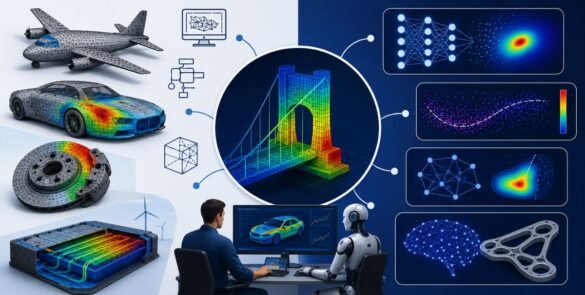
There are rare moments in the history of science and engineering when a tool developed for a narrow purpose transcends its boundaries and becomes something far greater than imagined. Developed as a numerical approximation technique for solving the partial differential equations (PDEs) for structural mechanics in the 1950s, Finite Element Method (FEM) has now evolved into a universal computational framework that finds application across virtually every branch of physics and engineering. Modern applications of FEM reach far beyond its structural origins, finding application in modelling blood flow in arteries, heat generation and transfer in batteries and semiconductors, thermal analysis of brake rotors, biomechanics and biomedical devices, etc.
FEM is a general-purpose PDE solver in a world whose physics is governed essentially by PDEs. The applications of FEM, also known as finite element analysis (FEA), from pencil-and-paper matrix algebra to AI-augmented multiphysics simulations has established FEA as a cornerstone for modern engineering development, the primary tool for stress testing and optimisation before prototyping and experimentation.
Birth of FEM: Discrete Elements and Aircraft Wings
The roots of FEM can be traced to the need for solutions for real-world systems governed by differential equations. For problems involving complex geometry and boundary conditions, closed-form analytical solutions were not possible. Mathematicians such as Walther Ritz, Boris Galerkin, and Lord Rayleigh developed approximation and variational techniques for solving these equations, which later served as a foundation for FEM. The practical application of FEM dates back to the post-WW2 aerospace industry. Engineers in the early 1950s faced a challenge in analysing the complex, multi-panel structures of aircraft wings. The decisive synthesis came in 1956, when Turner, Clough, Martin, and Topp published their landmark paper on the stiffness and deflection analysis of complex structures. They introduced the concept of finite elements, discrete sub-domains of a continuum, each characterised by an element stiffness matrix, assembled into a global system of algebraic equations. This was the birth of the finite element method as we know it today. Raymond Clough is widely credited with coining the term ‘finite element’ in 1960. A conceptual framework for FEM was developed: discretise/divide the domain into elements, assign shape functions (interpolation functions) to approximate the field variable (displacement, temperature, pressure, etc.) within each element, formulate element-level characteristic matrices, assemble them into a global system, apply boundary conditions, and solve. The field variables were calculated at the nodal points.
The power of FEM lies in the fact that the stiffness matrix computation is identical for the same element type, irrespective of its location. With the improvement of computational power, this feature enabled the development of FEA software that have standardised and optimised the formulation and solution of the stiffness matrices for bodies consisting of thousands and even millions of elements, transforming FEA from an academic technique into one of the most effective analysis tool.
Beyond Structures: Expansion of Application Domains
At its heart, FEM is a technique for transforming partial differential equations into systems of algebraic equations. Once engineers and applied mathematicians recognised it as a general purpose PDE solver rather than a structural mechanics tool, it was implemented extensively across several domains in the 1960s and 1970s.
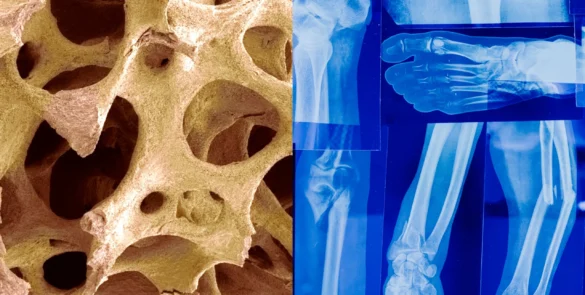
Thermal analysis was a natural extension due to the similarity in the governing equations. The similarity between the structural stiffness matrix and the thermal conductance matrix meant that existing structural codes could be adapted with relatively modest effort. Fluid mechanics, electromagnetics, geomechanics and biomechanics followed but demanded considerably more work. CFD was developed to better address the nonlinearity of the Navier-Stokes equations. Electromagnetics was incorporated by recasting the simplified Maxwell’s equations into the FEM framework. Nonlinear solution strategies and models were developed to address the nonlinear material behaviour of soil. FEM was implemented in the 1980s to perform biomechanical calculations such as bone stress, joint loads and operational analysis of the devices. Each new domain brought new element types, new constitutive models, and new validation challenges, but the underlying numerical architecture remained unchanged.
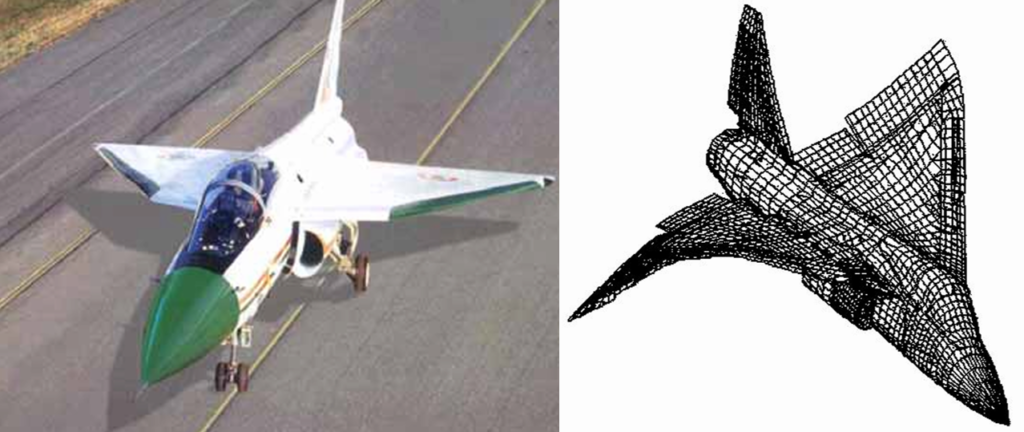
Figure 1. A meshed model of a combat aircraft modelled by a specialised aeronautical agency in the early days of FEA. Development of GUIs has made meshing and analysis much more convenient and accessible.[1]
Development of Commercial Platforms
The finite element method is, by its nature, a computational method. Even a modest FEA mesh with a few hundred elements yields thousands of coupled equations, making hand-based solutions impractical. The development of FEA software is therefore inseparable from the development of the method itself. The earliest FEA programs were research tools written in Fortran, tailored to specific problem types.
The transformation into professional engineering software began in the 1960s. NASTRAN (NASA Structural Analysis) was developed under NASA contract starting in 1965 and first released in 1968. Designed from the outset as a general-purpose structural analysis tool, its release into the public domain made it one of the most widely used FEA codes in history. While NASTRAN remains one of the leading FEA platforms in aerospace applications to this day, additional platforms such as ABAQUS and ANSYS have also become commonplace across the broader engineering industry. The reliability, documentation and sustained technical support of these platforms are as responsible for their widespread adoption as the capabilities of the software itself.
Solver technology itself underwent significant development. The global stiffness matrices are sparse, with most entries equal to zero. The original direct solvers based on Gaussian elimination were progressively refined to exploit this matrix structure, first through the use of banded storage, then through sparse direct solvers, and eventually through iterative solvers capable of handling larger and more complex systems on the same hardware. Parallel processing, enabled in the 1990s through domain decomposition, reduced hardware power demands and computational time.
The next step in making FEA more accessible was the development of the graphical user interface (GUI). Before GUIs, using the software required as much expertise in the tool as in the underlying physics. Mesh generation was manual, geometry was described in command-line syntax, and results were delivered as tables of numbers. With the development of GUIs, setting up the simulation and post-processing became much more convenient as deformed shapes, animations and contour plots were generated. PATRAN, developed in the 1970s, was among the first widely used graphical pre/post-processors. CAD integration in the 1990s allowed the import of the geometry directly from the CAD software, and an automated meshing algorithm significantly simplified the setup.
The integration of the full simulation workflow into a single GUI-based environment such as ANSYS Workbench, which included CAD import, geometry cleanup, meshing, boundary condition application, solver execution, post-processing, and report generation, was the defining achievement that helped make FEA mainstream. Cloud computing extended this democratisation further by allowing engineers, without access to high-performance computing setups, to run large simulations on computational infrastructure managed by providers such as Amazon Web Services, paying only for the compute time used. High-fidelity simulation became economically accessible to smaller companies and research institutions alike.
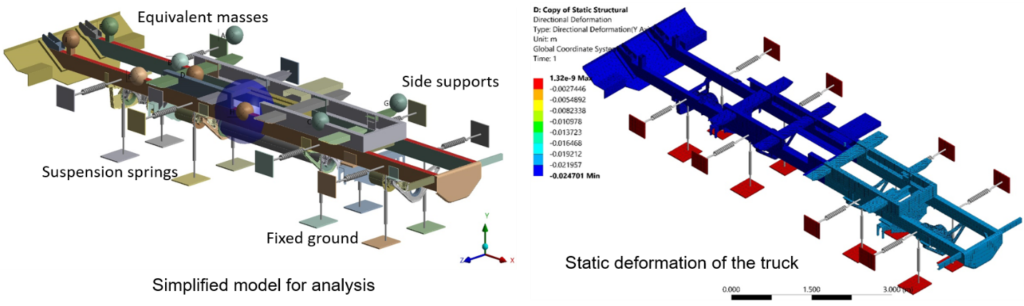
Figure 2. Structural analysis of 8×8 truck suspension system.
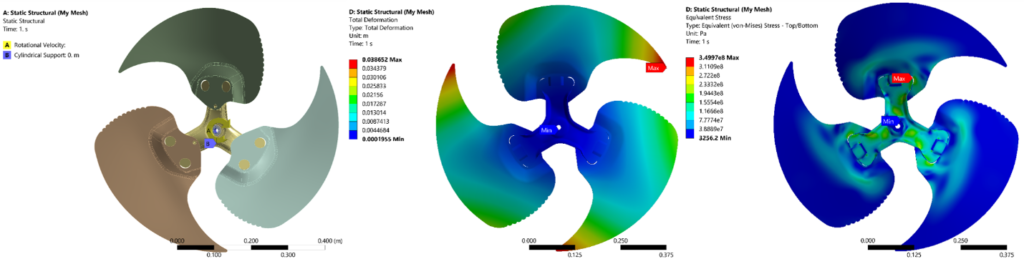
Figure 3. Structural analysis of axial fans operating at critical speeds.
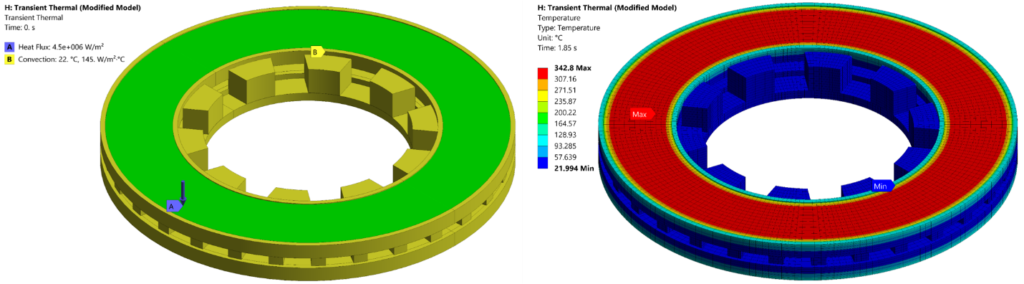
Figure 4. Thermal analysis of brake rotor assembly.
Incorporating Machine Learning
The most recent chapter in FEA’s evolution is the incorporation of machine learning with the objective of reducing the overall simulation time. The first and most established is surrogate modelling, with neural networks trained on libraries of FEA simulation results to predict simulation outputs in milliseconds, enabling real-time structural optimisation, thereby extending the applications of the FEA results. The quality of surrogate modelling improves with the number of training results, allowing better predictions.
The second role is mesh adaptation and error estimation, where machine learning helps decide where to refine the mesh to improve accuracy efficiently. Traditional error estimators are purely algorithmic; ML-based approaches can learn from past simulations to anticipate where errors will be large before running the full computation.
The most conceptually radical development is the Physics-Informed Neural Network (PINN), introduced in its modern form by Raissi, Perdikaris, and Karniadakis in 2019. PINNs are neural networks trained not merely to fit data, but to satisfy a governing differential equation as part of the loss function. The network learns a continuous function approximation that satisfies the boundary and initial conditions, as well as the governing differential equation, which is embedded as constraints in the training objective rather than being imposed through mesh.
Because PINNs are mesh-free, the solution is a continuous function defined over any point in the domain rather than only at discrete nodes. They incorporate sparse observational data alongside physical constraints, making them particularly well-suited to data-assimilation and inverse problems. For forward problems where FEA is already fast and reliable, PINNs remain generally slower to train and less accurate than well-validated FEA codes. Their advantage lies in problems where FEA struggles: high-dimensional spaces, irregular or evolving domains, and inverse problems that require reconciling observed data with physical laws.
Beyond PINNs, machine learning is influencing FEA in material modelling. Constitutive models have traditionally been hand-crafted by materials scientists. Neural network constitutive models, trained on experimental data or atomistic simulations, can capture complex nonlinear and history-dependent material behaviours that exceed the reach of classical analytical models. Topology optimisation, finding the optimal distribution of material within a design domain subject to structural constraints, has been a classical FEA application since the work of Bendsøe and Kikuchi in 1988. Machine learning is now accelerating this process by replacing the iterative FEA-based optimisation loop with a trained generative model, reducing computation times from hours to seconds.
The Way Forward
Predicting the future of any technology is an exercise in informed humility. But the trajectories visible today point clearly enough toward several developments that will define the next decade of FEA.
The relationship between FEA and AI will deepen, and it will be more collaborative than competitive. The most productive developments are likely to involve close integration: AI-assisted meshing, machine learning-based error estimation and adaptive refinement, neural network constitutive models embedded within FEA solvers, and hybrid PINN-FEA methods that leverage the strengths of each.
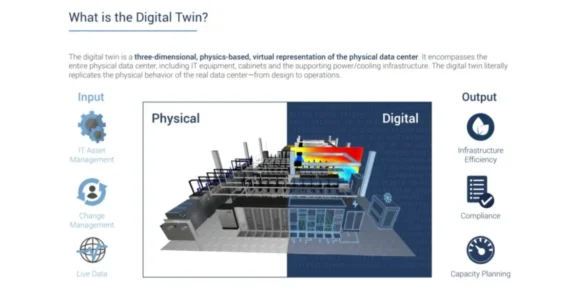
Real-time simulation will arrive at scale. Surrogate models trained on FEA data are already enabling real-time structural and thermal analysis in industrial contexts. The broader ambition of the digital twin, a continuously updated virtual replica of a physical system that reflects its current state and anticipates its future behaviour, depends critically on this capability becoming routine.
The inverse problem will become central to engineering practice. Historically, FEA has been a forward tool, applying the material properties, boundary condition and loading on a given geometry and computing the system response. The inverse problem where the material properties and loads are infered from the response data, is harder and has nuch scope for improvement. PINNs, Bayesian methods, and adjoint-based techniques are all promising tools for the inverse problem, with applications from non-destructive testing and structural health monitoring to medical imaging and geophysical exploration.
The democratisation of simulation will continue. The arc from research code to commercial software to CAD-integrated tools to cloud-accessible platforms shows no sign of reversing. AI-assisted modelling may eventually make meaningful FEA accessible to engineers with relatively little specialised training. That is both a remarkable opportunity and a serious responsibility: simulation is only ever as good as its inputs and the engineering judgement applied to its outputs. Finite element analysis has matured over seven decades into a discipline of extraordinary depth and breadth. It rests on rigorous mathematical foundations, is implemented in software of remarkable reliability, and has been validated across a range of physical phenomena that would have seemed implausible to its founders. The encounter with machine learning and artificial intelligence is not disrupting FEA so much as extending it, opening new domains, accelerating established workflows, and posing new questions about what simulation is and what it should be asked to do.
References
[1] P. Seshu, Textbook of Finite Element Analysis. PHI Learning Private Limited, New Delhi, 2003. — Primary course text; source for conceptual framework, application examples (automotive, aerospace, electronics), and the generic PDE interpretation of FEM.
[2] O.C. Zienkiewicz & R.L. Taylor, The Finite Element Method, 7th ed. Butterworth-Heinemann, 2013. — Definitive multi-volume reference; cited for historical attribution (Clough, Turner et al.), domain expansions, solver technology, and meshing methods.
[3] M. Raissi, P. Perdikaris & G.E. Karniadakis, “Physics-informed neural networks: A deep learning framework for solving forward and inverse problems involving nonlinear partial differential equations,” Journal of Computational Physics, vol. 378, pp. 686–707, 2019. — Original PINN paper; cited for PINN formulation, mesh-free properties, and inverse problem capabilities.
[4] K.J. Bathe, Finite Element Procedures, 2nd ed. K.J. Bathe, Watertown MA, 2014. — Rigorous theoretical reference; cited for convergence theory, solver methods, meshing algorithms, and nonlinear analysis.
[5] I. Goodfellow, Y. Bengio & A. Courville, Deep Learning. MIT Press, Cambridge MA, 2016. — Background reference for neural network constitutive models and the ML methods intersecting with simulation.