
More results...
More results...
Oil and gas pipelines operate under challenging conditions involving multiphase flow, pressure variation, temperature changes, long-distance transport, elevation changes, changing production rates, and complex fluid behavior. These conditions can create slugging, pressure fluctuations, hydrate formation, wax deposition, flow restriction, corrosion risk, erosion risk, and pipeline integrity challenges.
Flow assurance and pipeline integrity studies help operators understand how oil, gas, water, and solids behave inside pipeline systems before instability, blockage, or reliability issues affect production. By using simulation-led engineering, Experiqs helps identify flow risks, optimize operating conditions, and improve pipeline performance across real-world scenarios.
Experiqs provides Flow Assurance & Pipeline Integrity services for upstream, midstream, offshore, subsea, and process pipeline systems. We use multiphase flow simulation, CFD analysis, thermal-flow modelling, pressure drop evaluation, hydrate and wax risk assessment, and pipeline performance optimization to help oil and gas teams improve flow reliability, reduce downtime, and protect critical assets.
Pipeline performance directly affects production stability, operating cost, asset reliability, and safety in oil and gas operations. Even small changes in flow rate, pressure, temperature, water cut, gas fraction, or fluid properties can change the way fluids move through a pipeline.
Multiphase flow can produce slugging, liquid holdup, pressure surges, vibration, unstable separation performance, and reduced process reliability. Low-temperature or high-pressure operating regions can increase hydrate formation risk. Crude oil composition and temperature drop can increase wax deposition risk, creating flow restriction and higher pumping or compression demand.
Pipeline integrity is also affected by flow behavior. High-velocity regions, turbulence, water accumulation, solids transport, erosion-prone bends, and corrosion-sensitive zones can reduce asset life and increase inspection or maintenance requirements.
Traditional operating data may show symptoms such as pressure drop, unstable flow, or reduced throughput, but it may not clearly show the root cause. Simulation helps visualize flow behavior, predict risk zones, and test operating changes before field implementation.
Experiqs helps oil and gas teams move from reactive troubleshooting to predictive flow assurance by identifying flow instability, thermal risks, pressure losses, and integrity concerns early.
We simulate oil, gas, water, and solids flow behavior to identify unstable operating zones and improve pipeline reliability.
Our analysis helps assess:
This helps improve flow stability and reduce production interruptions caused by multiphase flow issues.

Hydrate formation and wax deposition can restrict flow, increase pressure drop, and create serious operational risks in pipelines.
We help evaluate:
This helps operators identify risk zones and plan safer operating strategies.

Pipeline performance depends on pressure drop, flow rate, temperature variation, fluid properties, and operating conditions.
We analyze and optimize:
This helps improve pipeline efficiency, reduce energy loss, and support reliable production.

Slugging can cause unstable flow, separator overload, vibration, pressure surges, and process disturbances.
Experiqs helps identify:
This helps improve process stability and protect downstream equipment.
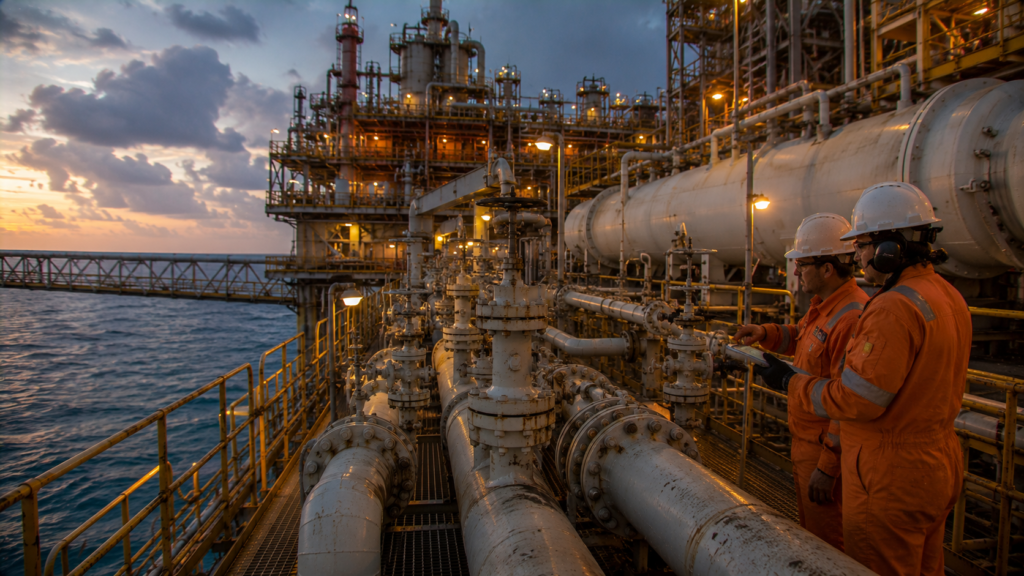
Temperature variation strongly affects viscosity, phase behavior, hydrate risk, wax deposition, and pressure drop.
We evaluate:
This helps define safer operating conditions and reduce blockage risk.

Flow behavior can influence erosion, corrosion, vibration, fatigue, and long-term pipeline reliability.
We help assess:
This helps improve inspection planning, maintenance decisions, and asset life management.

Experiqs helps oil and gas operators, EPC teams, and infrastructure developers address flow assurance and pipeline integrity challenges, including:
Identify slugging, instability, pressure fluctuations, and blockage risks before they affect pipeline operation.
Evaluate thermal-flow conditions and identify operating zones where hydrate formation or wax deposition may occur.
Reduce pressure drop, improve flow rate performance, and optimize pumping or compression requirements.
Identify erosion, corrosion, vibration, and fatigue-sensitive areas influenced by flow behavior.
Define stable operating conditions across flow rate, pressure, temperature, and production scenarios.
Use simulation-led analysis to compare operating strategies and mitigation options before field implementation.
Our Flow Assurance & Pipeline Integrity service is suitable for:
Experiqs combines CFD simulation, multiphase flow analysis, thermal-flow modelling, pressure drop evaluation, pipeline integrity assessment, and digital engineering expertise to improve oil and gas pipeline reliability.
Our strength lies in connecting flow assurance with asset integrity. We help clients understand how flow regime, pressure, temperature, fluid properties, and operating conditions affect pipeline stability, energy use, blockage risk, and long-term reliability.
By validating pipeline behavior virtually before operational changes are made, Experiqs helps oil and gas teams reduce downtime, improve production stability, protect assets, and make better engineering decisions.
Improve multiphase flow stability, reduce hydrate and wax risk, optimize pressure drop, and strengthen pipeline integrity with Experiqs’ Flow Assurance & Pipeline Integrity services.
Talk to our experts to evaluate your pipeline system and identify practical opportunities for safer flow, better reliability, and stronger long-term asset performance.
Partner with Experiqs to transform complex ideas into validated, industry-ready engineering solutions
Discover how to partner with Experiqs and get started quickly
Whether you’re exploring a new R&D initiative, seeking advanced simulations, planning experimental validation, or evaluating product feasibility—our experts are ready to assist you.
