
More results...
More results...
Noise, vibration, and harshness directly affect vehicle comfort, product quality, structural durability, and customer experience. In electric vehicles and modern mobility platforms, NVH performance has become even more important because the absence of engine noise makes motor noise, fan noise, compressor noise, tire noise, structural vibration, and cabin acoustic issues more noticeable.
NVH, Vibration & Acoustic Analysis helps automotive and electric mobility teams identify the sources of unwanted noise and vibration, understand how they travel through vehicle structures, and improve designs before prototype testing. By using simulation-led engineering, Experiqs helps reduce resonance, vibration transfer, buzz, squeak, rattle, flow-induced noise, and structural-borne acoustic issues.
Experiqs provides NVH, Vibration & Acoustic Analysis services for automotive OEMs, EV manufacturers, mobility startups, component developers, and engineering teams. We use vibration analysis, acoustic simulation, structural dynamics, modal analysis, flow-induced noise evaluation, motor noise studies, and simulation-led design optimization to improve vehicle comfort, reliability, and perceived quality.
Vehicle NVH performance is influenced by many interacting sources, including motors, compressors, cooling fans, tires, ducts, panels, mounts, battery packs, powertrain systems, suspension components, and vehicle body structures. These sources can create vibration, resonance, airborne noise, structural-borne noise, and cabin noise issues.
In electric vehicles, NVH challenges are different from conventional vehicles. Electric motors can generate tonal noise, inverters can contribute high-frequency acoustic signatures, cooling fans and compressors become more noticeable, and structural-borne paths from battery packs or powertrain mounts can affect cabin comfort.
Poor NVH performance can reduce perceived quality, increase driver fatigue, create customer complaints, and indicate structural or mounting issues. Vibration can also affect durability by increasing fatigue risk in panels, mounts, brackets, battery enclosures, and powertrain components.
Simulation-led NVH analysis helps identify vibration sources, acoustic paths, resonance frequencies, structural response, and design weaknesses before physical testing. Experiqs helps automotive teams reduce NVH risks early and develop quieter, smoother, and more reliable vehicles.
We evaluate the dynamic response of vehicle structures, mounts, panels, battery packs, motors, and powertrain systems under real-world operating conditions.
Our analysis helps assess:
• Vehicle structure vibration
• Mount and bracket response
• Panel vibration behavior
• Battery pack vibration response
• Motor and powertrain vibration
• Suspension-induced vibration effects
• Resonance-prone regions
• Dynamic load transfer paths
This analysis helps identify vibration-sensitive areas, reduce vibration transfer, and improve overall vehicle durability, performance, and ride comfort.
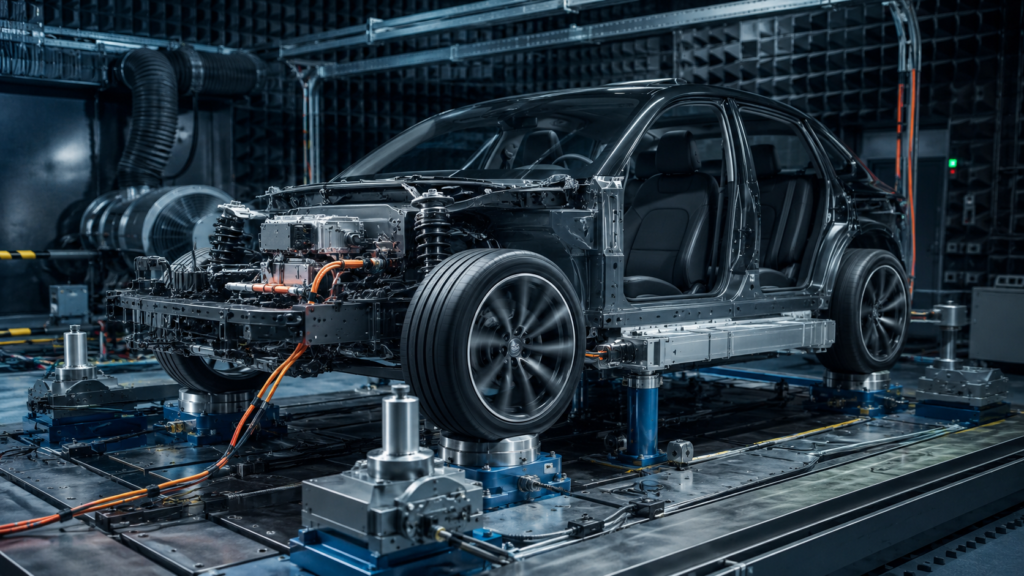
We predict and analyze noise from motors, fans, compressors, tires, ducts, body panels, and structural-borne paths.
We help evaluate:
This helps improve acoustic comfort and reduce unwanted vehicle noise.
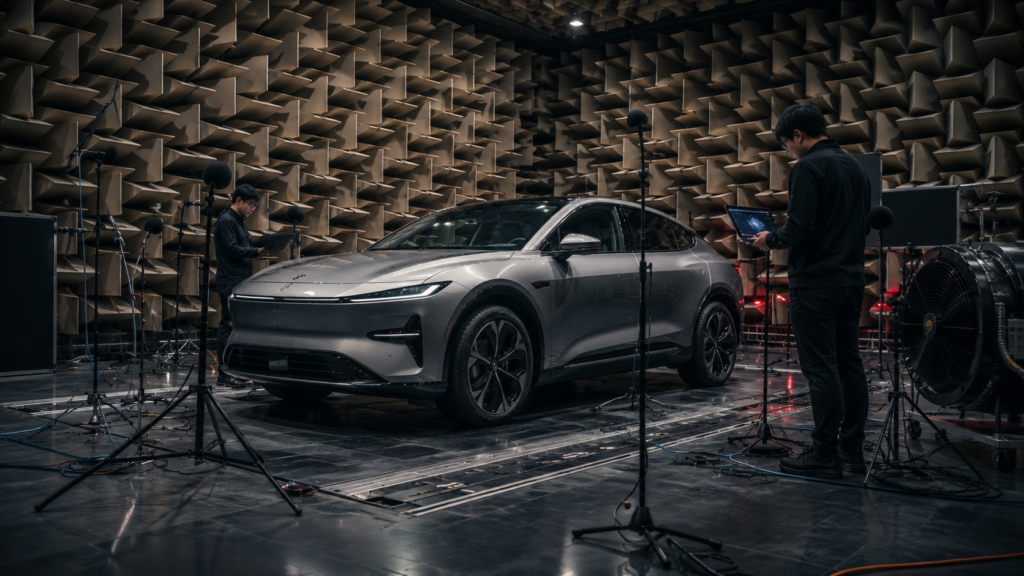
We support design changes that reduce resonance, vibration transfer, buzz, squeak, rattle, and flow-induced noise while maintaining performance.
Experiqs helps improve:
This helps improve vehicle refinement without unnecessary overdesign.
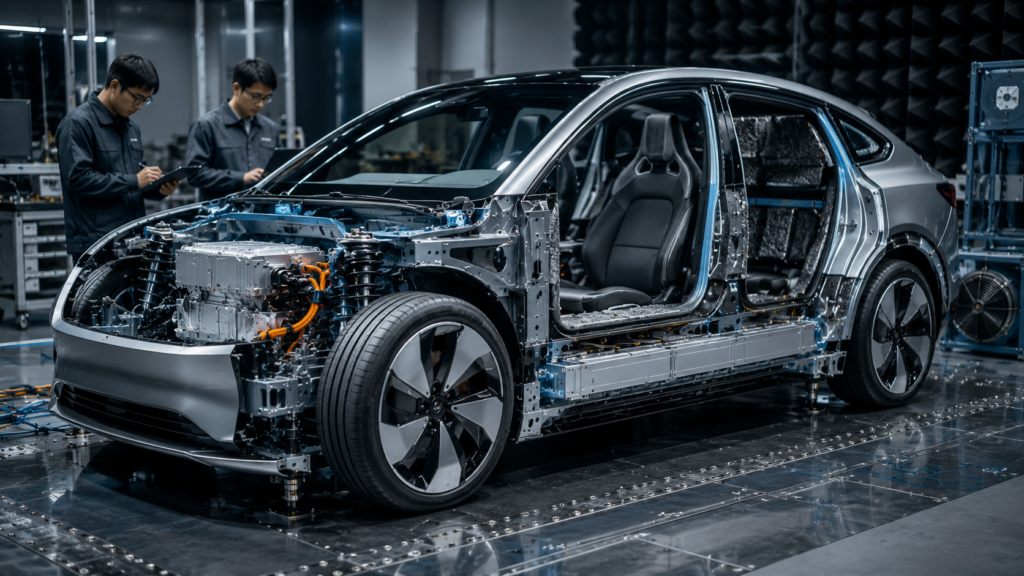
Resonance occurs when excitation frequencies align with structural natural frequencies, increasing vibration and noise.
We help assess:
This helps reduce resonance-related vibration and acoustic issues.
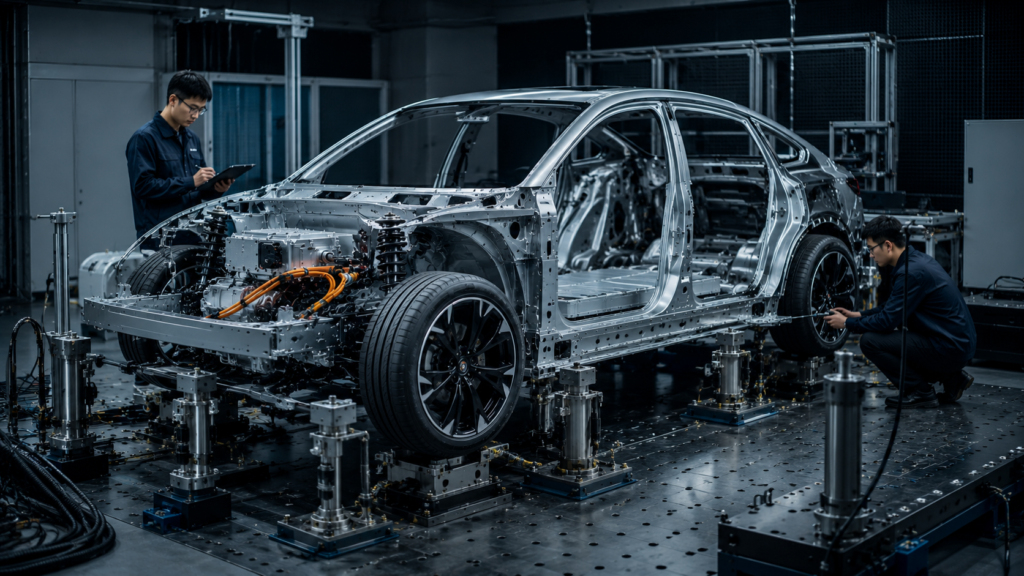
EV powertrains introduce unique NVH challenges due to electric motor tones, gearbox excitation, inverter effects, and compact packaging.
We analyze:
This helps improve EV powertrain refinement and cabin comfort.
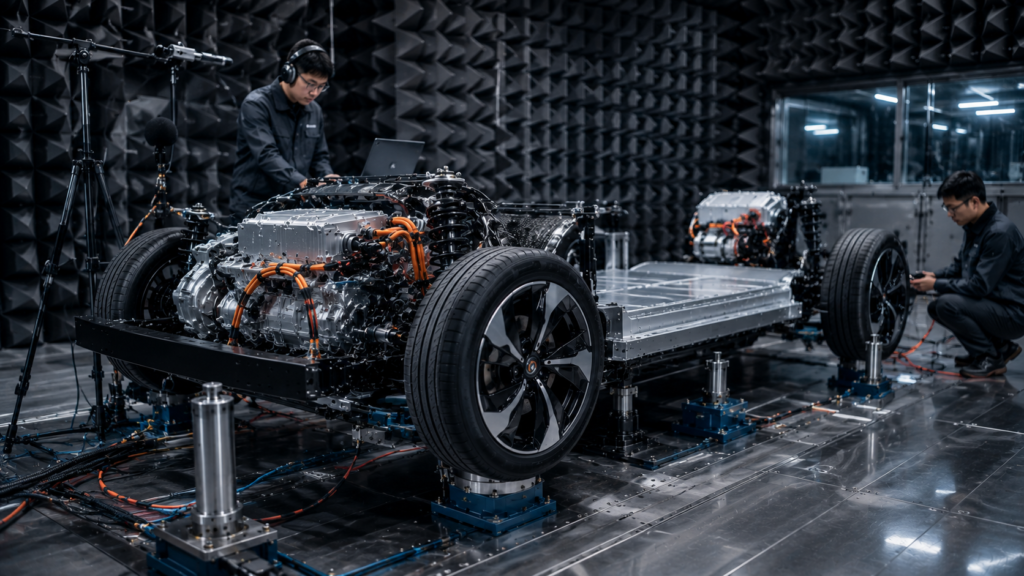
Buzz, squeak, and rattle issues can affect perceived quality and customer satisfaction, especially in cabins, panels, battery enclosures, and trim assemblies.
We help identify:
This helps reduce unwanted noise and improve perceived vehicle quality.
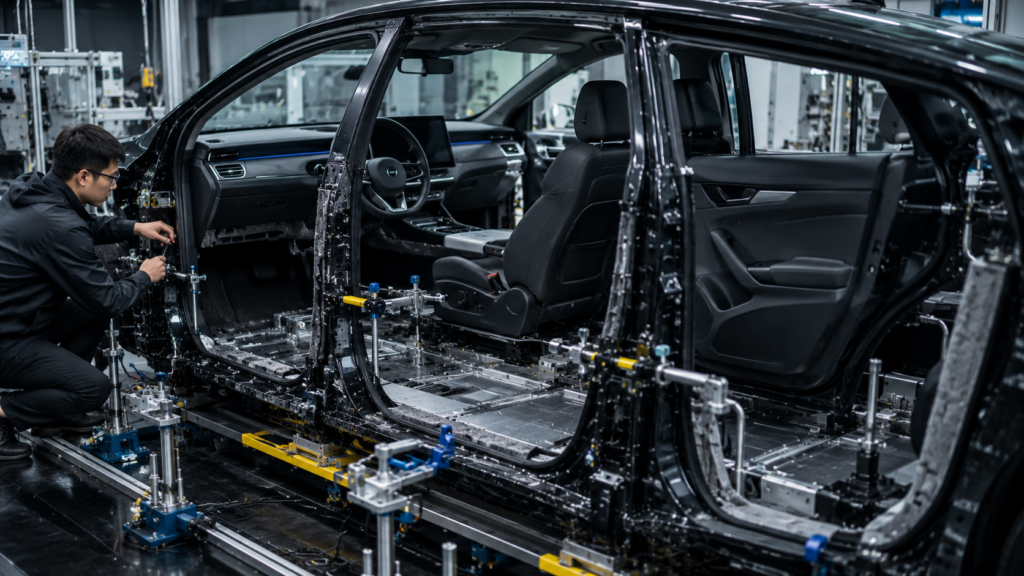
Experiqs helps automotive OEMs, EV manufacturers, mobility startups, and engineering teams address NVH and acoustic challenges, including:
Reduce unwanted noise, vibration, and harshness to improve ride comfort and cabin experience.
Address buzz, squeak, rattle, tonal noise, and vibration issues that affect customer perception.
Identify natural frequencies, dynamic response, and vibration paths before they create NVH problems.
Analyze motor, inverter, compressor, fan, gearbox, and e-axle noise sources for improved EV refinement.
Reduce vibration-related fatigue risks in mounts, brackets, panels, battery packs, and powertrain structures.
Use simulation to evaluate NVH improvements before prototype testing, physical trials, or production changes.
Experiqs combines vibration analysis, acoustic simulation, structural dynamics, CFD-based flow noise evaluation, FEA, and automotive engineering expertise to improve NVH performance in vehicles and electric mobility systems.
Our strength lies in connecting vibration sources, structural paths, acoustic radiation, and design behaviour into one engineering view. We help clients understand where noise and vibration originate, how they travel through the vehicle, and which design changes can improve comfort, reliability, and perceived quality.
By validating NVH behaviour virtually, Experiqs helps automotive teams reduce prototype iterations, improve vehicle refinement, address customer-facing noise issues, and make better engineering decisions before physical testing.
Reduce vibration, resonance, acoustic noise, buzz, squeak, rattle, and flow-induced noise with Experiqs’ NVH, Vibration & Acoustic Analysis services.
Talk to our experts to evaluate your vehicle or component design and identify practical opportunities for quieter operation, smoother performance, and improved perceived quality.
Partner with Experiqs to transform complex ideas into validated, industry-ready engineering solutions
Discover how to partner with Experiqs and get started quickly
Whether you’re exploring a new R&D initiative, seeking advanced simulations, planning experimental validation, or evaluating product feasibility—our experts are ready to assist you.
