
More results...
More results...
Robotic and autonomous systems must be validated across many operating conditions before reliable deployment. Motion behaviour, perception performance, control logic, mission execution, terrain response, payload effects, sensor inputs, failure cases, and edge scenarios all influence how robots perform in the real world.
Simulation, Digital Twin & Virtual Validation helps robotics teams test and improve robotic systems before physical trials. By creating virtual environments, physics-based models, data-driven digital twins, and scenario-based validation workflows, Experiqs helps reduce prototype iterations, identify performance risks, and improve deployment confidence.
Experiqs provides Simulation, Digital Twin & Virtual Validation services for mobile robots, AMRs, AGVs, autonomous vehicles, drones, UAVs, industrial robots, inspection robots, service robots, and intelligent machines. We support robotics simulation, digital twin development, virtual testing, scenario-based validation, motion analysis, perception validation, control logic evaluation, and mission behaviour testing.
Physical testing is essential, but it can be time-consuming, expensive, and limited in the number of scenarios it can cover. Robotic systems often need to be tested across different layouts, terrains, lighting conditions, payloads, speeds, obstacles, duty cycles, environmental conditions, and mission profiles.
A robot may work well in one test setup but fail when conditions change. Perception models may behave differently under sensor noise, occlusion, dust, lighting variation, or unusual objects. Control logic may respond differently under load, slope, surface friction, or emergency conditions. Mechanical and thermal systems may face reliability issues during longer missions or repeated operation.
Virtual validation helps teams identify these issues earlier. Simulation can test motion behaviour, control response, path planning, sensor placement, structural response, thermal behaviour, and mission performance before real-world deployment.
Digital twins extend this by creating connected models that represent robot behaviour over time. These models can support performance monitoring, optimization, predictive maintenance, and design improvement. Experiqs helps robotics teams use simulation and digital twins to reduce uncertainty and improve real-world reliability.
We create virtual environments to evaluate motion, perception, control logic, and mission behaviour.
Our simulation support helps assess:
This helps teams test robotic performance before physical trials and field deployment.
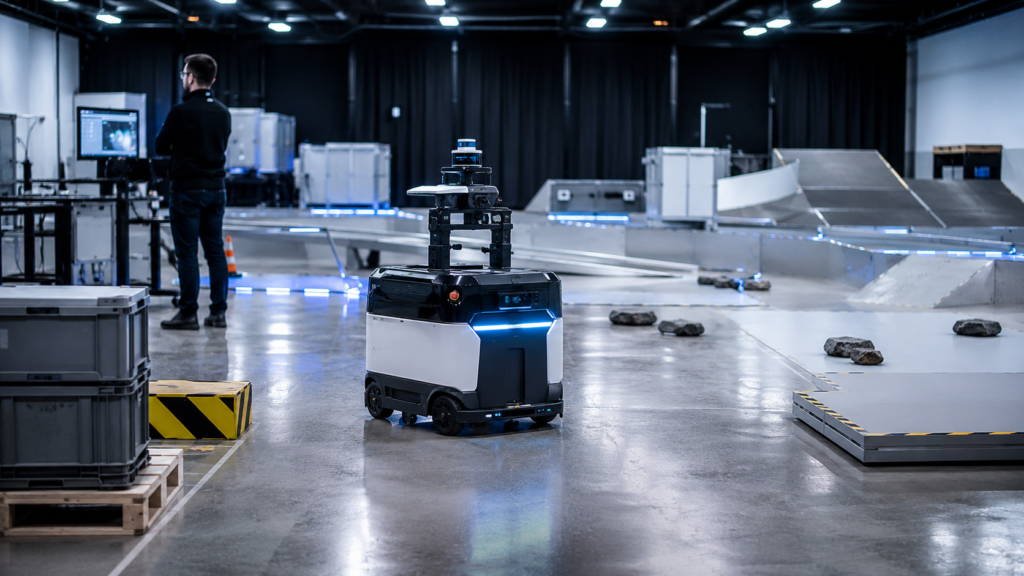
We build physics-based and data-driven models for robot performance monitoring and optimization.
Experiqs helps develop digital twins for:
This helps convert robot data and engineering models into practical performance insights.
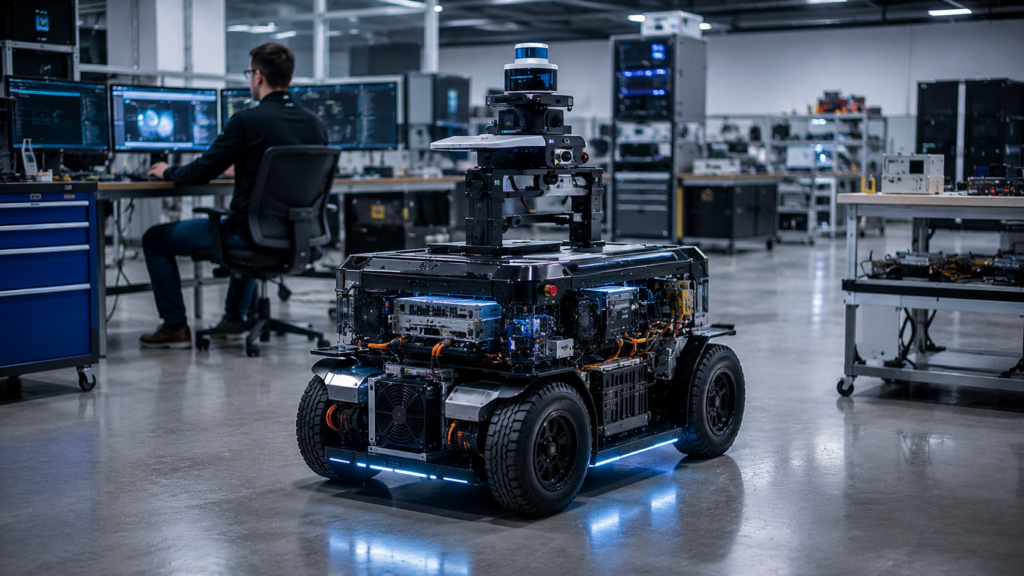
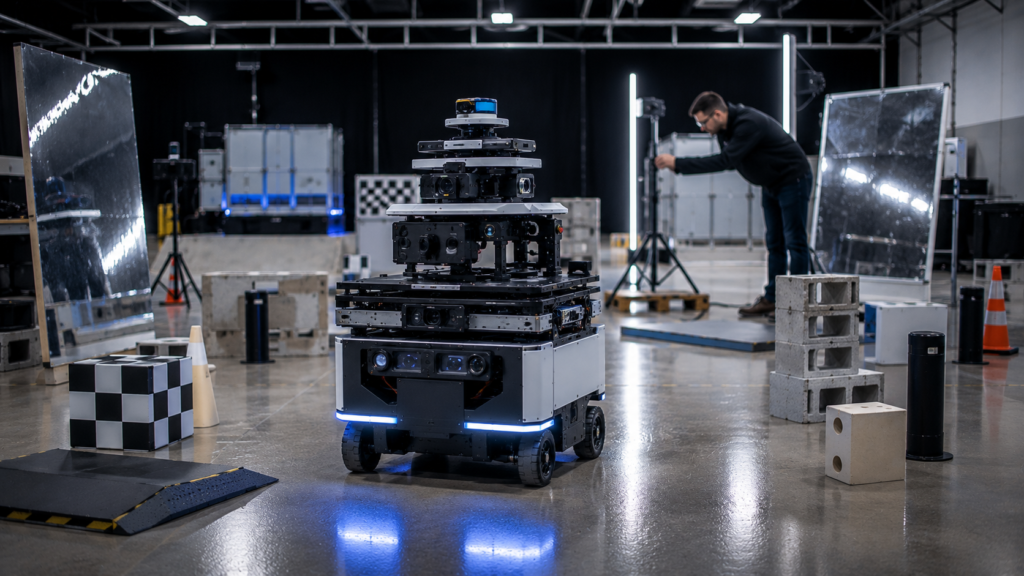
We test robots across operating conditions, edge cases, layouts, terrains, and mission profiles.
We help evaluate:
This helps improve confidence that the robot can perform reliably outside controlled test conditions.
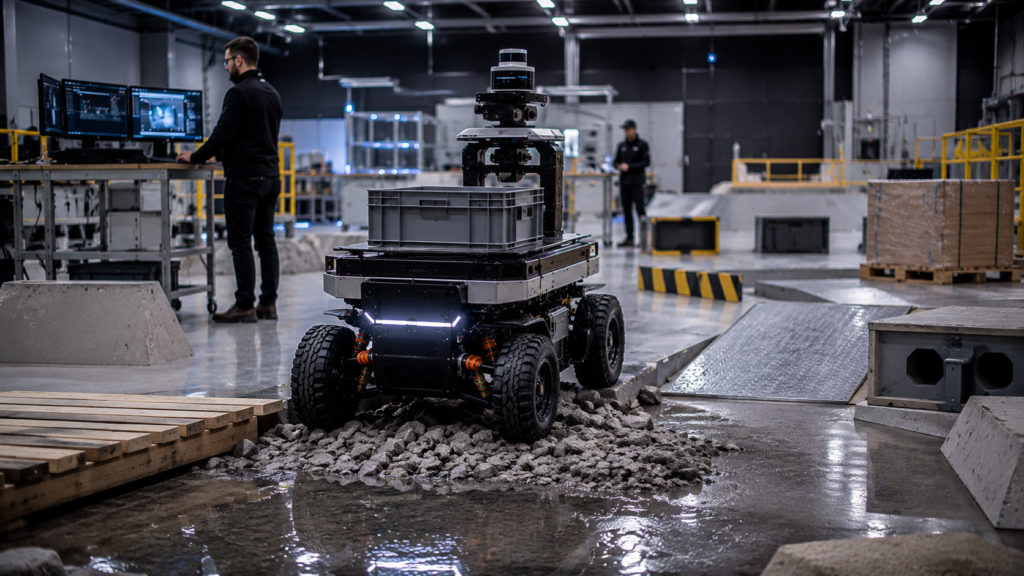
Robotic performance depends on stable motion, smooth control response, and reliable navigation behaviour.
We help assess:
This helps improve robot movement quality and mission reliability.
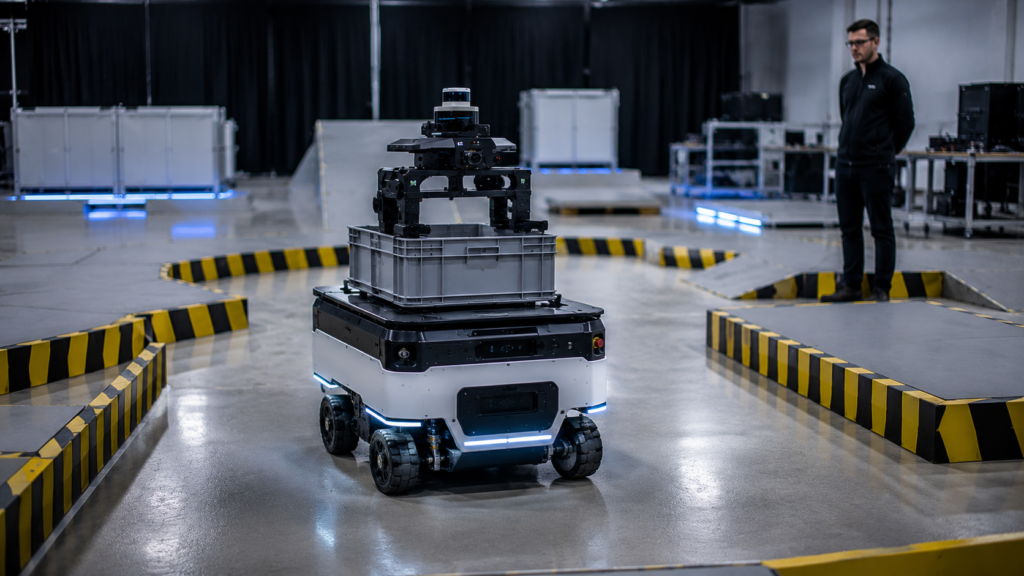
Robotic perception must remain reliable across real-world environmental variation.
We support validation of:
This helps reduce sensing and perception-related deployment risks.
Digital twins and simulation models can support continuous performance improvement after deployment.
We help monitor and optimize:
This helps improve uptime, reliability, and future robotic platform development.
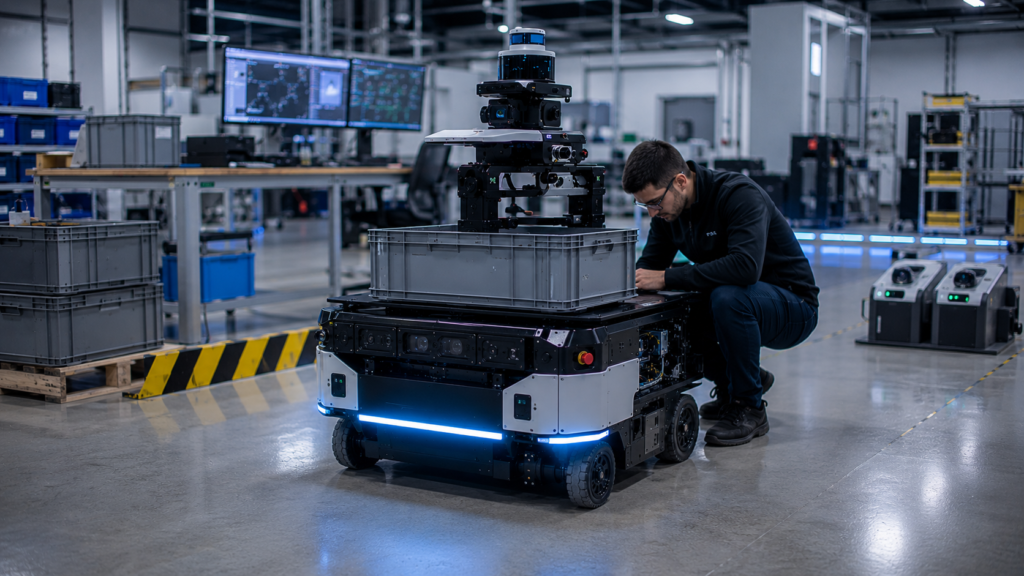
Experiqs helps robotics and autonomous system teams address simulation and validation challenges, including:
Test more operating conditions virtually before investing in repeated physical trials.
Identify design, control, perception, and mission risks earlier in the development cycle.
Validate robot behaviour across layouts, terrains, payloads, edge cases, and mission conditions.
Use simulation and digital twins to identify thermal, structural, control, perception, and performance risks.
Develop digital twins that support robot performance tracking, optimization, and predictive insights.
Compare design changes, operating strategies, and system configurations before deployment.
Experiqs combines robotics engineering, simulation-led validation, CFD, FEA, thermal analysis, AI/ML support, digital twin development, and system-level modelling to improve robotic and autonomous platforms.
Our strength lies in connecting virtual models with real engineering behaviour. We help teams understand how motion, perception, control logic, sensors, payloads, thermal systems, structures, and mission profiles interact during real-world operation.
By using simulation, digital twins, and scenario-based validation, Experiqs helps robotics teams reduce physical testing effort, improve reliability, accelerate development, and make stronger deployment decisions.
Create robotics simulations, digital twins, and scenario-based validation workflows to test motion, perception, control logic, mission behaviour, and performance before deployment.
Talk to our experts to evaluate your robotic platform and identify practical opportunities for faster validation, stronger reliability, and better real-world performance.
Partner with Experiqs to transform complex ideas into validated, industry-ready engineering solutions
Discover how to partner with Experiqs and get started quickly
Whether you’re exploring a new R&D initiative, seeking advanced simulations, planning experimental validation, or evaluating product feasibility—our experts are ready to assist you.
