
More results...
More results...
Data centers and mission-critical facilities depend on the reliable performance of structural systems, mechanical equipment, piping networks, tanks, skids, supports, frames, platforms, and utility infrastructure. These systems are exposed to mechanical loads, thermal gradients, pressure forces, vibration, equipment loads, operational stresses, and seismic events.
If structural performance is not properly validated, weak points can lead to excessive deformation, fatigue, support failure, equipment misalignment, leakage, vibration issues, safety risks, and downtime.
Experiqs provides simulation-driven Structural, Stress & Seismic Analysis services using advanced FEA, numerical simulation, dynamic analysis, and engineering evaluation. We help data center operators, consultants, EPC teams, facility owners, OEMs, and infrastructure designers assess structural integrity, improve safety, and strengthen long-term reliability.
Critical infrastructure must remain safe and operational under normal, abnormal, and extreme loading conditions. Equipment foundations, pipe supports, tanks, cooling system components, generator structures, skids, racks, and utility systems must withstand the combined effects of weight, pressure, temperature, vibration, wind, seismic forces, and operational loads.
Traditional design checks may not fully capture local stress concentrations, deformation behavior, dynamic response, thermal expansion effects, or load transfer between connected components.
Experiqs helps teams move from assumption-based structural review to data-driven design validation by simulating stress distribution, displacement, vibration response, seismic behavior, fatigue risk, and structural weak points under realistic operating conditions.
We perform detailed stress analysis to evaluate how components and structures respond to mechanical, thermal, pressure, and support loads.
Our stress analysis helps assess:
This helps identify overstressed regions and supports stronger, safer infrastructure design.
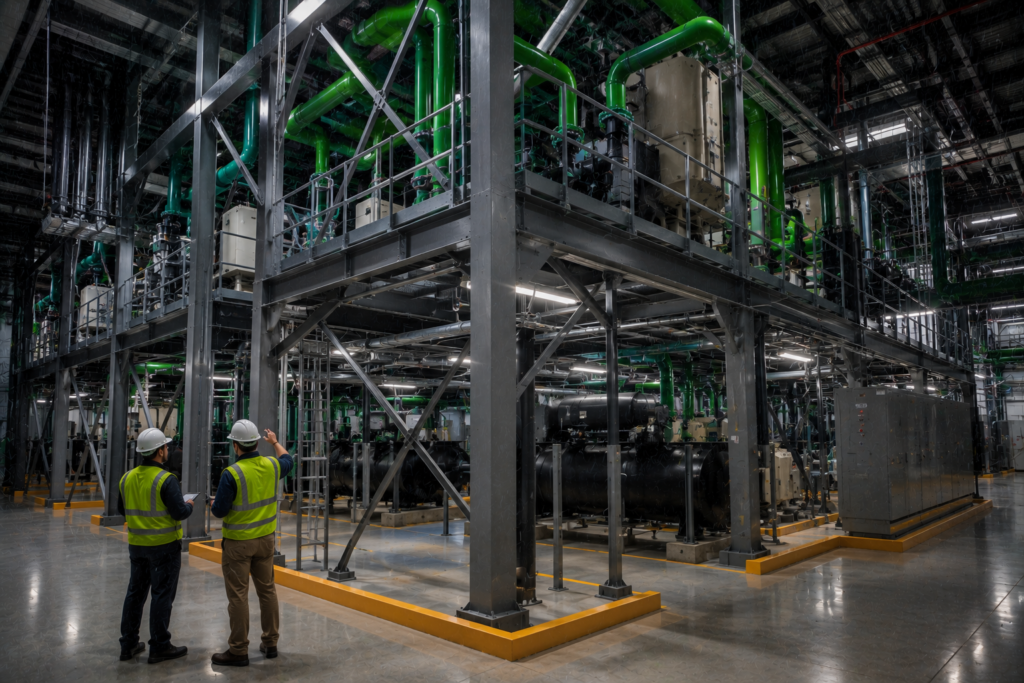
Seismic events can place high dynamic loads on critical systems. Experiqs evaluates how structures and equipment respond under seismic loading conditions using hazard assessment and dynamic simulation methods.
We analyze:
This helps validate whether critical systems can maintain safety and resilience during seismic events.
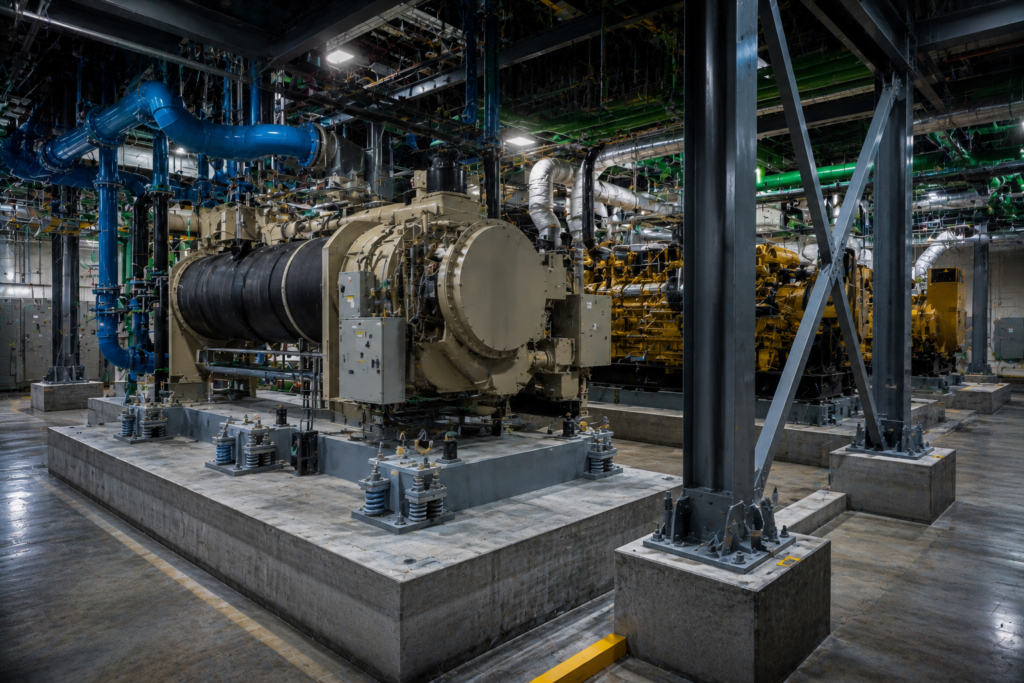
Experiqs identifies weak points, deformation risks, and improvement opportunities to strengthen infrastructure design.
We help evaluate and improve:
Our recommendations help improve durability, reduce risk, and support long-term reliable operation.
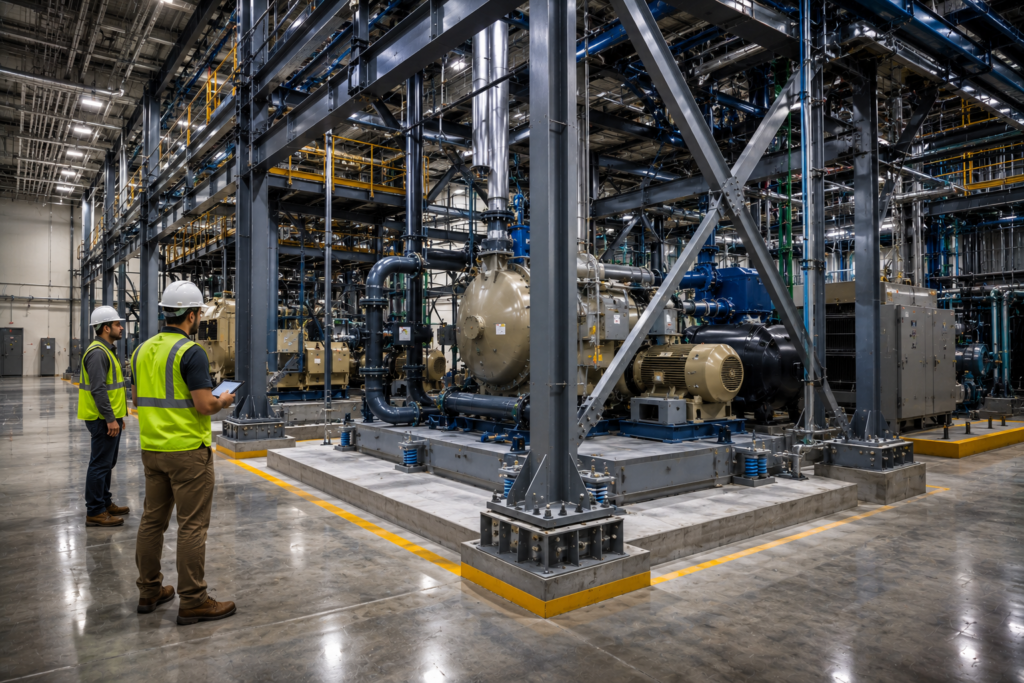
Cooling systems, chilled water circuits, exhaust systems, tanks, and utility equipment can experience significant thermal gradients during operation. These gradients can create expansion, contraction, and stress in connected structures.
We assess:
This helps prevent stress-related failure, leakage, and equipment misalignment.
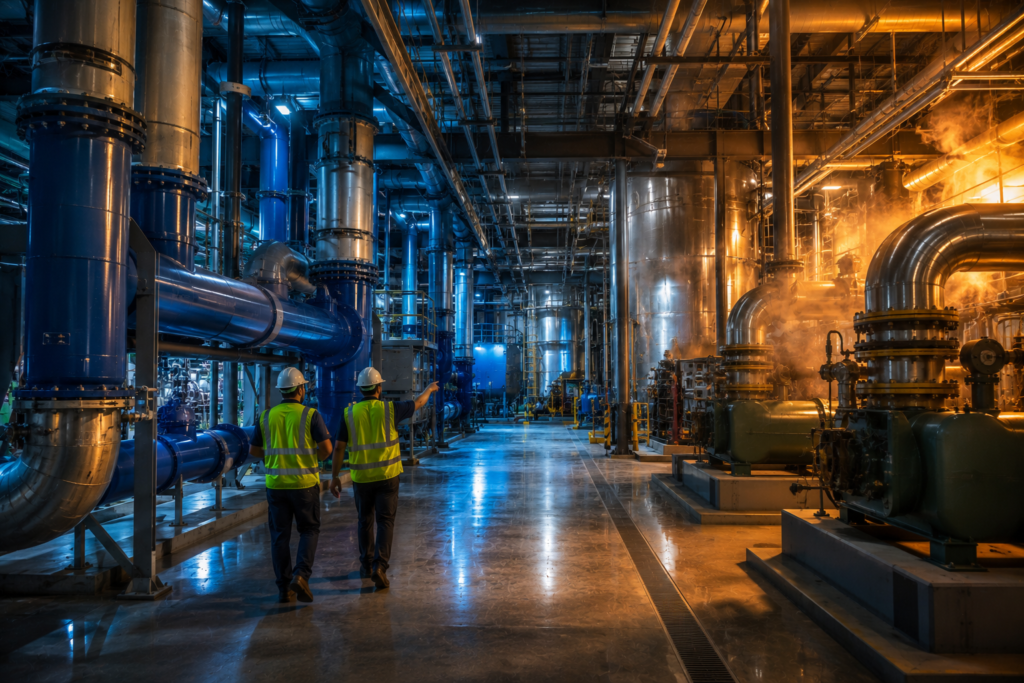
Critical cooling and utility systems often include tanks, vessels, piping, headers, manifolds, and pressurized components. Experiqs evaluates these systems for structural integrity under pressure and operating loads.
We analyze:
This helps improve safety and reliability for chilled water, fuel, air, and utility networks.
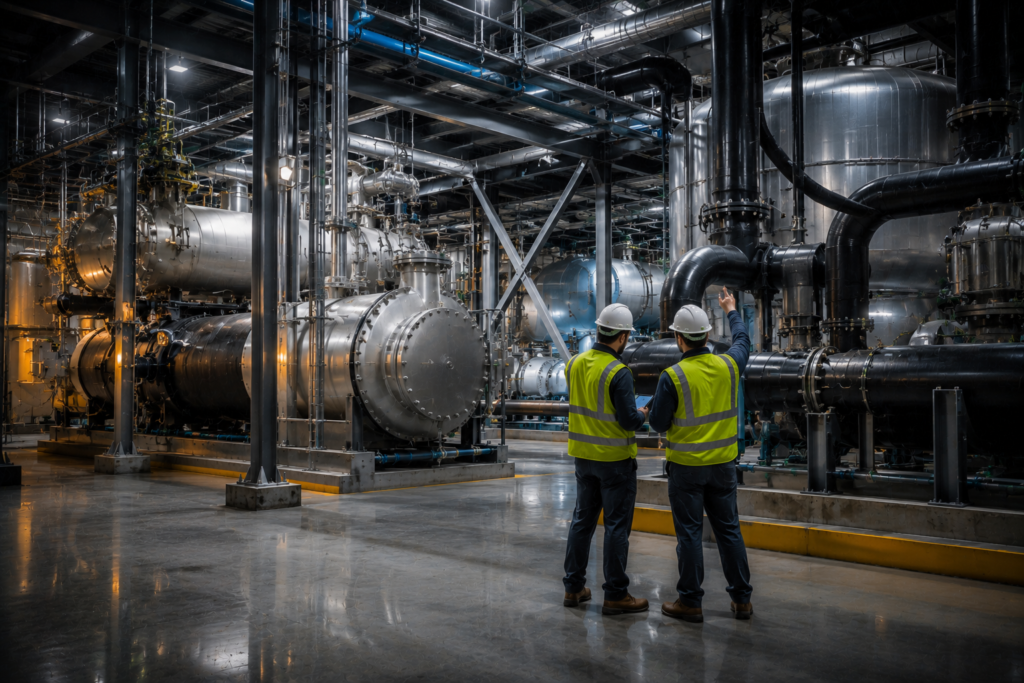
Rotating equipment, generators, pumps, fans, compressors, and cooling equipment can introduce vibration into structural systems. Experiqs evaluates dynamic response to reduce fatigue risk and operational issues.
We assess:
This helps reduce vibration-related damage and improve long-term performance.
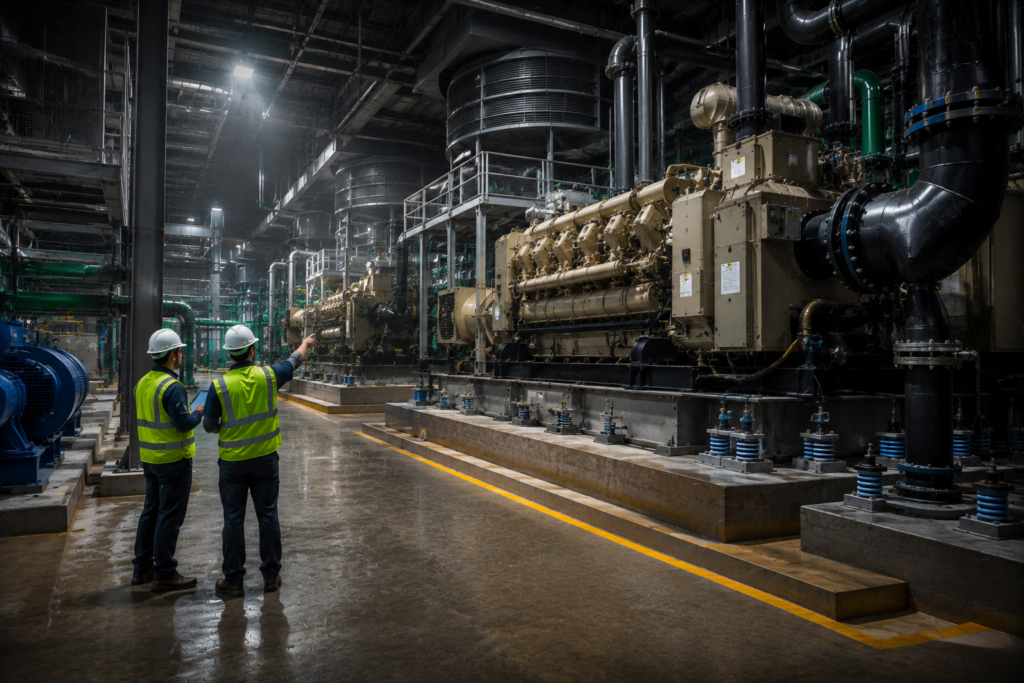
Experiqs helps data center and critical infrastructure teams address structural and seismic challenges, including:
Validate that critical infrastructure components can withstand expected operating and environmental loads.
Evaluate equipment, supports, tanks, frames, and systems under seismic loading conditions.
Identify high-stress zones, deformation risks, weak supports, and vibration-sensitive areas before failure occurs.
Improve structural design through simulation-backed recommendations for reinforcement, support, bracing, and load distribution.
Assess fatigue, thermal cycling, vibration, and operating stress effects that influence service life.
Use FEA and dynamic analysis results to support design validation, retrofit planning, safety review, and project approval.
Our Structural, Stress & Seismic Analysis service is suitable for:
Experiqs follows a simulation-led workflow to evaluate structural integrity and seismic performance.
We review drawings, 3D models, material properties, operating loads, pressure data, temperature conditions, support details, anchoring arrangements, seismic criteria, and applicable design requirements.
A detailed finite element model is developed to represent structural geometry, supports, constraints, material behavior, load cases, and interaction between components.
We evaluate stress distribution, displacement, reaction forces, deformation behavior, and critical load paths under normal operating conditions.
Multiple loading scenarios are tested, including mechanical loads, pressure loads, thermal gradients, vibration, equipment loads, wind loads, and seismic conditions.
Where required, modal analysis, response spectrum analysis, time-history analysis, and vibration assessment are performed to evaluate dynamic behavior.
We provide practical recommendations for design improvement, reinforcement, support modification, bracing, anchoring, material changes, and risk reduction.
Experiqs combines FEA simulation, structural engineering, thermal analysis, vibration assessment, CFD, system modelling, and critical infrastructure expertise to solve complex reliability challenges.
Our strength lies in understanding how loads, temperature, pressure, vibration, seismic forces, supports, and equipment interaction affect real-world structural performance. We convert complex structural behavior into clear engineering insights that help clients improve safety, reduce risk, and make confident design decisions.
By validating structural, stress, and seismic performance before fabrication, installation, retrofit, or expansion, Experiqs helps facility teams strengthen critical infrastructure resilience and long-term reliability.
Improve structural safety, reduce stress risks, validate seismic performance, and strengthen long-term durability with Experiqs’ Structural, Stress & Seismic Analysis services.
Talk to our experts to evaluate your critical infrastructure systems and identify practical opportunities for stronger, safer, and more resilient design.
Partner with Experiqs to transform complex ideas into validated, industry-ready engineering solutions
Discover how to partner with Experiqs and get started quickly
Whether you’re exploring a new R&D initiative, seeking advanced simulations, planning experimental validation, or evaluating product feasibility—our experts are ready to assist you.
