
More results...
More results...
Oil and gas systems operate under harsh flow and environmental conditions where particles, sand, liquids, gas, high velocity flow, temperature variation, pressure changes, and corrosive media can damage critical equipment over time. Components such as pipelines, bends, valves, choke points, elbows, manifolds, separators, scrubbers, and process equipment are especially vulnerable to erosion, corrosion, and wear.
Erosion, Corrosion & Wear Prediction helps operators and engineering teams identify damage-prone regions before they lead to leaks, wall thinning, equipment failure, production losses, or safety risks. By using simulation-led analysis, Experiqs helps evaluate how flow patterns, particle impact, material exposure, temperature, and operating conditions influence long-term asset integrity.
Experiqs provides Erosion, Corrosion & Wear Prediction services for upstream, midstream, downstream, offshore, subsea, refinery, petrochemical, and process industry assets. We use CFD simulation, particle tracking, erosion prediction, corrosion risk support, flow velocity analysis, wear assessment, and design optimization to help improve asset reliability and reduce damage-related downtime.
Erosion and corrosion are major reliability concerns in oil and gas operations. High-velocity flow, entrained sand, droplets, solids, turbulence, flow impingement, and aggressive fluid chemistry can gradually damage equipment surfaces and reduce wall thickness.
Erosion often occurs in areas where flow changes direction or velocity increases, such as elbows, bends, valves, choke points, tees, reducers, manifolds, and separator inlets. Corrosion risk can increase where water accumulates, temperature changes, flow becomes stagnant, protective films break down, or corrosive fluids interact with exposed surfaces.
Wear and material degradation may not be visible during early operation, but they can progress into serious integrity problems. If these risks are not identified early, they can lead to leakage, shutdowns, expensive repairs, reduced equipment life, and safety incidents.
Simulation-led prediction helps visualize high-risk zones, understand flow behaviour, estimate particle impact regions, and guide design or operating improvements before damage becomes critical.
We predict erosion-prone regions caused by particle impact, high velocity flow, droplets, solids, and flow impingement.
Our analysis helps assess:
This helps identify where damage may occur and supports better inspection and mitigation planning.
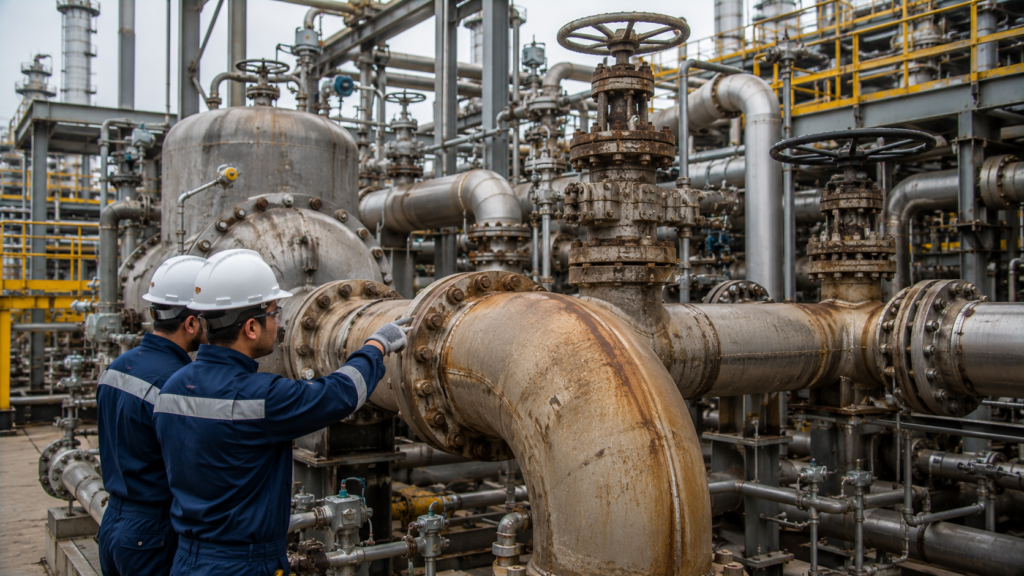
Corrosion behaviour is influenced by flow patterns, temperature, fluid composition, water presence, pressure, and operating conditions.
We help evaluate:
This helps support corrosion management and asset integrity decisions.

We help reduce wear risk through geometry optimization, material guidance, and operating condition assessment.
We support optimization of:
This helps reduce erosion, corrosion, and wear risk while maintaining process performance.

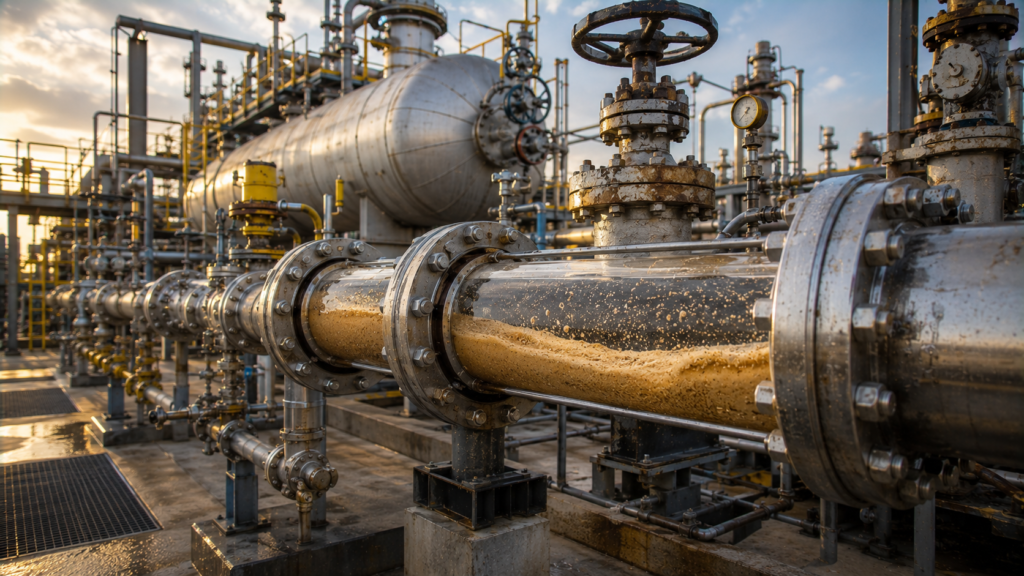
Sand and solid particles can cause severe localized erosion when they strike equipment surfaces at high velocity.
Experiqs helps analyze:
This helps identify vulnerable areas and improve equipment durability.
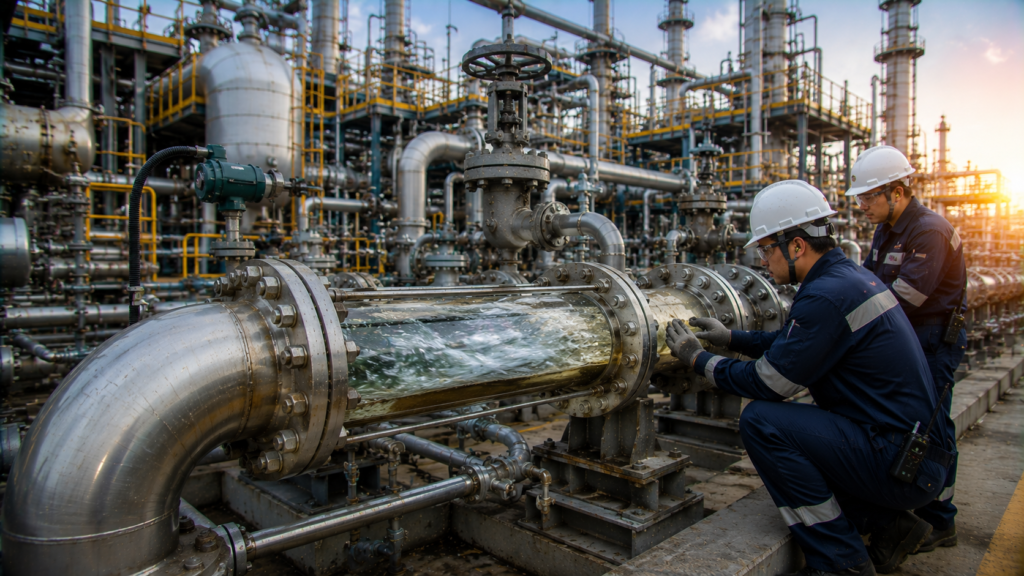
Flow velocity and wall shear stress strongly influence erosion, corrosion, and wear behaviour.
We analyze:
This helps understand how internal flow behaviour contributes to damage risk.
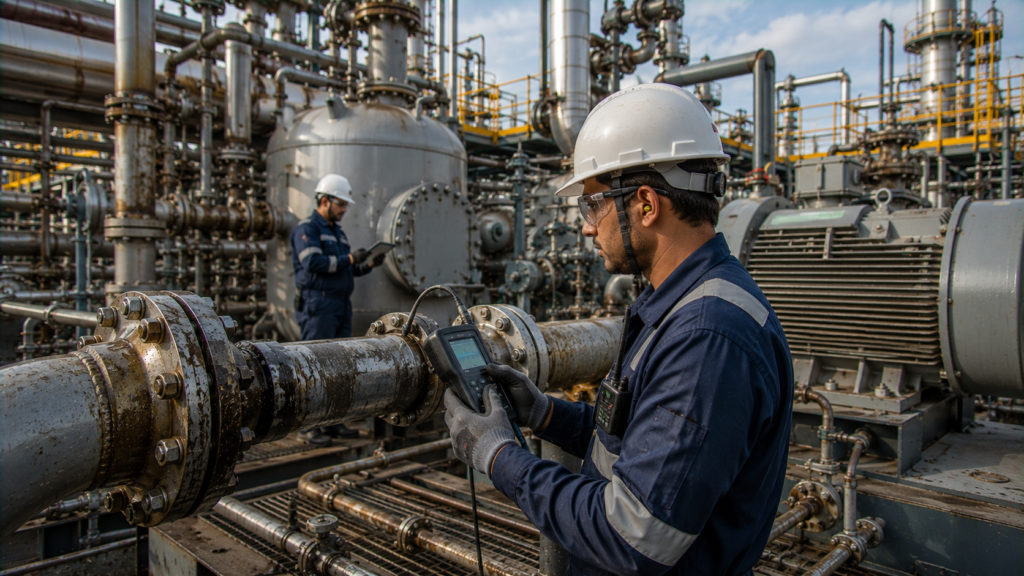
Erosion, corrosion, and wear prediction can support inspection planning, maintenance strategy, and life-extension decisions.
We help identify:
This helps reduce unplanned downtime and supports safer long-term operation.
Experiqs helps oil and gas operators, EPC teams, refinery teams, and equipment manufacturers address erosion, corrosion, and wear challenges, including:
Locate erosion, corrosion, and wear-prone regions before they cause leakage, failure, or shutdown.
Understand how flow velocity, particles, temperature, and operating conditions affect long-term equipment reliability.
Identify priority inspection locations and high-risk components for more effective maintenance planning.
Use CFD-based insights to reduce particle impact, high-velocity flow damage, and localized wall thinning.
Improve geometry, material selection, and operating conditions to reduce damage risk while maintaining performance.
Reduce degradation risks and support safer, more reliable oil and gas asset operation.
Our Erosion, Corrosion & Wear Prediction service is suitable for:
Experiqs combines CFD simulation, particle tracking, erosion prediction, corrosion risk support, flow analysis, and asset integrity engineering to help oil and gas teams reduce damage-related risks.
Our strength lies in identifying hidden damage mechanisms caused by flow behaviour, particle impact, high velocity regions, stagnation, and operating conditions. We help clients understand where erosion and corrosion risks are likely to occur and how design or operating changes can reduce long-term asset damage.
By validating damage risk virtually before failure occurs, Experiqs helps oil and gas teams improve reliability, reduce downtime, support inspection planning, and extend the life of critical assets.
Identify erosion-prone regions, corrosion-sensitive zones, wear risks, and high-impact flow areas with Experiqs’ Erosion, Corrosion & Wear Prediction services.
Talk to our experts to assess your oil and gas assets and identify practical opportunities for safer operation, stronger integrity, and longer equipment life.
Partner with Experiqs to transform complex ideas into validated, industry-ready engineering solutions
Discover how to partner with Experiqs and get started quickly
Whether you’re exploring a new R&D initiative, seeking advanced simulations, planning experimental validation, or evaluating product feasibility—our experts are ready to assist you.
