
More results...
More results...
Vehicle aerodynamic performance has a direct impact on drag, lift, stability, cooling airflow, energy consumption, driving range, and overall vehicle efficiency. For passenger vehicles, commercial vehicles, electric vehicles, two-wheelers, buses, trucks, and mobility platforms, external airflow behavior strongly affects both performance and reliability.
Vehicle Aerodynamics & External Flow Engineering helps automotive and electric mobility teams understand how air moves around the vehicle body, underbody, wheels, mirrors, spoilers, ducts, cooling openings, and external attachments. By using CFD simulation and aerodynamic design optimization, Experiqs helps reduce drag, improve stability, manage lift, and optimize airflow interaction with cooling and thermal systems.
Experiqs provides Vehicle Aerodynamics & External Flow Engineering services for automotive OEMs, EV manufacturers, mobility startups, component developers, and engineering teams. We use external CFD analysis, drag and lift evaluation, pressure distribution studies, flow separation analysis, crosswind behavior assessment, underbody flow optimization, and cooling airflow interaction studies to improve vehicle performance and energy efficiency.
Aerodynamics is one of the key factors influencing vehicle efficiency, especially for electric vehicles where lower drag directly supports better driving range and reduced energy consumption. Poor external flow behavior can increase drag, reduce stability, create lift imbalance, generate wind noise, disturb cooling airflow, and reduce vehicle efficiency.
Airflow around a vehicle is affected by body shape, front-end design, roofline, rear wake, wheel arch flow, underbody flow, mirrors, spoilers, ducts, grilles, cooling inlets, and aerodynamic attachments. Even small geometry changes can influence pressure distribution, wake size, separation zones, and airflow delivery to cooling systems.
For EVs and modern vehicles, aerodynamics is closely linked with thermal management. External airflow affects radiator airflow, brake cooling, HVAC intake performance, underhood cooling, battery cooling airflow paths, and EV thermal system efficiency.
CFD-based external flow analysis helps visualize airflow behavior, identify drag sources, evaluate lift balance, study crosswind response, and test design improvements before physical prototyping or wind tunnel testing.
Experiqs helps automotive teams improve vehicle efficiency, aerodynamic stability, cooling performance, and design confidence through simulation-led engineering.
We simulate airflow around vehicles to evaluate aerodynamic performance and external flow behavior under realistic operating conditions.
Our analysis helps assess:
This helps identify aerodynamic losses and improve vehicle efficiency and stability.
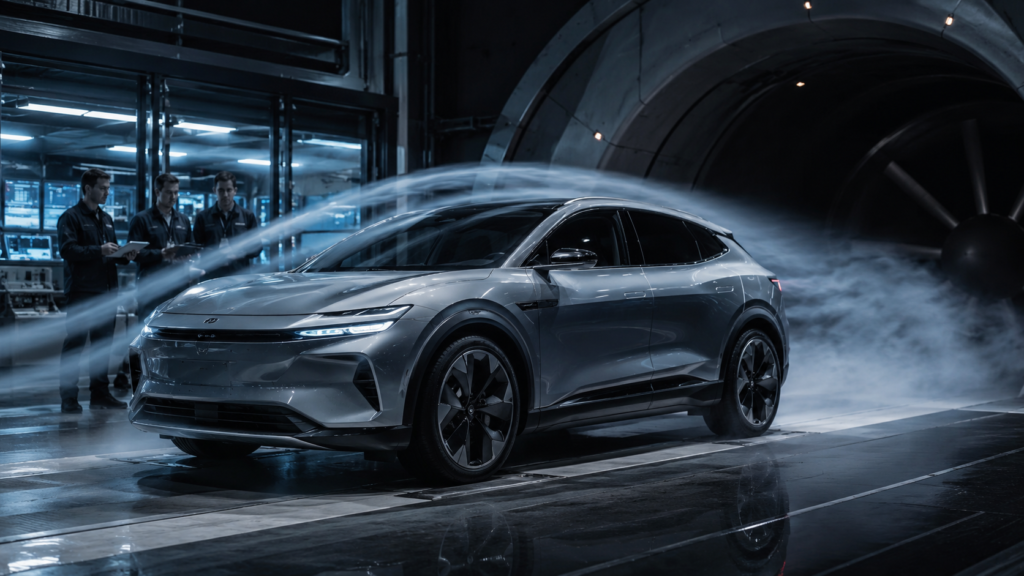
Drag and lift directly influence vehicle energy consumption, handling stability, and high-speed performance.
We help optimize:
This helps reduce aerodynamic drag, manage lift balance, and improve overall vehicle efficiency.

External airflow strongly affects how effectively air reaches cooling systems and thermal management components.
Experiqs helps analyze:
This helps improve cooling system performance without compromising aerodynamic efficiency.

Underbody airflow can be a major contributor to drag, lift, turbulence, and vehicle stability.
We help evaluate:
This helps improve aerodynamic efficiency and vehicle stability.

Crosswind conditions can affect vehicle handling, side force, yaw moment, and driver confidence, especially for high-profile vehicles and lightweight EV platforms.
We analyze:
This helps improve stability and safety under real driving conditions.
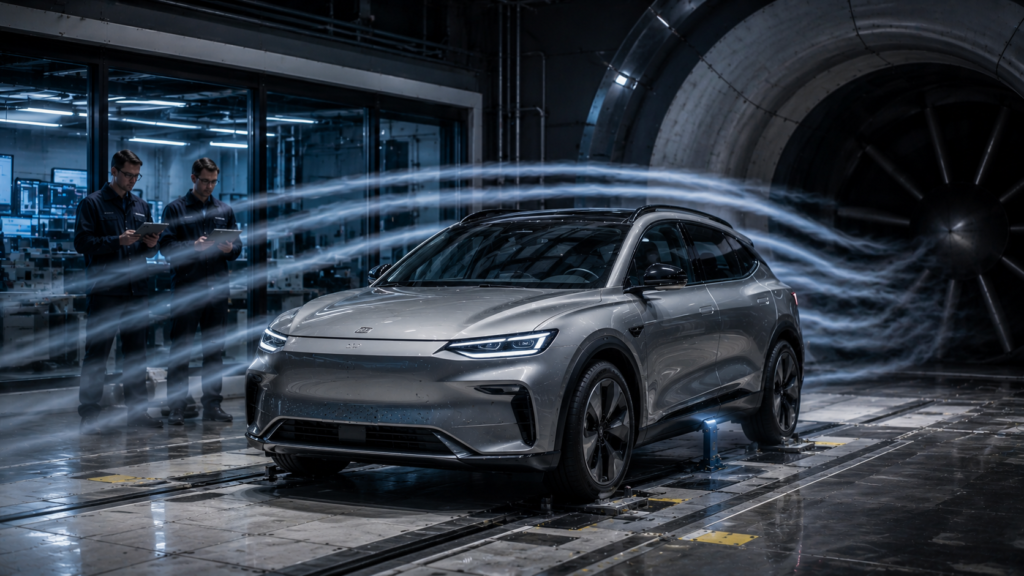
Aerodynamic devices and external features can improve or reduce vehicle performance depending on how they interact with the complete flow field.
We support optimization of:
This helps improve aerodynamic performance while supporting styling, cooling, and packaging requirements.

Experiqs helps automotive OEMs, EV manufacturers, mobility startups, and engineering teams address aerodynamic and external flow challenges, including:
Identify and reduce drag sources to improve vehicle efficiency, fuel economy, and EV driving range.
Evaluate lift, downforce, side force, yaw moment, and crosswind behavior for better road stability.
Improve airflow delivery to radiators, brakes, HVAC intakes, underhood systems, and EV thermal components.
Use CFD simulation to evaluate aerodynamic design changes before prototype manufacturing or wind tunnel testing.
Reduce aerodynamic losses and support better energy performance for ICE, hybrid, and electric vehicles.
Compare body shapes, underbody concepts, ducts, spoilers, mirrors, and attachments with simulation-backed insights.
Experiqs combines CFD simulation, automotive aerodynamics, thermal engineering, external flow analysis, and design optimization expertise to improve vehicle performance and energy efficiency.
Our strength lies in connecting aerodynamic behavior with real product requirements such as drag reduction, stability, cooling airflow, EV range, packaging, and manufacturability. We help automotive teams understand where aerodynamic losses occur, how airflow affects cooling performance, and which design changes can improve overall vehicle efficiency.
By validating external flow behavior virtually, Experiqs helps clients reduce prototype iterations, improve design confidence, support EV efficiency goals, and make better engineering decisions before physical testing.
Reduce drag, manage lift, improve crosswind stability, and optimize cooling airflow interaction with Experiqs’ Vehicle Aerodynamics & External Flow Engineering services.
Talk to our experts to evaluate your vehicle design and identify practical opportunities for better aerodynamic performance, improved energy efficiency, and stronger thermal airflow management.
Partner with Experiqs to transform complex ideas into validated, industry-ready engineering solutions
Discover how to partner with Experiqs and get started quickly
Whether you’re exploring a new R&D initiative, seeking advanced simulations, planning experimental validation, or evaluating product feasibility—our experts are ready to assist you.
