
More results...
More results...
Thermal Energy Storage, or TES tanks, and buffer tanks play an important role in chilled water systems, data centers, district cooling plants, industrial cooling networks, and mission-critical infrastructure. These tanks help manage cooling demand fluctuations, support system stability, improve plant response, and provide backup cooling capacity during transient operating conditions.
However, tank performance depends on how effectively water flows, mixes, stratifies, charges, and discharges inside the tank. Poor internal flow distribution, excessive mixing, weak thermal stratification, incorrect diffuser design, or thermal stress can reduce usable storage capacity and affect cooling reliability.
Experiqs provides simulation-driven TES Tank & Buffer Tank Transient Analysis services using CFD-based flow simulation, transient thermal modelling, heat transfer analysis, and structural response assessment. We help data center operators, consultants, EPC teams, MEP designers, facility owners, and plant operators validate tank performance under real operating conditions.
TES tanks and buffer tanks are often designed to provide temperature stability and cooling resilience. But actual performance can vary significantly depending on tank geometry, inlet and outlet arrangement, diffuser design, flow rate, load variation, charging strategy, discharging strategy, and operating controls.
If the tank experiences unwanted mixing, thermal short-circuiting, or poor stratification, the system may lose effective storage capacity. This can lead to unstable supply water temperature, reduced cooling availability, increased chiller cycling, poor plant efficiency, and unreliable cooling during peak load or emergency conditions.
Experiqs helps teams move from assumption-based tank design to data-driven performance validation by simulating transient tank behavior, fluid movement, temperature variation, stratification quality, heat transfer, phase change behavior, and structural response under different operating scenarios.
We perform transient thermal simulations to evaluate how tank temperature changes over time during charging, discharging, standby, and load variation conditions.
Our transient thermal modelling helps assess:
This helps validate whether the TES or buffer ta
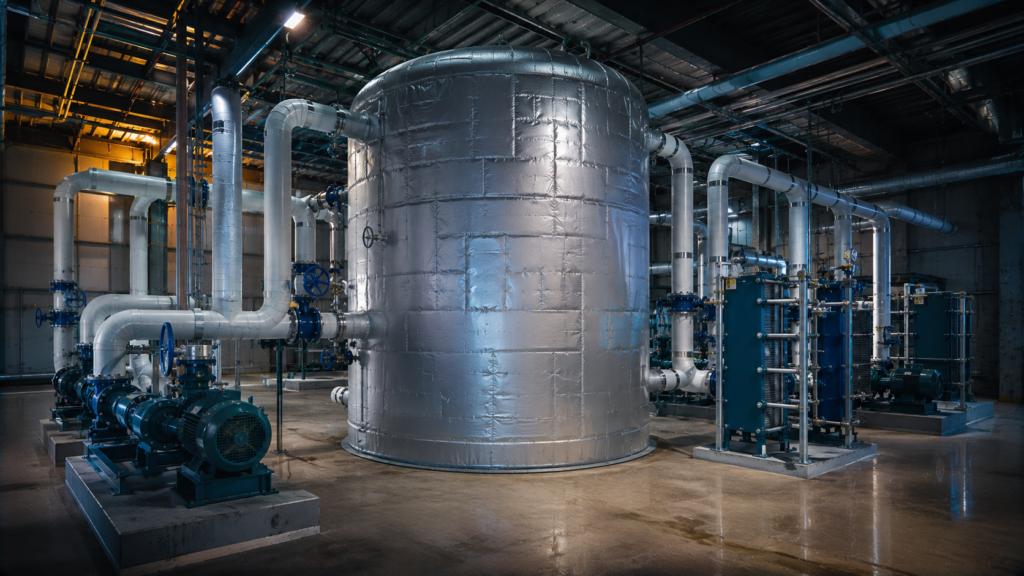
Experiqs uses CFD simulation to study fluid movement, thermal behavior, and heat transfer inside TES tanks and buffer tanks.
We analyze:
This helps improve tank design, reduce unwanted mixing, and support more effective cooling storage operation.
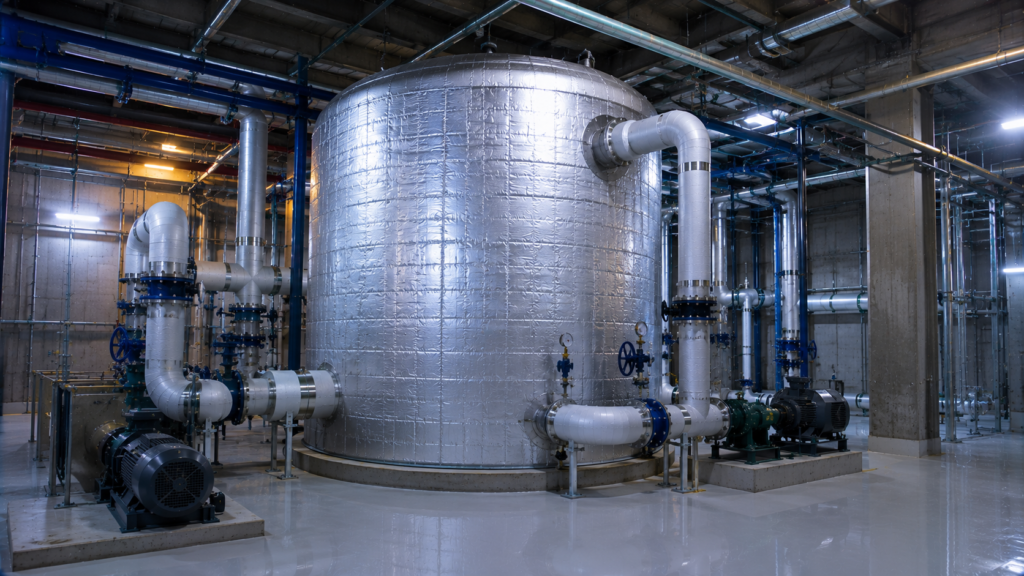
Thermal stratification is critical for TES tank performance. A well-stratified tank maintains separation between warmer and cooler water layers, improving usable storage capacity and supply temperature control.
We help evaluate:
The outcome is improved storage effectiveness and better chilled water temperature control.
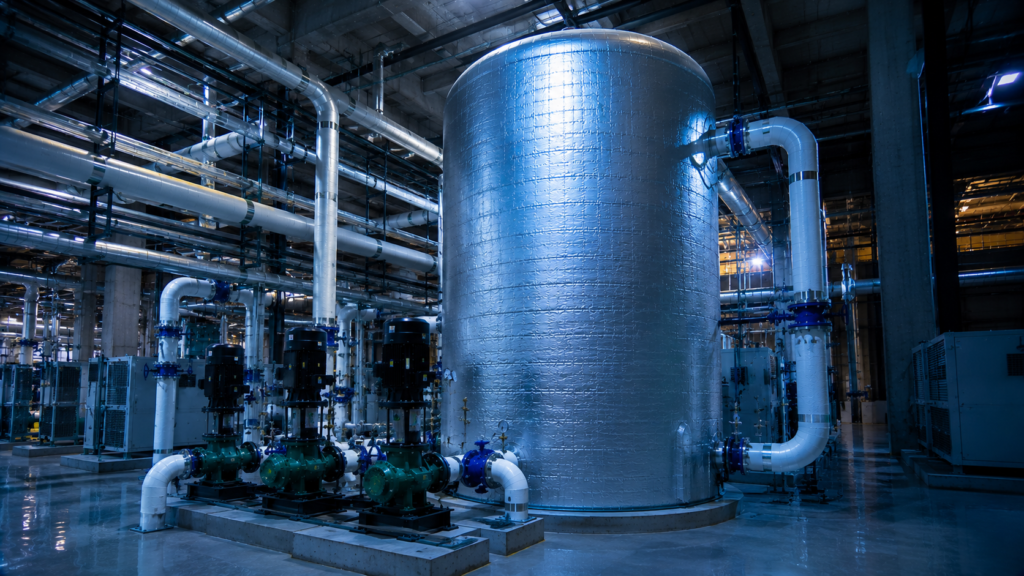
TES and buffer tanks must perform reliably across different operating modes. Experiqs evaluates charging and discharging behavior to understand whether the tank can meet system demand.
We assess:
This helps facility teams optimize tank operation and improve chilled water system reliability.
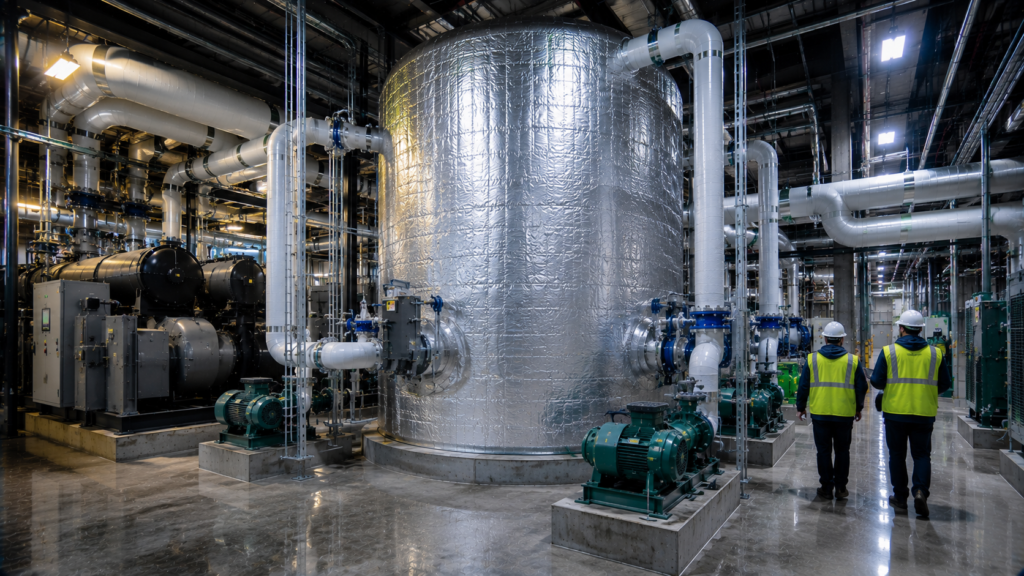
For tanks using phase change materials or specialized thermal storage media, Experiqs evaluates thermal response and energy storage behavior under transient conditions.
We analyze:
This helps validate advanced TES concepts and improve long-term thermal storage performance.
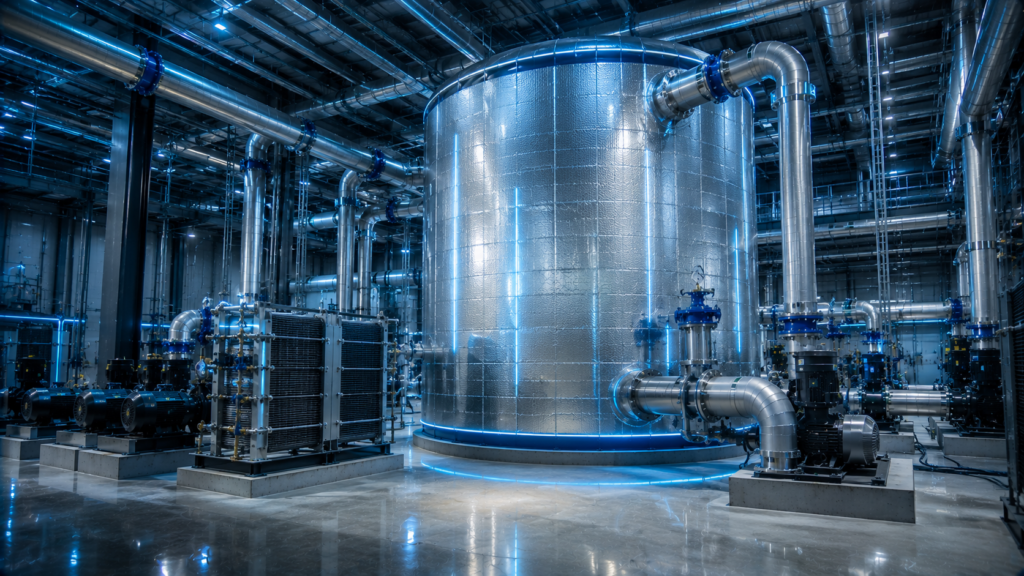
TES tanks and buffer tanks are exposed to thermal gradients, pressure variation, operating loads, and long-term cyclic conditions. Experiqs supports structural response assessment to identify reliability risks.
We evaluate:
This helps improve tank durability and reduce the risk of structural issues during operation.
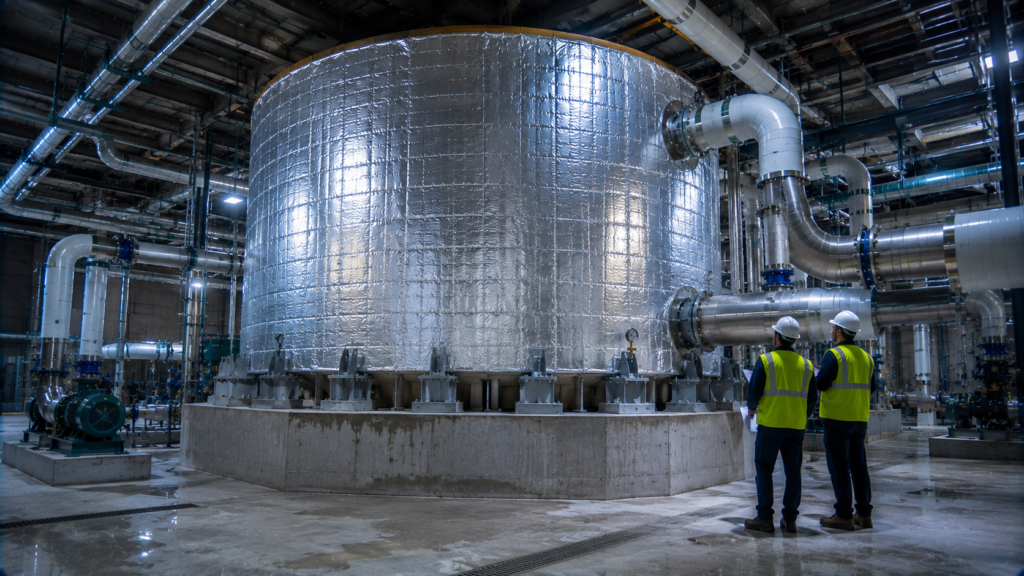
Experiqs helps data center and critical infrastructure teams address TES tank and buffer tank challenges, including:
Validate how effectively the tank stores and delivers cooling energy during real operating conditions.
Maintain more stable chilled water supply temperatures during load variation and transient operation.
Understand how long the tank can support cooling demand during peak load, plant transition, or emergency conditions.
Improve diffuser design, inlet and outlet placement, flow distribution, and internal thermal behavior
Identify mixing, stratification loss, thermal short-circuiting, and structural stress risks before implementation.
Use CFD and transient simulation results to support design validation, retrofit planning, and operational strategy.
Our TES Tank & Buffer Tank Transient Analysis service is suitable for:
Experiqs follows a simulation-led workflow to evaluate TES tank and buffer tank performance.
We review tank geometry, volume, height, inlet and outlet details, diffuser design, pipe connections, flow rates, operating temperatures, cooling loads, control philosophy, and charging/discharging sequences.
A detailed transient model is developed to represent tank geometry, internal flow behavior, heat transfer, temperature gradients, stratification, and operating cycles.
We evaluate the existing or proposed tank performance, including temperature distribution, mixing behavior, stratification quality, charging time, discharging time, and usable cooling capacity.
Multiple operating conditions are tested, including peak load, part load, standby mode, emergency cooling, high flow operation, partial charging, partial discharging, and system recovery.
Where required, tank thermal gradients and operating loads are evaluated to assess stress zones, expansion effects, and long-term reliability risks.
We provide practical recommendations for diffuser design, inlet and outlet configuration, flow control, tank sizing, operating strategy, thermal insulation, and structural reliability improvement.
Experiqs combines CFD simulation, thermal engineering, hydraulic modelling, structural analysis, system modelling, and digital twin expertise to solve complex cooling infrastructure challenges.
Our strength lies in understanding how water flow, temperature gradients, tank geometry, heat transfer, operating cycles, and structural response interact over time. We convert complex transient tank behavior into clear engineering insights that help clients improve cooling stability, storage performance, and long-term reliability.
By validating TES tank and buffer tank performance before construction, commissioning, retrofit, or expansion, Experiqs helps facility teams reduce operational risk and improve chilled water system resilience.
Improve thermal storage effectiveness, maintain chilled water temperature stability, reduce mixing losses, and strengthen cooling reliability with Experiqs’ TES Tank & Buffer Tank Transient Analysis services.
Talk to our experts to evaluate your TES tank or buffer tank design and identify practical opportunities for thermal, hydraulic, and structural performance improvement.
Partner with Experiqs to transform complex ideas into validated, industry-ready engineering solutions
Discover how to partner with Experiqs and get started quickly
Whether you’re exploring a new R&D initiative, seeking advanced simulations, planning experimental validation, or evaluating product feasibility—our experts are ready to assist you.
