
More results...
More results...
Robotic and autonomous systems rely on accurate sensing to understand their surroundings, locate themselves, plan movement, avoid obstacles, and make reliable decisions. Cameras, LiDAR, radar, IMUs, GPS, encoders, proximity sensors, ultrasonic sensors, and other sensing inputs must work together to provide a consistent and trustworthy view of the environment.
Sensor Fusion & Environment Mapping helps robotics teams improve perception reliability, localization accuracy, mapping quality, and autonomous decision-making. By evaluating sensor integration, data consistency, calibration, drift, noise, and mapping performance, Experiqs helps reduce uncertainty in robotic perception and navigation systems.
Experiqs provides Sensor Fusion & Environment Mapping services for autonomous robots, AMRs, AGVs, drones, UAVs, autonomous vehicles, inspection robots, warehouse robots, service robots, and intelligent mobility platforms. We support multi-sensor integration, localization and mapping support, sensor data consistency analysis, sensor calibration validation, sensor drift detection, environment mapping improvement, and autonomy performance evaluation.
Autonomous systems cannot operate reliably if they do not understand their environment correctly. A single sensor may be affected by lighting, dust, vibration, weather, reflective surfaces, occlusion, range limits, field-of-view limitations, signal noise, or calibration errors. Sensor fusion helps reduce this dependency by combining multiple sensing inputs into a more reliable perception and navigation system.
However, combining sensor data is not simple. Different sensors may produce data at different rates, resolutions, coordinate frames, noise levels, and accuracy ranges. If sensor alignment, calibration, synchronization, or filtering is weak, the robot may misinterpret its surroundings, lose localization accuracy, detect false obstacles, miss real hazards, or make unstable movement decisions.
Environment mapping is equally important. Robots operating in warehouses, factories, outdoor sites, inspection areas, public spaces, or mission environments need maps that remain useful under changing conditions. Poor mapping can lead to navigation errors, route failure, obstacle confusion, or reduced mission reliability.
Experiqs helps robotics teams evaluate how sensor inputs behave together, where data mismatch occurs, and how perception and mapping workflows can be improved for safer and more reliable autonomous operation.
We support integration of camera, LiDAR, radar, IMU, GPS, encoder, ultrasonic, and proximity sensor data for reliable robotic perception.
Our analysis helps assess:
This helps improve situational awareness and reduce perception-related uncertainty.
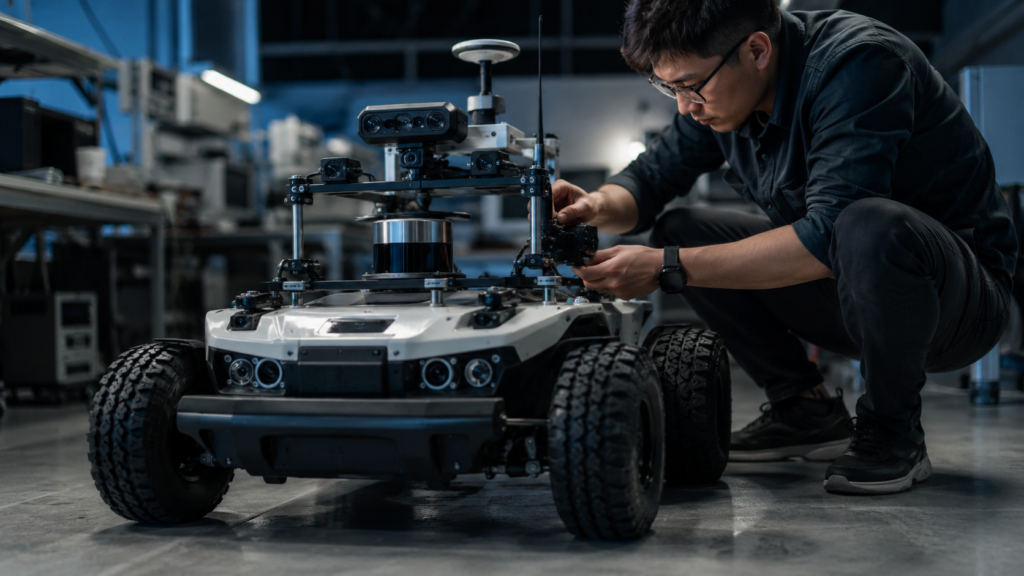
We improve robot positioning, navigation reliability, and environment understanding through mapping and localization support.
Experiqs helps evaluate:
This helps improve autonomous movement and mission success.
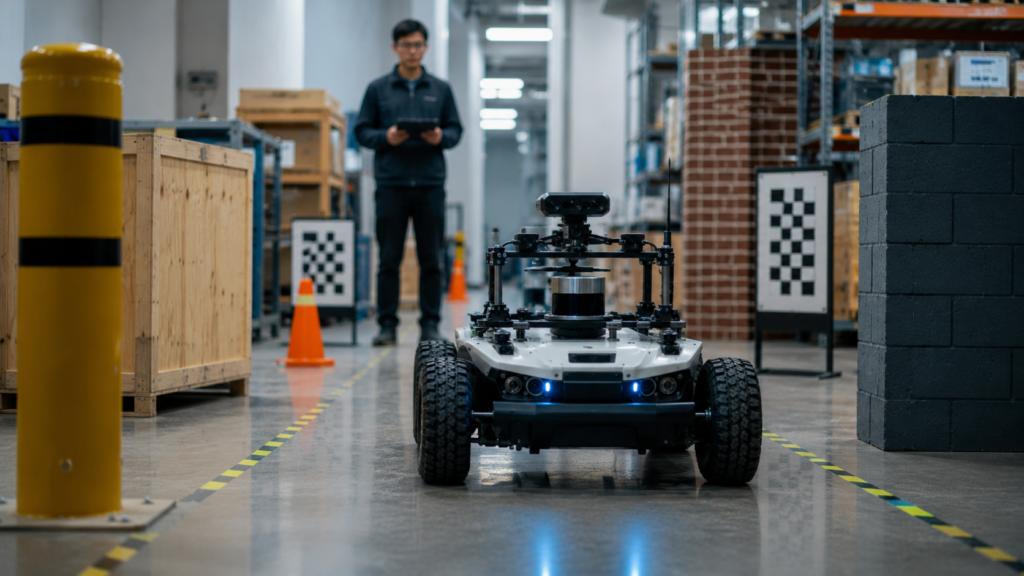
We identify sensor mismatch, drift, noise, and calibration issues that affect autonomy performance.
We help detect:
This helps reduce perception errors and improve autonomous decision-making.
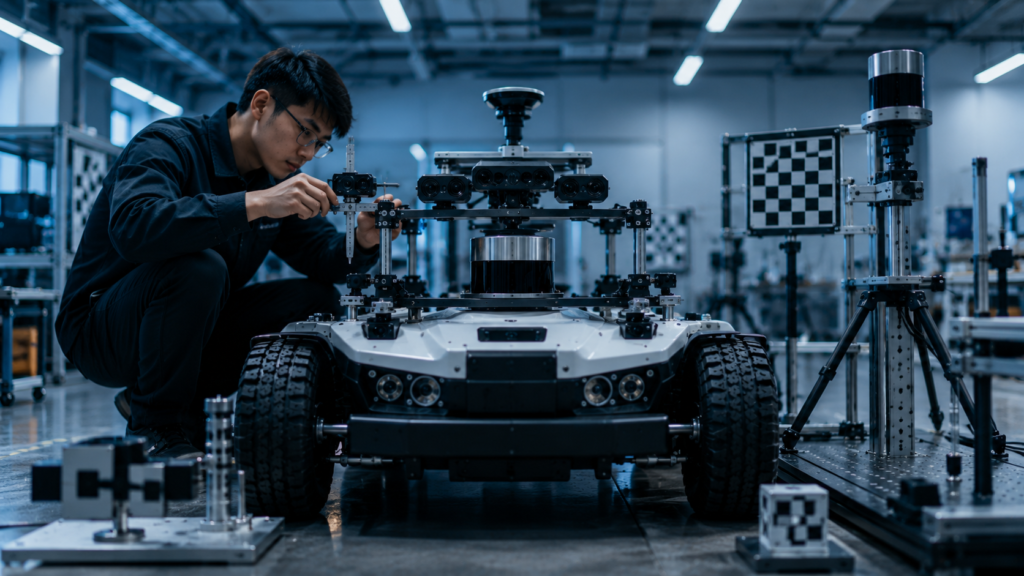
Accurate calibration is essential for reliable sensor fusion and mapping.
We help assess:
This helps improve perception accuracy and reduce long-term reliability issues.
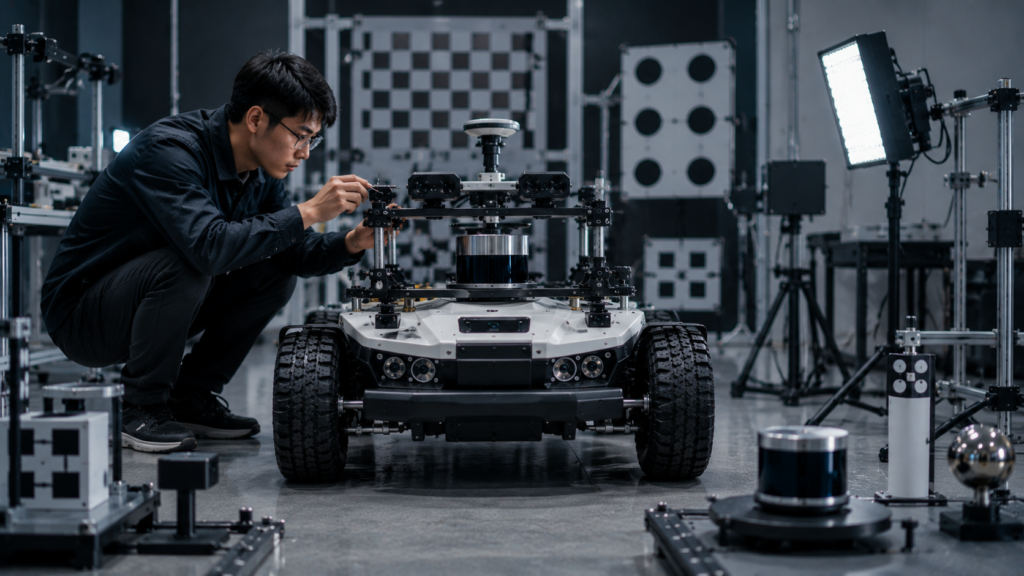
Robots need reliable maps and obstacle understanding to navigate safely and complete missions.
We support evaluation of:
This helps improve route planning, obstacle avoidance, and mission execution.
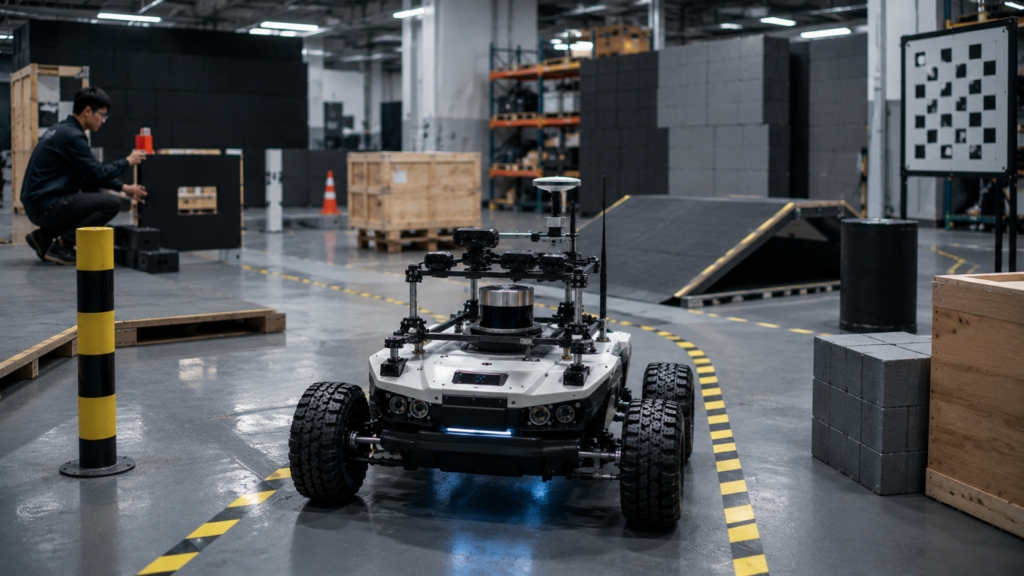
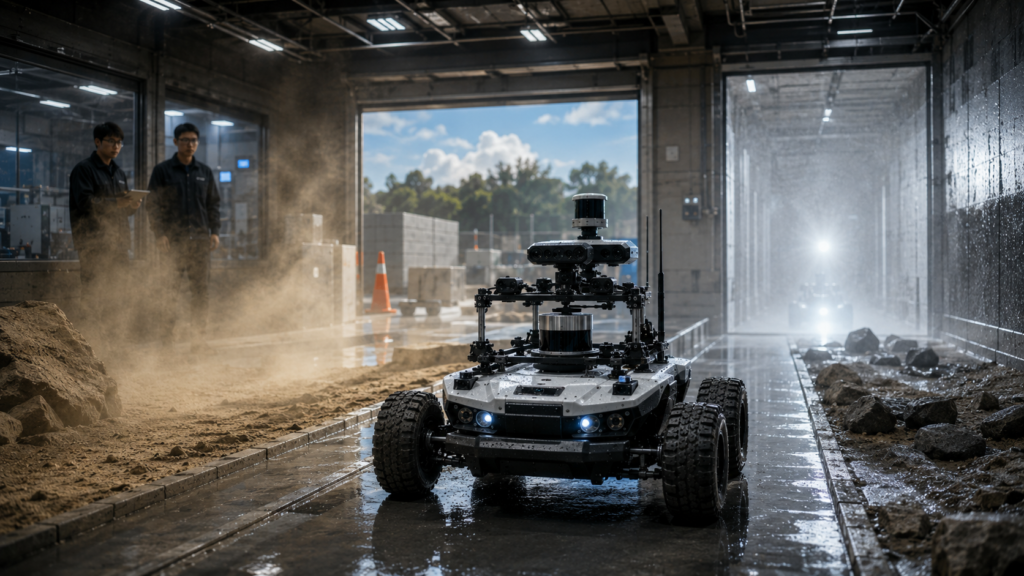
Sensor performance can change significantly across operating environments.
We help evaluate perception performance under:
This helps improve perception robustness before field deployment.
Experiqs helps robotics and autonomous system teams address sensor fusion and mapping challenges, including:
Combine multiple sensing inputs to improve robot understanding of its environment.
Enhance robot positioning, map accuracy, navigation reliability, and environment representation.
Identify calibration, drift, noise, mismatch, and synchronization issues before field deployment.
Improve obstacle understanding, free-space detection, and navigation confidence in complex environments.
Improve the quality of sensor inputs used for path planning, control, obstacle avoidance, and mission execution.
Use engineering-led analysis to validate sensor fusion and mapping workflows before real-world deployment.
Experiqs combines robotics engineering, AI/ML support, sensor data analysis, simulation-led validation, system integration, and autonomous platform understanding to improve sensor fusion and environment mapping performance.
Our strength lies in connecting sensing behaviour with real robot operation. We help teams understand how sensor placement, calibration, drift, noise, environment conditions, and data fusion affect autonomous decision-making.
By validating sensing and mapping workflows early, Experiqs helps robotics teams improve perception reliability, reduce deployment risk, strengthen navigation performance, and make better system-level engineering decisions.
Optimize multi-sensor integration, localization, mapping, calibration, data consistency, obstacle understanding, and perception reliability with Experiqs’ Sensor Fusion & Environment Mapping services.
Talk to our experts to evaluate your sensing architecture and identify practical opportunities for better situational awareness, safer navigation, and stronger autonomous performance.
Partner with Experiqs to transform complex ideas into validated, industry-ready engineering solutions
Discover how to partner with Experiqs and get started quickly
Whether you’re exploring a new R&D initiative, seeking advanced simulations, planning experimental validation, or evaluating product feasibility—our experts are ready to assist you.
