
More results...
More results...
Data centers and mission-critical facilities must remain operational during extreme weather, heavy rainfall, drainage overflow, surface water flooding, and changing environmental conditions. Even limited water ingress or poor site drainage can threaten electrical rooms, generator yards, chiller plants, fuel systems, utility corridors, access roads, and critical infrastructure assets.
Flood risk is not only a civil engineering concern. It directly affects uptime, safety, asset protection, emergency access, and long-term operational resilience.
Experiqs provides simulation-driven Flood Risk & Site Resilience Assessment services using hydraulic modelling, hydrological analysis, terrain evaluation, flood mapping, and mitigation planning. We help data center operators, consultants, EPC teams, facility owners, developers, and infrastructure planners understand flood exposure and develop practical strategies to reduce site vulnerability.
Critical facilities are often built with high-value equipment, dense utility networks, and limited tolerance for disruption. Flooding around a data center site can affect power systems, cooling infrastructure, emergency generators, fuel storage, access routes, drainage networks, and building entrances.
Traditional site reviews may not fully capture how water moves across terrain during intense rainfall, blocked drainage, nearby runoff, or extreme storm events. Low-lying zones, poor grading, undersized drainage systems, and unprotected utility yards can create hidden risks.
Experiqs helps teams move from basic flood checks to data-driven resilience planning by modelling flood flow behavior, drainage capacity, water movement, topographic vulnerability, exposure zones, and mitigation options around mission-critical sites.
We perform hydraulic and hydrological modelling to estimate rainfall runoff, flood flow behavior, drainage performance, and water movement around critical infrastructure sites.
Our modelling helps assess:
This helps identify how floodwater may move across the site and which assets may be exposed.
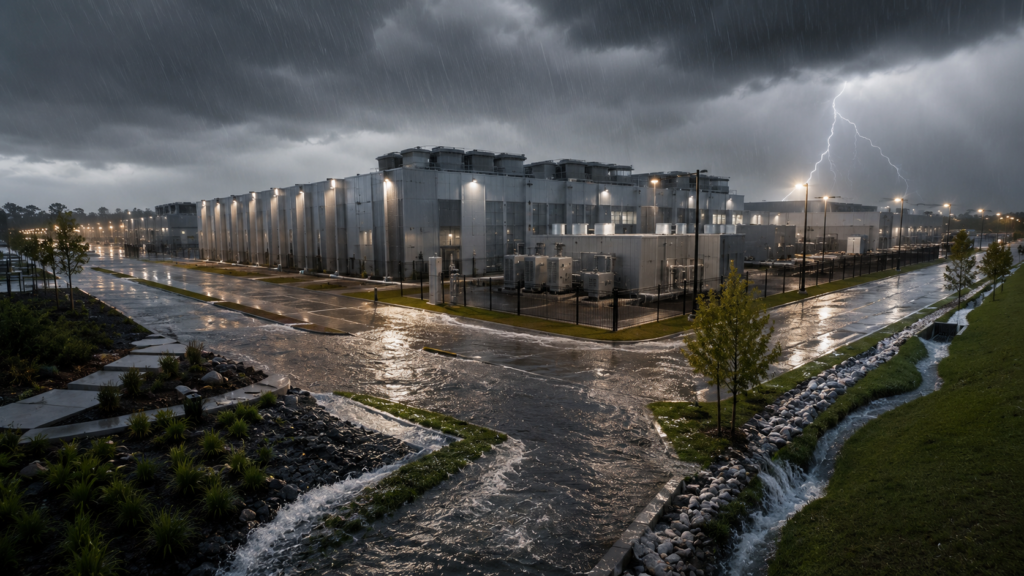
Site elevation and terrain shape strongly influence flood exposure. Experiqs uses DEMs, LiDAR data, terrain maps, grading information, and elevation studies to understand site vulnerability.
We analyze:
This helps planning teams understand how topography influences flood risk before design, construction, or expansion.
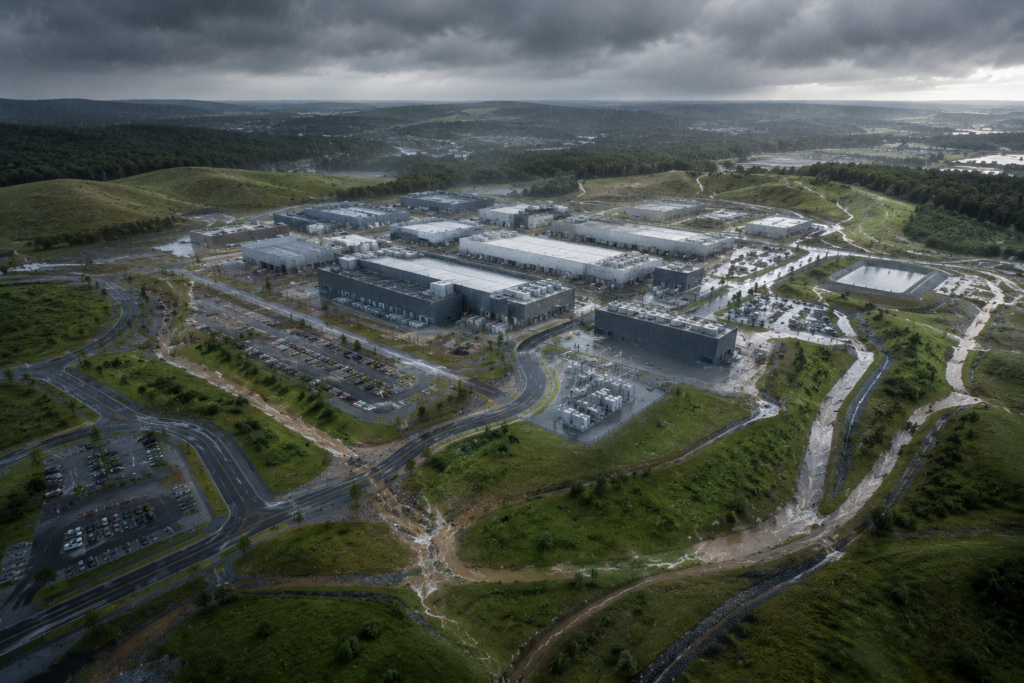
Flood risk mapping provides a clear visual understanding of exposure zones and helps prioritize mitigation planning.
Experiqs develops flood maps to identify:
This supports better site planning, emergency preparedness, and infrastructure protection.
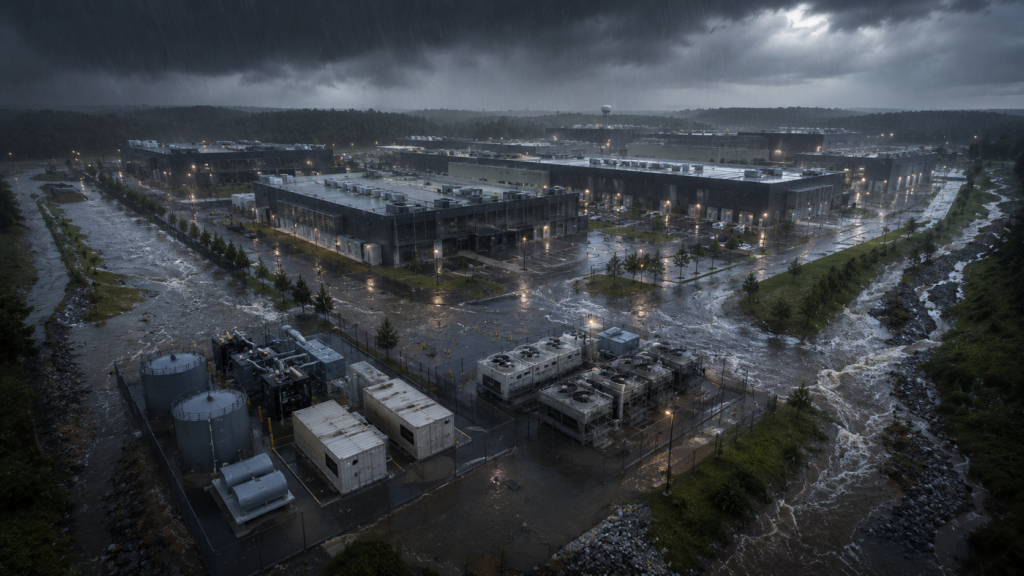
Drainage systems are essential for controlling flood risk around mission-critical facilities. Experiqs evaluates stormwater networks, surface gradients, catchment behavior, and drainage discharge performance.
We assess:
This helps reduce water accumulation and improve site-level flood control.
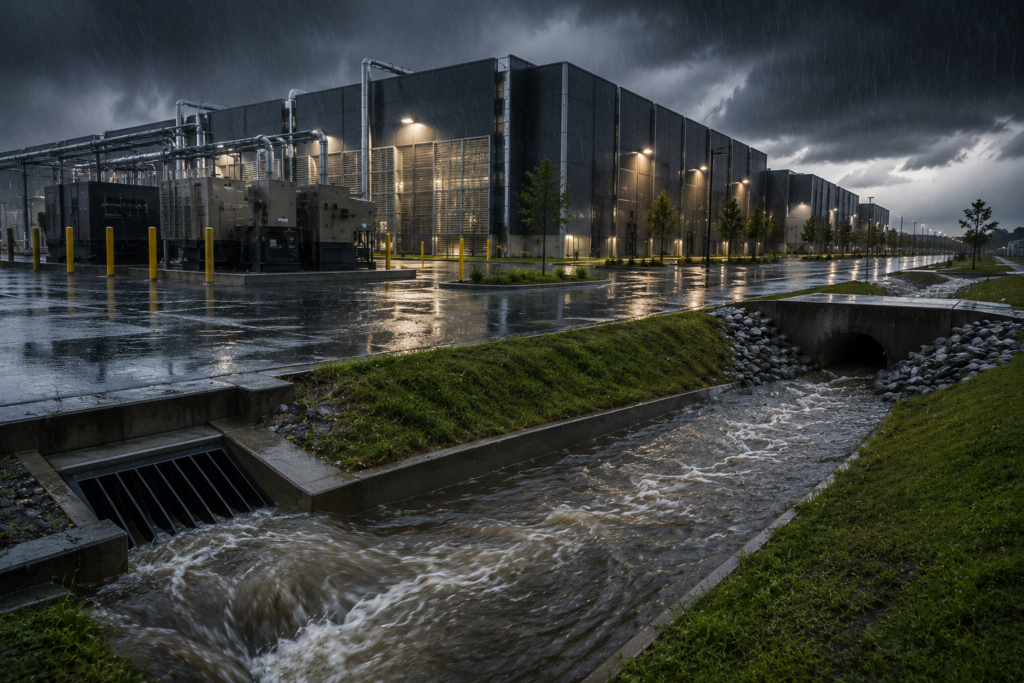
Flood risk must be evaluated around the equipment and infrastructure that directly support uptime. Experiqs identifies how flooding may affect critical assets and operational continuity.
We evaluate exposure around:
This helps prioritize protection measures for the most critical site assets.

Experiqs supports practical flood mitigation planning by evaluating how design improvements can reduce risk and improve site resilience.
We help assess and optimize:
Our recommendations help reduce flood exposure while supporting safe and reliable facility operation.
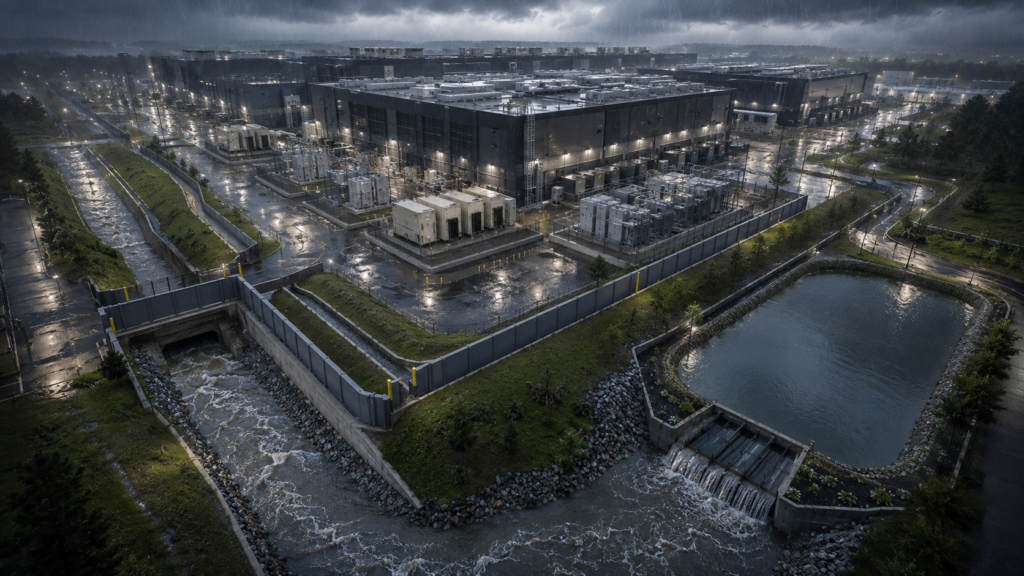
Experiqs helps data center and critical infrastructure teams address flood and site resilience challenges, including:
Understand how the site responds to rainfall, runoff, drainage overflow, and flood events.
Identify flood exposure around electrical, cooling, power, and utility infrastructure.
Use flood maps and terrain analysis to understand high-risk zones and water movement paths.
Evaluate drainage capacity, surface grading, runoff behavior, and stormwater management performance.
Protect uptime by identifying flood vulnerabilities before they affect mission-critical systems.
Compare mitigation strategies and prioritize practical improvements using simulation-backed evidence.
Our Flood Risk & Site Resilience Assessment service is suitable for:
Experiqs follows a simulation-led workflow to evaluate flood risk and site resilience.
We review site layout, topographic survey data, DEMs, LiDAR data, drainage drawings, rainfall data, catchment boundaries, utility locations, building entrances, equipment elevations, and historical flood information where available.
We evaluate site elevation, slope, low-lying areas, runoff pathways, contributing catchments, and likely water accumulation zones.
A detailed model is developed to represent rainfall-runoff response, surface water movement, drainage capacity, flow paths, and site-level flood behavior.
Multiple rainfall and flood scenarios are tested, including peak storm events, drainage overload, blocked drain conditions, runoff from adjacent areas, and future site development conditions.
We develop flood maps and assess risk to buildings, access roads, generator yards, chiller plants, electrical systems, and utility infrastructure.
We provide practical recommendations for grading, drainage, barriers, asset elevation, site layout improvement, access protection, and long-term resilience planning.
Experiqs combines hydraulic modelling, hydrological analysis, terrain assessment, CFD, system modelling, digital twin expertise, and critical infrastructure engineering to support resilient site planning.
Our strength lies in converting complex rainfall, runoff, terrain, drainage, and flood behavior into clear engineering insights. We help clients understand where water may accumulate, how it may move, which assets are exposed, and what actions can reduce operational risk.
By validating flood risk before construction, expansion, or resilience upgrades, Experiqs helps facility teams protect critical infrastructure, improve safety, and strengthen long-term uptime performance.
Protect critical assets, improve drainage performance, reduce flood exposure, and support safer site planning with Experiqs’ Flood Risk & Site Resilience Assessment services.
Talk to our experts to evaluate your site flood risk and identify practical mitigation opportunities for mission-critical infrastructure protection.
Partner with Experiqs to transform complex ideas into validated, industry-ready engineering solutions
Discover how to partner with Experiqs and get started quickly
Whether you’re exploring a new R&D initiative, seeking advanced simulations, planning experimental validation, or evaluating product feasibility—our experts are ready to assist you.
