
More results...
More results...
Oil and gas assets operate under changing flow rates, pressures, temperatures, fluid properties, production conditions, equipment loads, and process requirements. Pipelines, pumps, compressors, separators, heat exchangers, valves, flare systems, and process equipment must perform reliably while managing risks such as fouling, flow restriction, wear, corrosion, efficiency loss, and operational instability.
Digital Twin & Predictive Engineering helps oil and gas teams create virtual models that represent the real operating behaviour of pipelines, equipment, and process systems. These models can be used to monitor performance, predict degradation, test operating changes, evaluate failure scenarios, and support better maintenance and optimization decisions.
Experiqs provides Digital Twin & Predictive Engineering services for upstream, midstream, downstream, offshore, refinery, petrochemical, LNG, and process industry assets. We combine physics-based digital twins, data-driven models, CFD insights, thermal-flow analysis, system simulation, predictive monitoring, and scenario testing to improve reliability, efficiency, and asset performance.
Oil and gas systems rarely fail suddenly without warning. In many cases, performance degradation begins gradually through fouling, deposits, flow restriction, erosion, corrosion, equipment wear, heat transfer loss, pressure drop increase, vibration, or control instability.
Traditional monitoring may show that pressure, flow rate, temperature, or efficiency has changed, but it may not always explain why the change happened or what could happen next. Digital twin models help close this gap by connecting engineering knowledge with operating data.
A physics-based digital twin can represent flow behaviour, pressure response, thermal performance, equipment interaction, and operating limits. A data-driven model can track trends, detect abnormal behaviour, and support predictive maintenance decisions. Together, they help teams move from reactive troubleshooting to proactive performance management.
Experiqs helps oil and gas teams use digital twins and predictive engineering to identify early warning signs, compare operating strategies, reduce downtime risk, and improve long-term asset reliability.
We create models that represent the real operating behaviour of pipelines, equipment, and process systems.
Our digital twin models help assess:
This helps teams understand how oil and gas assets behave under real operating scenarios.
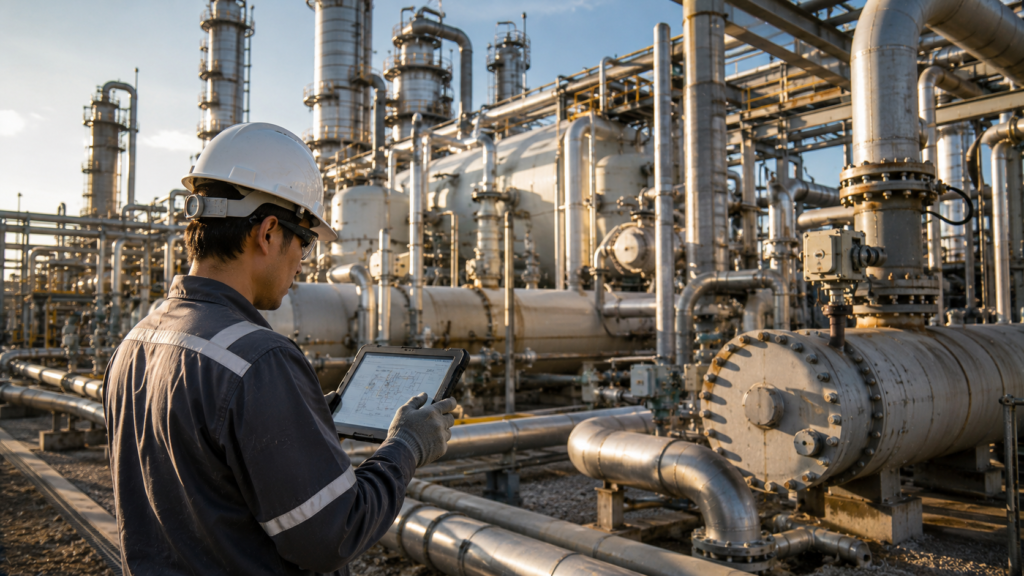
We identify early signs of fouling, flow restriction, wear, corrosion, efficiency loss, and abnormal operating behaviour.
Experiqs helps detect:
This helps support predictive maintenance and reduce unexpected downtime.
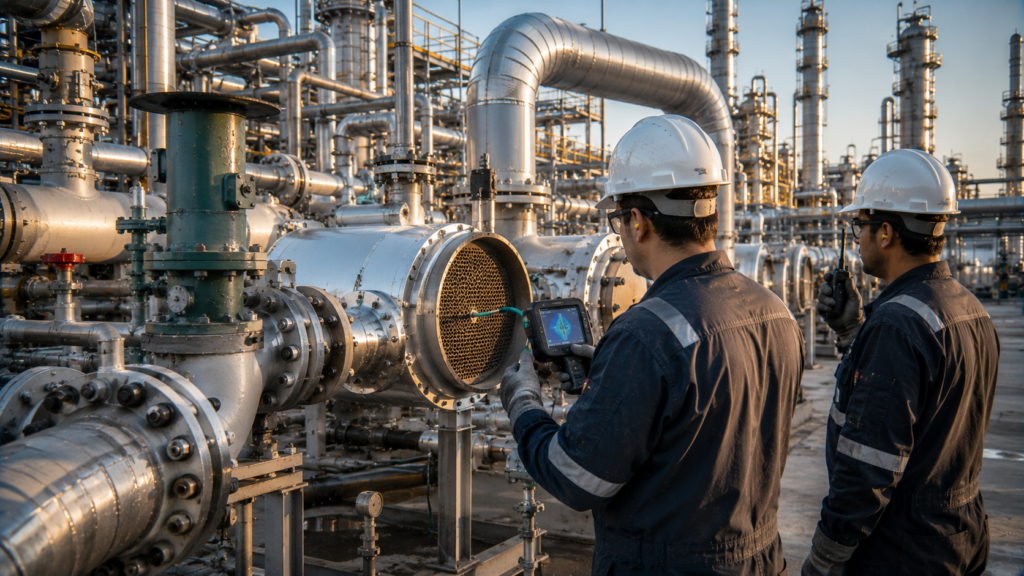
We test operating changes, failure scenarios, and performance improvement options before implementation.
We help simulate:
This helps teams compare decisions virtually before making changes in the field.
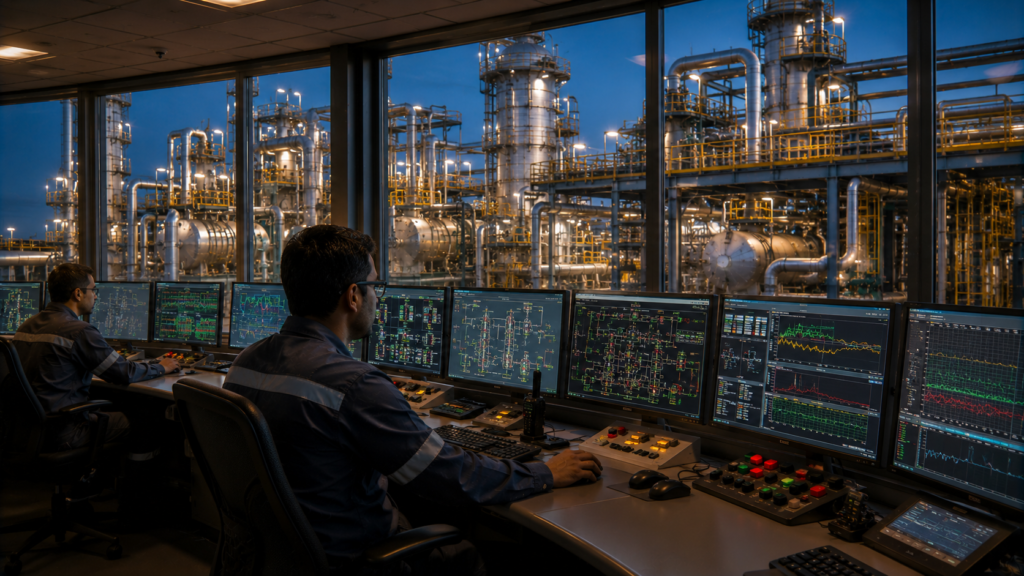
Operating data can reveal patterns that indicate performance drift, equipment degradation, or changing system behaviour.
We help evaluate:
This helps convert operating data into useful engineering insights.

Oil and gas equipment often interacts with pipelines, controls, process loads, and downstream systems. System-level modelling helps evaluate how the complete system behaves.
We analyze:
This helps optimize complete asset performance instead of only individual components.

Digital twins help engineering and operations teams make better decisions by comparing operating strategies, maintenance actions, and improvement options.
We support:
This helps improve long-term reliability, safety, and operating efficiency.
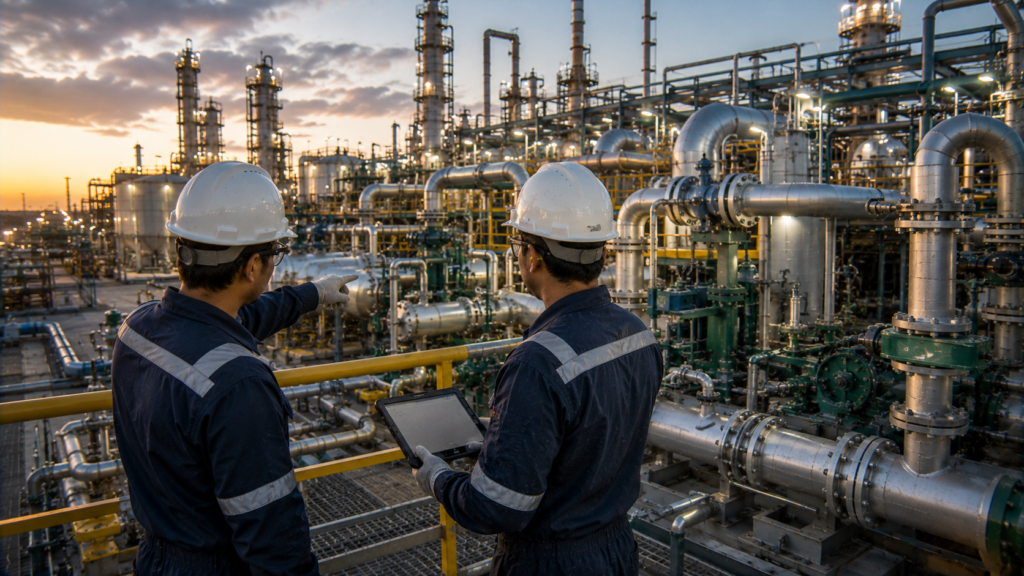
Experiqs helps oil and gas operators, EPC teams, refinery teams, offshore teams, and equipment manufacturers address digital twin and predictive engineering challenges, including:
Understand how pipelines, equipment, and process systems perform under real operating conditions.
Identify early signs of fouling, flow restriction, wear, corrosion, efficiency loss, and abnormal behaviour.
Use model-based and data-driven insights to support better inspection, maintenance, and reliability planning.
Test operating changes, failure cases, and performance improvements virtually before field implementation.
Optimize pressure drop, flow behaviour, energy use, thermal performance, and process stability.
Use physics-based and data-driven models to reduce uncertainty and support practical asset improvement decisions.
Our Digital Twin & Predictive Engineering service is suitable for:
Experiqs combines CFD simulation, thermal-flow analysis, system modelling, digital twin development, predictive engineering, and oil and gas asset performance expertise to help clients monitor, predict, and optimize critical systems.
Our strength lies in connecting physics-based engineering models with real operating data. We help clients understand what is happening, why performance is changing, and which actions can improve reliability, efficiency, and long-term asset health.
By using digital twins and predictive models, Experiqs helps oil and gas teams reduce downtime, improve maintenance planning, optimize performance, and make better operational decisions.
Monitor pipelines, equipment, and process systems with physics-based digital twins, data-driven models, degradation detection, and what-if scenario simulation.
Talk to our experts to evaluate your oil and gas assets and identify practical opportunities for better monitoring, stronger prediction, and optimized performance.
Partner with Experiqs to transform complex ideas into validated, industry-ready engineering solutions
Discover how to partner with Experiqs and get started quickly
Whether you’re exploring a new R&D initiative, seeking advanced simulations, planning experimental validation, or evaluating product feasibility—our experts are ready to assist you.
