
More results...
More results...
Valves and flow control equipment are critical for regulating fluid movement, pressure, flow rate, system stability, and operational reliability. In thermal systems, cooling systems, process fluid networks, HVAC systems, industrial machinery, and energy systems, valve performance directly affects pressure drop, control response, leakage, sealing reliability, energy consumption, and equipment life.
When valves, regulators, manifolds, or flow control systems are not optimized, they can create excessive pressure loss, unstable throttling behavior, flow separation, leakage, noise, vibration, poor control response, and uneven flow distribution.
Experiqs provides Valve & Flow Control Equipment Development services to help manufacturers, engineering teams, and system operators improve valve performance through CFD simulation, pressure drop analysis, flow control evaluation, leakage assessment, sealing support, and geometry optimization.
Thermal and multiphysics analysis helps engineering teams understand how equipment behaves when temperature, flow, pressure, and structural loads act together. This is especially important for systems exposed to high heat generation, cooling demand, thermal gradients, vibration, pressure fluctuations, and mechanical stress.
Experiqs provides Thermal & Multiphysics Analysis services for thermal equipment, heat exchangers, cooling systems, HVAC systems, industrial machinery, fluid handling equipment, electronics cooling, process equipment, energy systems, and mission-critical infrastructure. We combine CFD simulation, FEA, thermal analysis, fluid-structure interaction, and coupled physics modeling to predict real-world performance more accurately.
Valves are often small components within larger systems, but their impact on system performance can be significant. Poor valve design or incorrect valve selection can increase pumping power, reduce flow control accuracy, create unstable pressure behavior, and lower overall system efficiency.
Flow control equipment must perform reliably across different flow rates, pressure conditions, valve positions, operating temperatures, and duty cycles. In many cases, performance issues occur inside the valve body, seat region, flow passages, manifolds, or sealing interfaces where physical inspection alone cannot show the root cause.
CFD simulation and engineering analysis help reveal internal flow behavior such as pressure loss, velocity imbalance, turbulence, recirculation, throttling instability, cavitation-prone regions, and leakage-sensitive areas.
Experiqs helps clients improve valve and flow control performance by identifying hidden loss mechanisms and validating design improvements before manufacturing, testing, or field implementation.
Thermal gradients can cause expansion, distortion, fatigue, sealing issues, stress concentration, and material degradation. Flow forces can create vibration, structural loading, pressure pulsation, and instability. Heat transfer behavior can change depending on airflow, liquid flow, geometry, materials, and operating conditions.
Traditional single-physics analysis may not fully capture these interactions. Multiphysics simulation helps connect thermal, fluid, and structural behavior into one engineering view.
Experiqs helps clients identify hidden risks, improve design reliability, and validate equipment performance before manufacturing, testing, or field implementation.
We evaluate flow restriction and internal pressure losses to reduce unnecessary energy consumption and improve system efficiency.
Our analysis helps assess:
This helps reduce system resistance and improve overall flow performance.
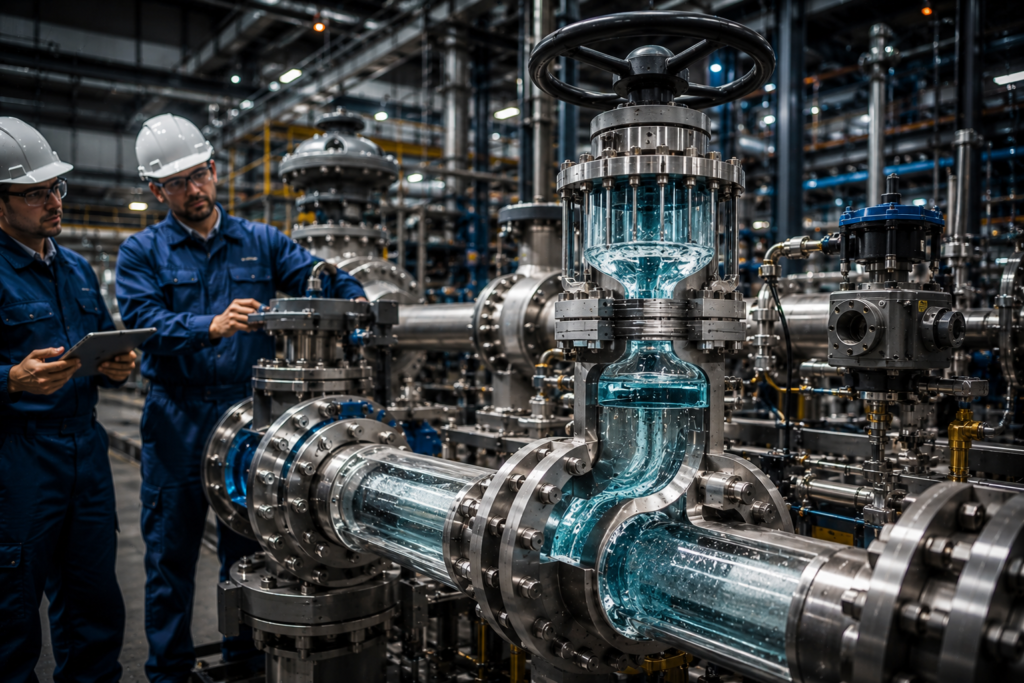
We study throttling behavior, flow stability, and control response across different operating conditions.
We help evaluate:
This helps improve accurate flow regulation and predictable system control.
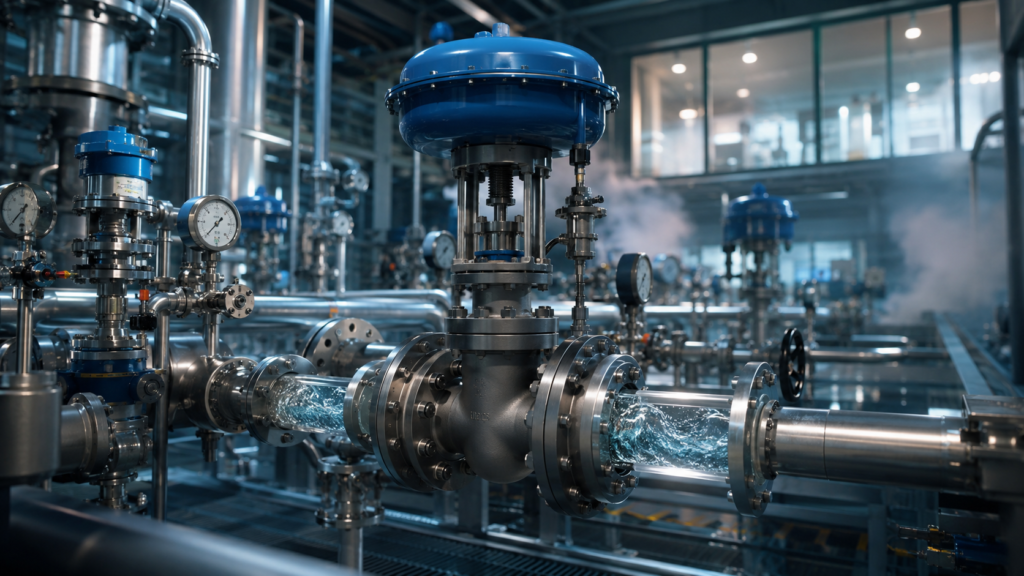
Leakage can reduce reliability, affect safety, increase operating losses, and create maintenance issues. Experiqs supports improved sealing performance through design and flow behavior assessment.
We help analyze:
This helps reduce leakage and improve long-term operational reliability.

Valve and flow control performance depends strongly on internal geometry, including flow passages, seats, ports, cavities, bends, and transitions.
We support optimization of:
This helps reduce losses, improve flow balance, and support smoother fluid movement.
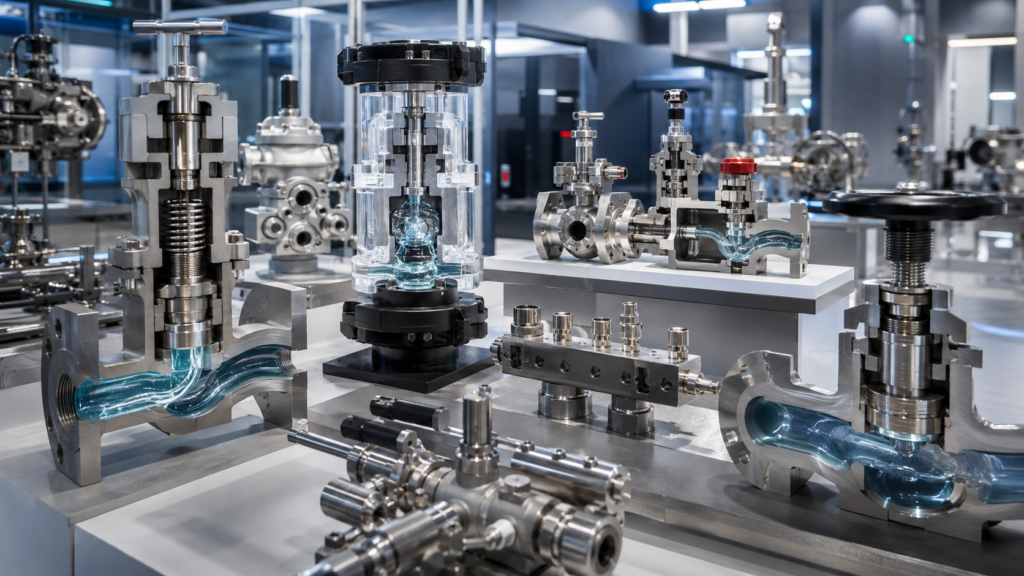
High pressure drop and throttling conditions can create cavitation, noise, vibration, and unstable flow behavior in valves and regulators.
We help identify:
This helps improve valve durability, acoustic behavior, and safe operation.

Manifolds and multi-branch flow control systems must distribute fluid evenly while maintaining stable pressure and flow behavior.
Experiqs analyzes:
This helps improve system balance and control performance.

Reduce internal resistance and energy losses across valves, regulators, manifolds, and flow control equipment.
Enhance throttling behavior, control response, flow coefficient performance, and pressure regulation.
Identify leakage paths and improve sealing performance for more reliable operation.
Detect low-pressure zones, flashing risks, flow separation, and unstable operating regions before failure occurs.
Balance flow delivery across branches, ports, channels, and connected system components.
Validate valve designs, internal geometry changes, and flow control improvements virtually before manufacturing or testing.
Experiqs combines CFD simulation, fluid flow analysis, pressure drop evaluation, valve performance assessment, sealing support, and simulation-driven design optimization to improve valve and flow control equipment.
Our strength lies in identifying internal flow and pressure loss behavior that is difficult to detect through testing alone. We help clients understand why valves lose efficiency, where flow control becomes unstable, and how geometry can be improved for better control, lower losses, and stronger reliability.
By validating valve performance virtually before implementation, Experiqs helps teams reduce development risk, improve flow control accuracy, lower energy losses, and develop more reliable flow control equipment.
Optimize valves, regulators, manifolds, and flow control systems with Experiqs’ simulation-led Valve & Flow Control Equipment Development services.
Talk to our experts to evaluate your valve or flow control equipment and identify practical opportunities for lower pressure drop, better control response, reduced leakage, and long-term operational reliability.
Partner with Experiqs to transform complex ideas into validated, industry-ready engineering solutions
Discover how to partner with Experiqs and get started quickly
Whether you’re exploring a new R&D initiative, seeking advanced simulations, planning experimental validation, or evaluating product feasibility—our experts are ready to assist you.
