
More results...
More results...
Electric and hybrid powertrain systems must deliver high performance while managing heat generation, packaging constraints, cooling demand, structural loads, and system-level integration challenges. Components such as motors, controllers, inverters, converters, onboard chargers, e-axles, electronic control units, and cooling circuits must work together efficiently under real driving and charging conditions.
Powertrain & E-Mobility System Optimization helps automotive and electric mobility teams evaluate how thermal, electrical, mechanical, and cooling interactions affect system performance. By using simulation-led engineering, Experiqs helps improve efficiency, reliability, temperature control, packaging, and long-term durability across EV and hybrid powertrain systems.
Experiqs provides Powertrain & E-Mobility System Optimization services for EV manufacturers, hybrid vehicle developers, mobility startups, power electronics teams, motor developers, and automotive engineering teams. We use thermal simulation, CFD analysis, power electronics cooling studies, motor and controller thermal analysis, e-axle integration assessment, structural evaluation, and system-level optimization to improve EV powertrain performance and reliability.
EV and hybrid powertrains operate under high electrical loads, rapid acceleration events, continuous duty cycles, regenerative braking, fast charging, and changing ambient conditions. These operating modes create heat inside motors, controllers, inverters, converters, onboard chargers, and electronic control units.
If heat is not managed effectively, powertrain components can experience thermal derating, reduced efficiency, shorter component life, insulation degradation, control instability, and reliability issues. Poor packaging or cooling integration can also create hotspots, uneven temperature distribution, flow imbalance, excessive pressure drop, vibration concerns, and maintenance challenges.
Power electronics cooling is especially important because inverters, converters, and onboard chargers must maintain safe operating temperatures while handling high current and switching loads. Motor and controller thermal performance also affects torque delivery, efficiency, and continuous power capability.
Simulation-led optimization helps identify thermal limits, cooling bottlenecks, airflow or coolant distribution issues, packaging conflicts, and integration risks before prototype testing or production decisions.
Experiqs helps automotive and EV teams improve powertrain efficiency, reduce thermal risk, validate integration choices, and make better engineering decisions through physics-based simulation.
We evaluate heat generation, cooling requirements, and temperature limits in motors, controllers, and e-axles.
Our analysis helps assess:
This helps improve powertrain reliability, efficiency, and continuous operating performance.

Power electronics require effective cooling to maintain performance, safety, and durability under high electrical loads.
We help optimize thermal performance of:
This helps reduce hotspot formation and improve power electronics reliability.
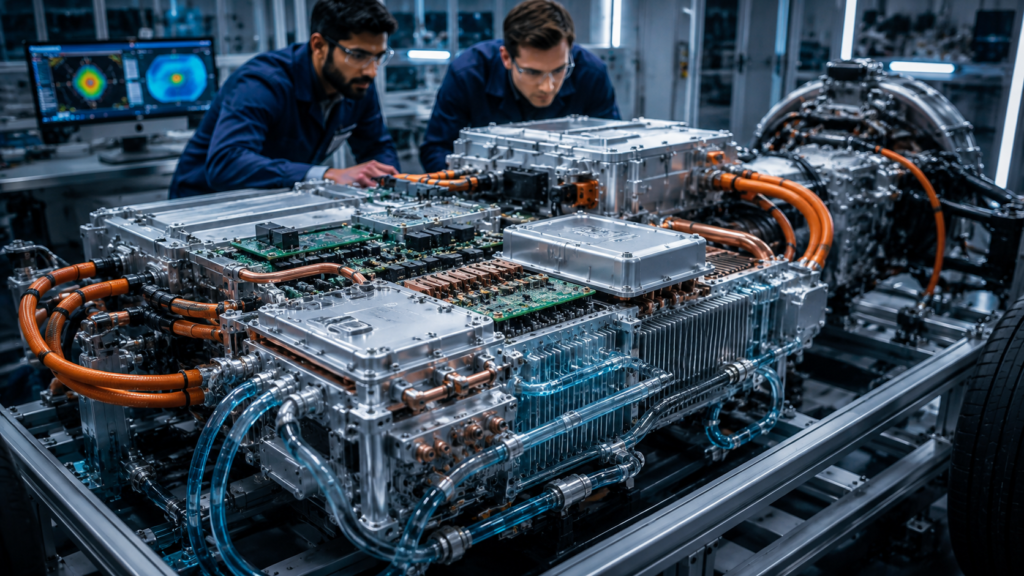
EV powertrain components must be packaged and integrated without compromising cooling performance, structural safety, or serviceability.
Experiqs helps assess:
This helps improve powertrain integration and reduce design risks during development.

E-axles and electric drive units combine motor, gearbox, inverter, housing, cooling, and structural elements in compact packages.
We help evaluate:
This helps improve compact drive unit performance and reliability.
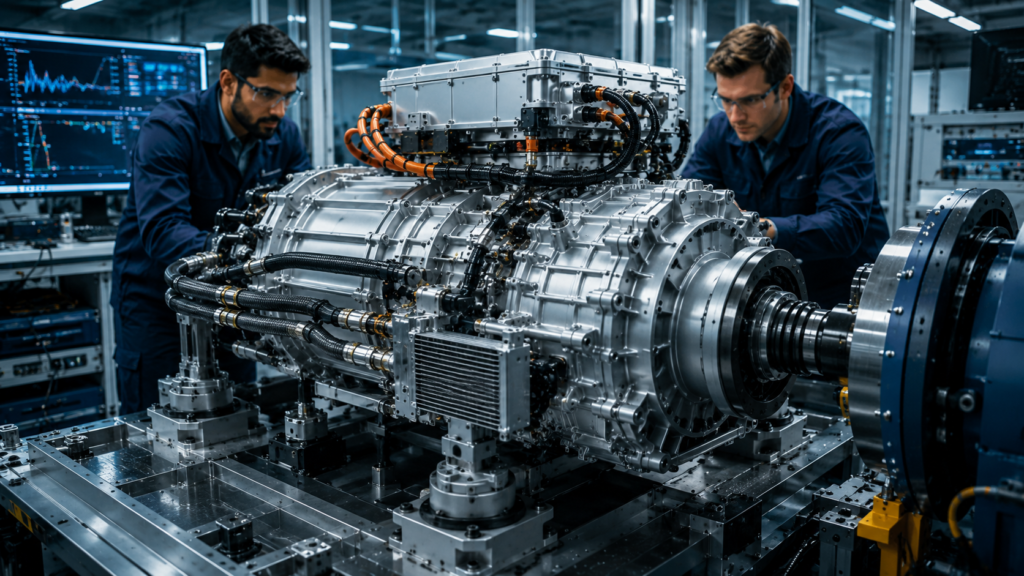
Cooling circuit design directly affects temperature control, pressure drop, pump demand, and system efficiency.
We analyze and optimize:
This helps improve thermal performance while reducing unnecessary energy consumption.
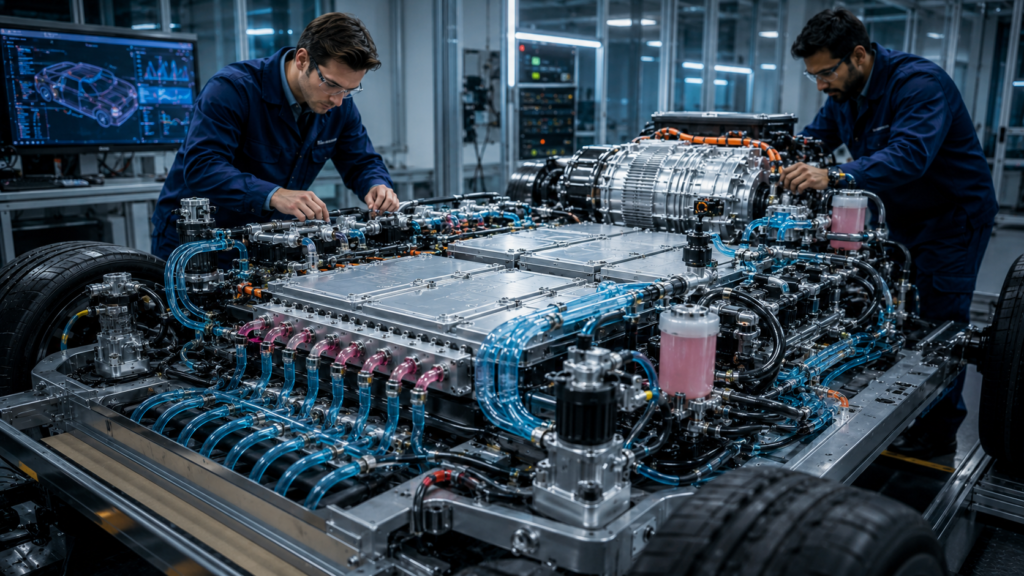
Thermal and mechanical stress can reduce powertrain life if components operate close to their limits.
We help assess:
This helps improve powertrain reliability and reduce failure risk.

Experiqs helps EV manufacturers, hybrid vehicle teams, mobility startups, and automotive engineering teams address powertrain and e-mobility challenges, including:
Optimize cooling, packaging, and thermal performance to support better electrical and mechanical efficiency.
Identify hotspots, temperature limits, and derating risks before they affect powertrain operation.
Improve inverter, converter, onboard charger, and ECU cooling for safer and more reliable performance.
Evaluate packaging, thermal interaction, structural loads, and cooling performance across EV powertrain components.
Use simulation to compare design concepts before prototype manufacturing or system-level testing.
Reduce thermal stress, temperature cycling damage, and cooling-related reliability issues.
Experiqs combines CFD simulation, thermal analysis, power electronics cooling, motor thermal modelling, structural assessment, and system-level optimization expertise to improve EV and hybrid powertrain performance.
Our strength lies in understanding how powertrain components interact inside compact electric mobility systems. We help clients identify thermal bottlenecks, cooling inefficiencies, packaging risks, and reliability concerns before they become costly design issues.
By validating powertrain behaviour virtually, Experiqs helps EV teams reduce prototype iterations, improve efficiency, strengthen reliability, and make better engineering decisions before physical testing.
Improve motor cooling, controller thermal performance, power electronics reliability, e-axle integration, and system-level efficiency with Experiqs’ Powertrain & E-Mobility System Optimization services.
Talk to our experts to evaluate your EV or hybrid powertrain system and identify practical opportunities for better efficiency, stronger reliability, and improved integration.
Partner with Experiqs to transform complex ideas into validated, industry-ready engineering solutions
Discover how to partner with Experiqs and get started quickly
Whether you’re exploring a new R&D initiative, seeking advanced simulations, planning experimental validation, or evaluating product feasibility—our experts are ready to assist you.
