
More results...
More results...
Automotive and electric mobility components depend on controlled airflow, coolant flow, lubrication flow, pressure drop, heat transfer, and fluid distribution to perform reliably. Ducts, manifolds, valves, brake cooling paths, underbody airflow, motors, gearboxes, battery packs, cooling plates, and thermal circuits must deliver stable flow under real operating conditions.
Fluid Flow & Component Performance helps automotive teams understand how air, coolant, oil, and other working fluids move through vehicle components and systems. By using CFD simulation and thermal-flow analysis, Experiqs helps improve flow distribution, reduce pressure losses, control temperature, improve cooling performance, and support better component reliability.
Experiqs provides Fluid Flow & Component Performance services for automotive OEMs, EV manufacturers, mobility startups, component suppliers, and engineering teams. We use CFD analysis, airflow simulation, coolant flow studies, pressure drop evaluation, heat transfer analysis, lubrication flow modelling, brake cooling studies, and component-level performance optimization to improve product performance and durability.
Vehicle components often fail to perform as expected because internal or external flow behaviour is not fully optimized. Poor duct design can create flow separation and pressure loss. Manifolds and valves can cause uneven distribution or flow restriction. Cooling plates and thermal circuits may suffer from coolant maldistribution, high pressure drop, or insufficient heat removal.
Brake systems and underbody regions also depend on effective airflow. If airflow paths are blocked or poorly guided, brake temperatures can rise, heat rejection can reduce, and thermal performance can become inconsistent across operating conditions.
In EVs, fluid flow performance is even more critical because battery packs, motors, inverters, gearboxes, and cooling circuits must maintain temperature limits while minimizing pump power and energy loss. Efficient coolant and lubrication delivery helps improve reliability, thermal stability, and overall vehicle efficiency.
CFD-based analysis helps visualize flow paths, pressure fields, separation zones, recirculation, dead zones, heat transfer behaviour, and distribution imbalance before prototype testing. Experiqs helps automotive teams improve component performance through simulation-led engineering and practical design recommendations.
We study airflow, coolant flow, pressure drop, flow separation, and distribution behaviour inside ducts, manifolds, valves, and connected flow paths.
Our analysis helps assess:
This helps improve flow delivery, reduce losses, and support stable component performance.
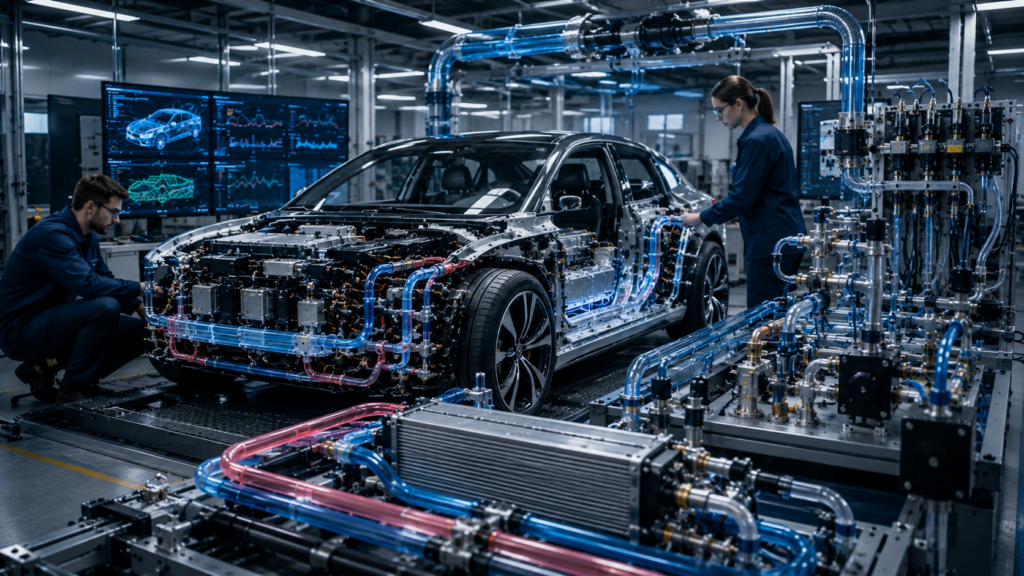
Brake and underbody airflow strongly affect heat rejection, temperature control, and thermal reliability during vehicle operation.
We help evaluate:
This helps improve braking system durability and underbody thermal control.

Lubrication and coolant delivery are critical for motors, gearboxes, battery packs, cooling plates, and thermal circuits.
Experiqs helps optimize:
This helps improve cooling reliability, lubrication effectiveness, and component life.
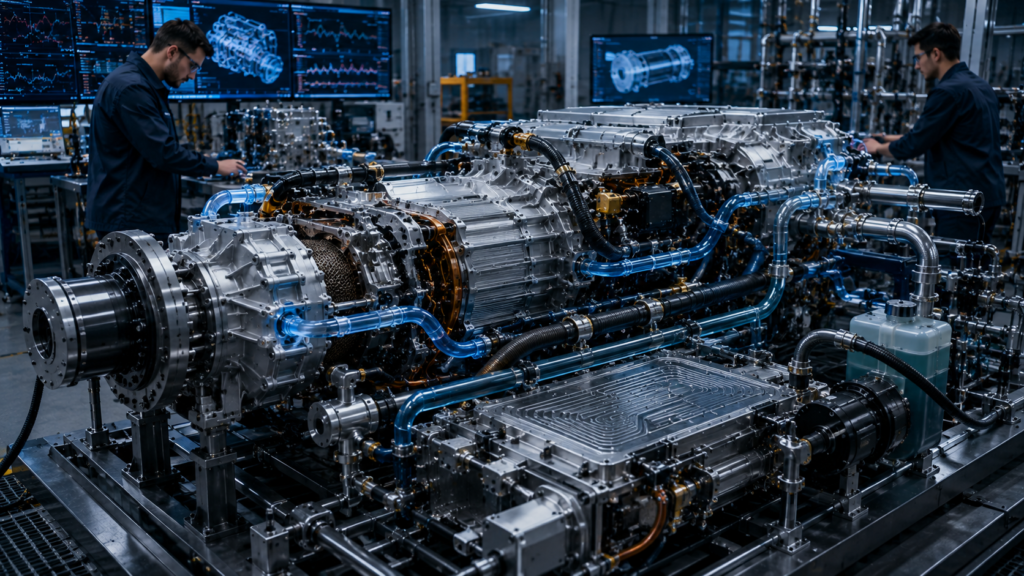
Excessive pressure drop increases pump or fan power demand and reduces overall system efficiency.
We analyze:
This helps reduce energy losses and improve system efficiency.
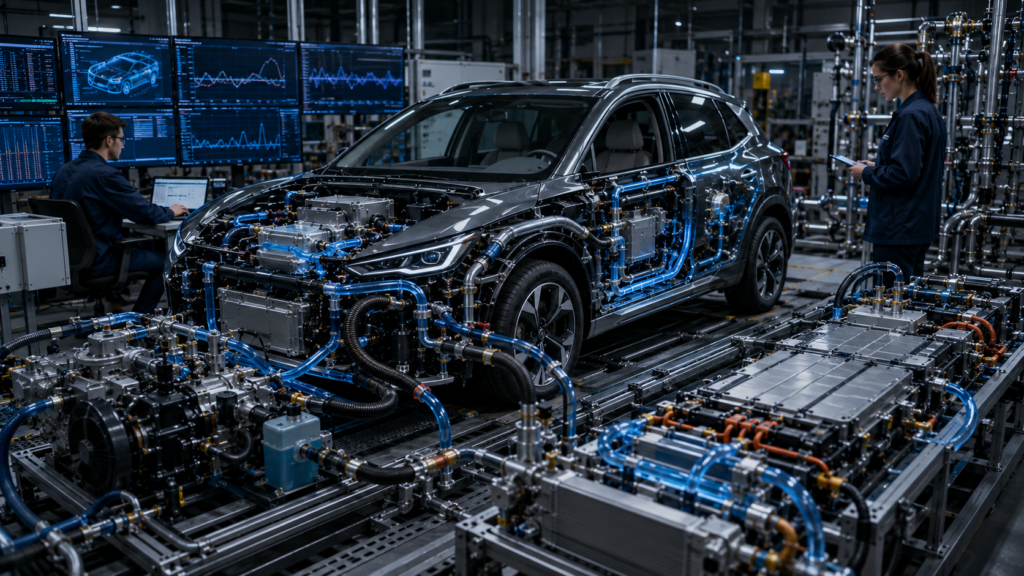
Uneven flow distribution can create poor cooling, localized overheating, weak lubrication, and inconsistent component performance.
We help identify:
This helps improve temperature uniformity and stable component operation.

Fluid flow and heat transfer are closely connected in automotive cooling and thermal systems.
We help evaluate:
This helps improve cooling effectiveness and reduce overheating risks.

Experiqs helps automotive OEMs, EV manufacturers, mobility startups, and component suppliers address fluid flow and component performance challenges, including:
Optimize airflow, coolant flow, lubrication flow, pressure drop, and heat transfer for better component behaviour.
Reduce flow resistance across ducts, manifolds, valves, cooling plates, hoses, and thermal circuits.
Improve brake cooling, underbody cooling, battery cooling, motor cooling, gearbox cooling, and thermal circuit performance.
Reduce maldistribution, dead zones, recirculation, and uneven flow delivery across automotive components.
Reduce pump and fan energy demand by improving flow paths and minimizing hydraulic losses.
Use CFD and thermal simulation to compare component design options before prototype manufacturing or testing.
Experiqs combines CFD simulation, thermal engineering, fluid flow analysis, pressure drop evaluation, and automotive component optimization expertise to improve vehicle and EV system performance.
Our strength lies in identifying hidden flow and thermal issues that are difficult to detect through basic testing alone. We help clients understand where pressure losses occur, why flow becomes uneven, how cooling performance can be improved, and which design changes can increase component reliability.
By validating fluid flow and thermal behaviour virtually, Experiqs helps automotive teams reduce prototype iterations, improve component performance, reduce energy losses, and make better engineering decisions before physical testing.
Optimize ducts, manifolds, valves, brake cooling, underbody airflow, lubrication flow, coolant circuits, and thermal components with Experiqs’ Fluid Flow & Component Performance services.
Talk to our experts to evaluate your automotive component or fluid system and identify practical opportunities for better flow performance, lower pressure drop, stronger cooling, and improved reliability.
Partner with Experiqs to transform complex ideas into validated, industry-ready engineering solutions
Discover how to partner with Experiqs and get started quickly
Whether you’re exploring a new R&D initiative, seeking advanced simulations, planning experimental validation, or evaluating product feasibility—our experts are ready to assist you.
