
More results...
More results...
Robotic and autonomous systems must withstand mechanical loads, thermal buildup, vibration, shock, repeated motion, payload variation, terrain impact, and long operating hours. Frames, arms, brackets, joints, mounts, enclosures, payload structures, motors, electronics, batteries, controllers, and compact robotic assemblies must remain reliable under real-world operating conditions.
Mechanical, Thermal & Structural Reliability helps robotics teams validate hardware strength, thermal safety, vibration behaviour, and long-term durability. By using FEA simulation, thermal analysis, vibration assessment, fatigue evaluation, and reliability-focused design validation, Experiqs helps identify weak regions, overheating risks, shock-sensitive components, and failure-prone operating conditions before field deployment.
Experiqs provides Mechanical, Thermal & Structural Reliability services for autonomous robots, AMRs, AGVs, drones, UAVs, inspection robots, service robots, industrial robots, warehouse robots, and intelligent machines. We support FEA structural analysis, thermal management, vibration and durability assessment, shock analysis, fatigue studies, electronics cooling, battery thermal analysis, and robotic hardware reliability validation.
Robotic platforms operate as integrated systems where mechanical, thermal, and structural performance directly affect reliability. A robot may perform well during short testing but face failures during long missions, repeated cycles, outdoor operation, high payload use, rough terrain, or continuous industrial deployment.
Mechanical structures such as frames, arms, joints, brackets, mounts, and payload supports can experience stress concentration, deformation, fatigue, vibration, impact loading, and loosening over time. If these risks are not evaluated early, they can lead to field failures, reduced uptime, safety concerns, and repeated maintenance.
Thermal reliability is equally important. Motors, batteries, controllers, compute units, sensors, drives, and power electronics generate heat inside compact robotic enclosures. Poor heat dissipation can cause derating, reduced performance, electronics failure, battery risk, sensor drift, or shortened component life.
Vibration and shock can affect sensors, cameras, LiDAR, payloads, connectors, structural joints, and electronics. For autonomous systems, even small vibration-related changes can affect perception, positioning, and mission reliability.
Experiqs helps robotics teams validate hardware behaviour virtually and improve reliability before prototype testing, field trials, or customer deployment.
We assess frames, arms, brackets, joints, mounts, enclosures, and payload structures under real operating and handling loads.
Our analysis helps evaluate:
This helps identify weak regions and improve structural reliability before field operation.
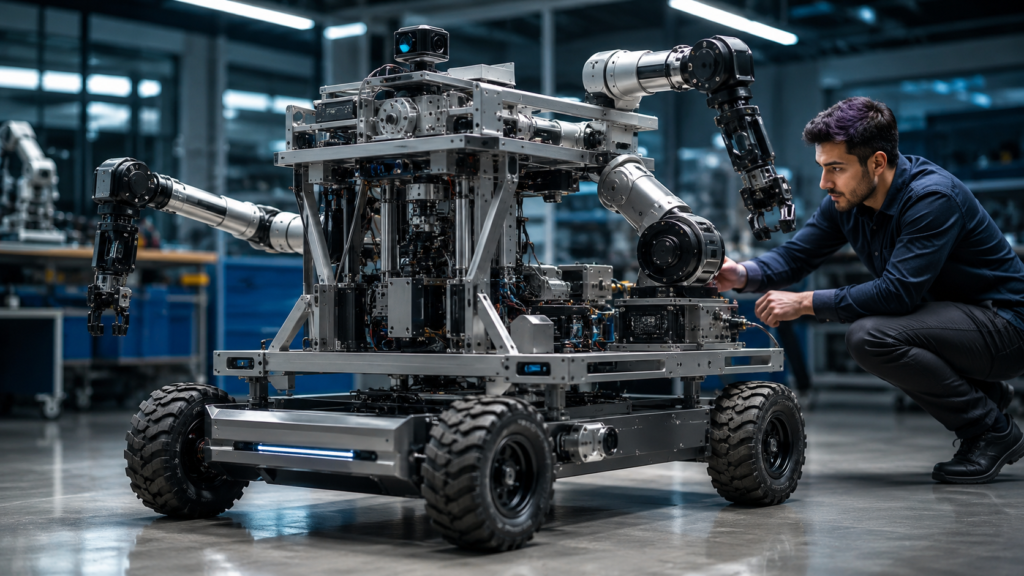
We evaluate heat buildup in motors, electronics, batteries, controllers, and compact robotic enclosures.
Experiqs helps analyze:
This helps improve thermal safety and maintain stable robotic performance during long-duration operation.
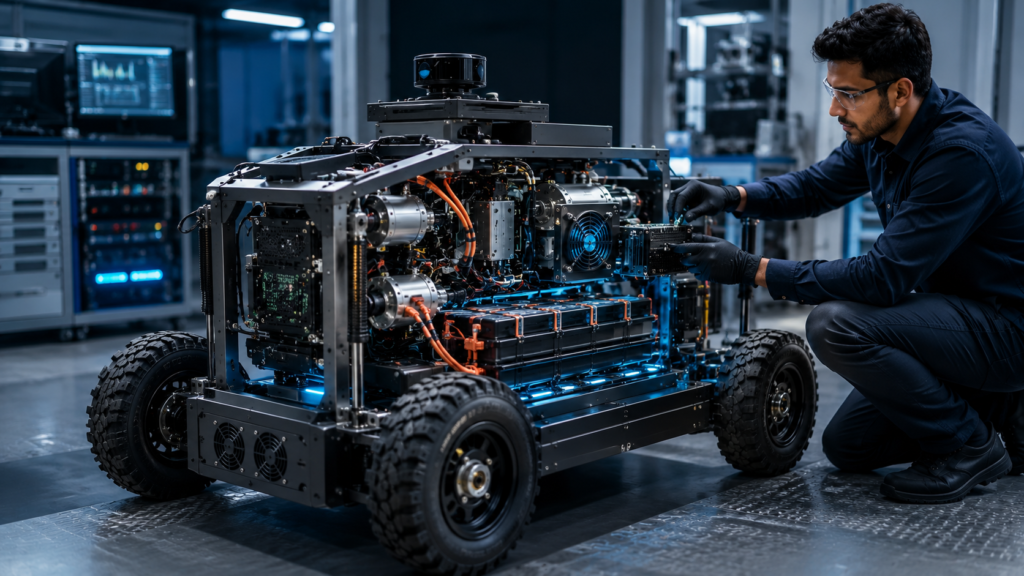
We study dynamic loads, fatigue, shock, vibration, and mechanical reliability across robotic hardware.
We help evaluate:
This helps improve hardware robustness and reduce field failure risks.
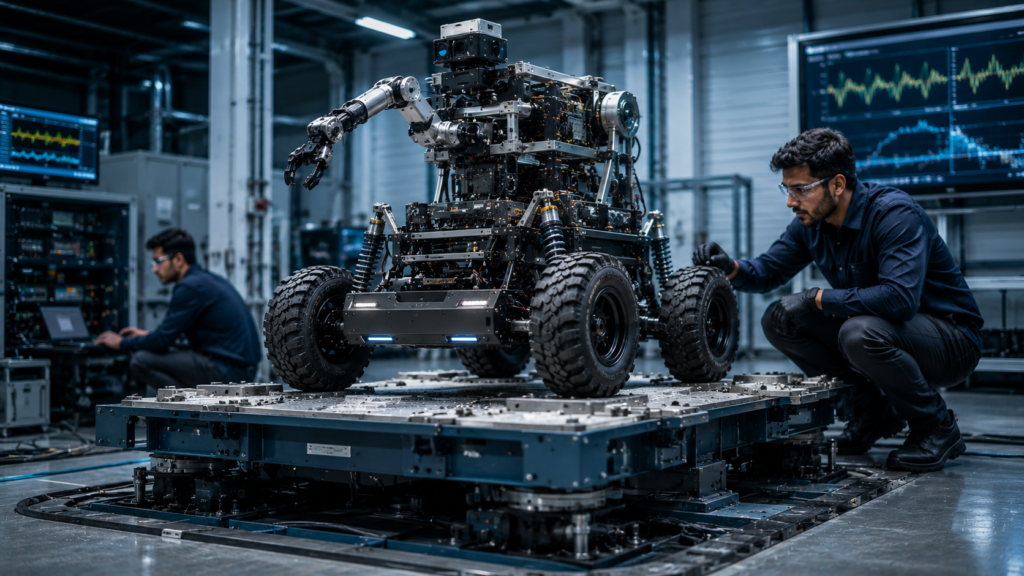
Robots may experience impact during transport, handling, field operation, obstacle contact, hard landing, collision, or rough terrain use.
We help assess:
This helps improve survival under real-world handling and operating conditions.
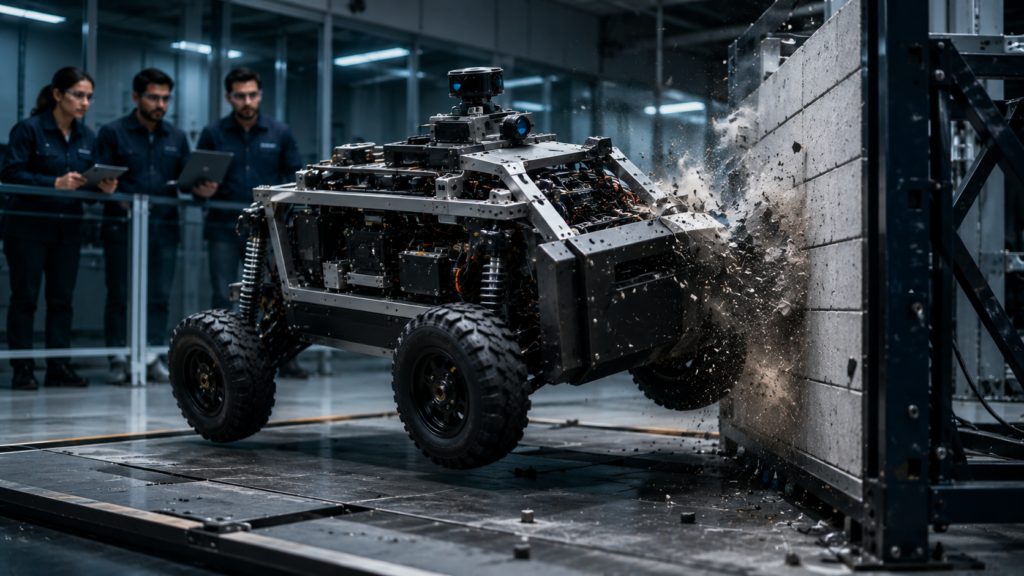
Robotic systems depend on compact electronics and power systems that must remain thermally stable.
We support evaluation of:
This helps reduce overheating risk and improve system uptime.
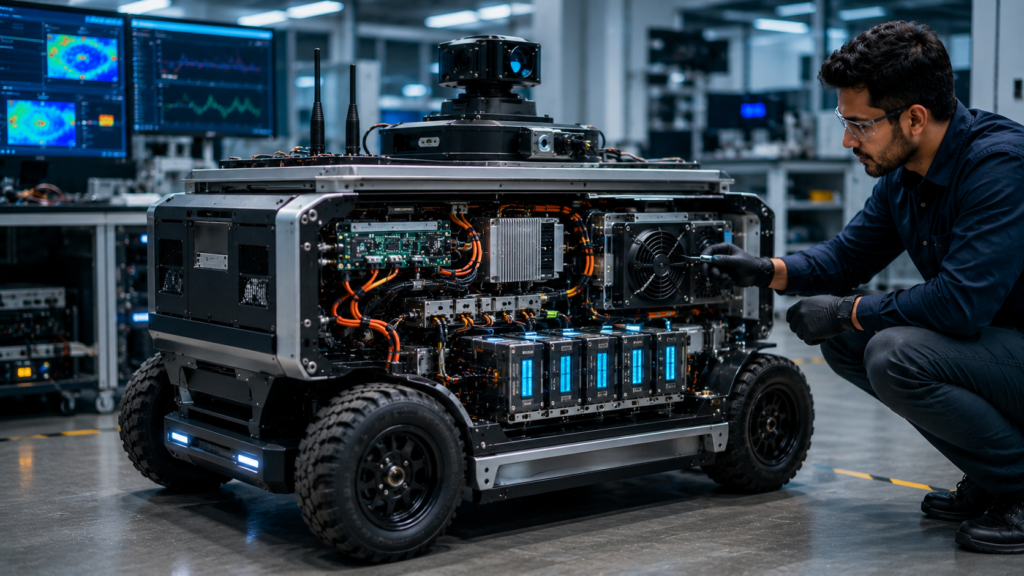
Mechanical and thermal reliability can often be improved with focused design changes rather than unnecessary overdesign.
We support optimization of:
This helps improve reliability while controlling weight, cost, and packaging constraints.
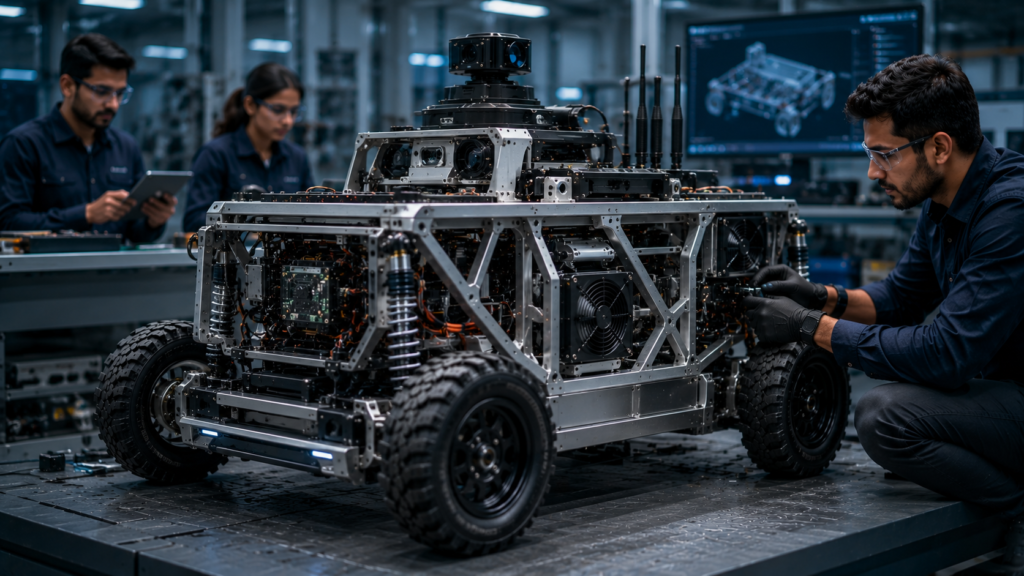
Experiqs helps robotics and autonomous system teams address hardware reliability challenges, including:
Validate frames, arms, brackets, mounts, joints, enclosures, and payload structures under real operating loads.
Identify heat buildup in motors, batteries, controllers, electronics, compute units, and compact enclosures.
Reduce vibration transfer to sensors, payloads, cameras, electronics, and structural components.
Evaluate fatigue, shock, dynamic loads, and repeated motion effects that influence long-term durability.
Identify structural, thermal, and mechanical reliability issues before field trials or customer deployment.
Improve reliability without unnecessary material, weight, or overdesign.
Experiqs combines FEA simulation, CFD, thermal analysis, vibration assessment, fatigue studies, shock evaluation, and robotics product engineering to improve hardware reliability in autonomous systems.
Our strength lies in evaluating robotic hardware under realistic operating conditions. We help teams understand where stress develops, how heat builds up, how vibration transfers, and which design changes can improve strength, durability, and thermal performance.
By validating mechanical, thermal, and structural reliability virtually, Experiqs helps robotics teams reduce prototype iterations, improve field uptime, strengthen hardware reliability, and make better design decisions before deployment.
Validate robotic frames, arms, brackets, joints, mounts, enclosures, batteries, motors, electronics, payload structures, vibration response, and thermal behaviour with Experiqs’ Mechanical, Thermal & Structural Reliability services.
Talk to our experts to evaluate your robotic platform and identify practical opportunities for stronger durability, safer thermal performance, and reliable field operation.
Partner with Experiqs to transform complex ideas into validated, industry-ready engineering solutions
Discover how to partner with Experiqs and get started quickly
Whether you’re exploring a new R&D initiative, seeking advanced simulations, planning experimental validation, or evaluating product feasibility—our experts are ready to assist you.
