
More results...
More results...
Data centers must remain reliable not only during normal operation, but also during equipment failure, maintenance shutdowns, power disruptions, and abnormal cooling conditions. Even a short interruption in cooling performance can cause rapid temperature rise, rack inlet overheating, hotspot formation, and increased risk to mission-critical IT infrastructure.
Experiqs provides simulation-driven Cooling Failure & Redundancy Analysis services for data halls, server rooms, and critical infrastructure facilities. Using advanced CFD analysis, transient thermal simulation, and system-level engineering evaluation, we help data center operators, consultants, EPC teams, and facility owners understand how cooling systems perform during failure scenarios and whether redundancy strategies are sufficient to protect IT equipment.
Our approach helps validate backup cooling arrangements, identify thermal risks during equipment downtime, and support reliable operation under abnormal or emergency conditions.
Cooling systems in data centers are often designed with redundancy, but redundancy does not always guarantee thermal safety. The actual response of a data hall during cooling unit failure depends on airflow distribution, rack heat loads, containment performance, cooling unit placement, pressure balance, and the time required for backup systems to respond.
Without detailed analysis, teams may not know how quickly rack inlet temperatures will rise after a CRAC, CRAH, PAHU, or FWU unit failure. This creates uncertainty during maintenance planning, emergency operation, and high-density IT deployment.
Experiqs helps teams move from assumption-based redundancy planning to data-driven thermal risk validation by simulating cooling failure scenarios, temperature rise behavior, airflow redistribution, and recovery performance across the data hall.
We evaluate the impact of cooling unit failure on airflow delivery, rack inlet temperatures, pressure balance, and thermal stability inside the data hall.
Our analysis helps assess:
This allows engineering teams to understand whether the remaining cooling capacity and airflow distribution are sufficient to maintain safe operating temperatures.
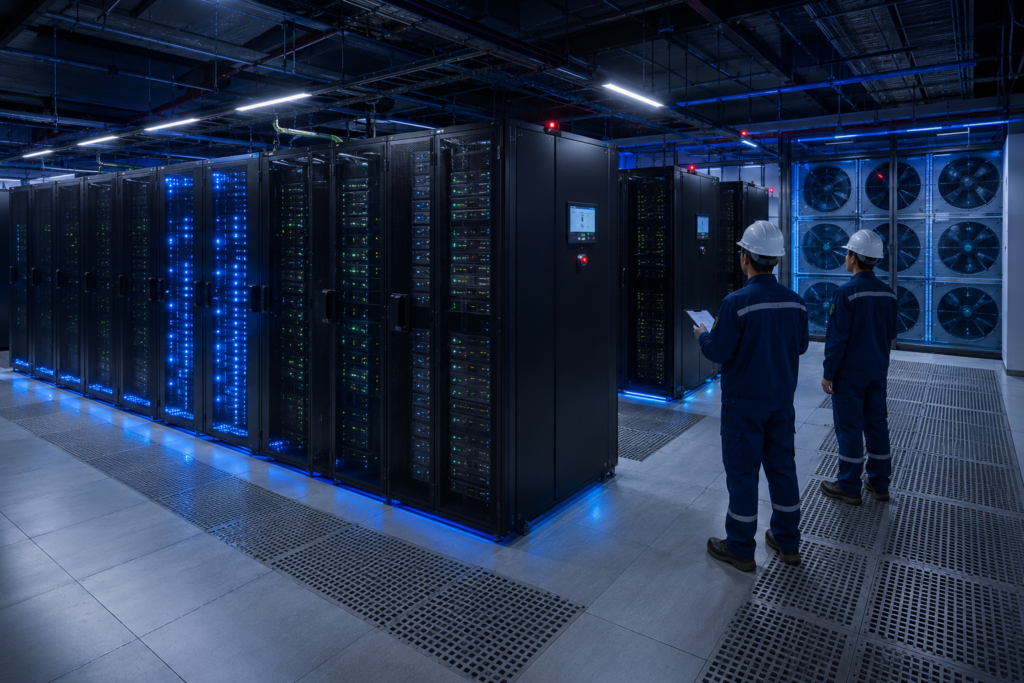
Cooling failures are time-dependent events. Experiqs performs transient thermal simulations to evaluate how quickly temperatures increase during abnormal operating conditions.
We analyze:
This helps operators define safe response windows, emergency procedures, and operating limits during failure events.
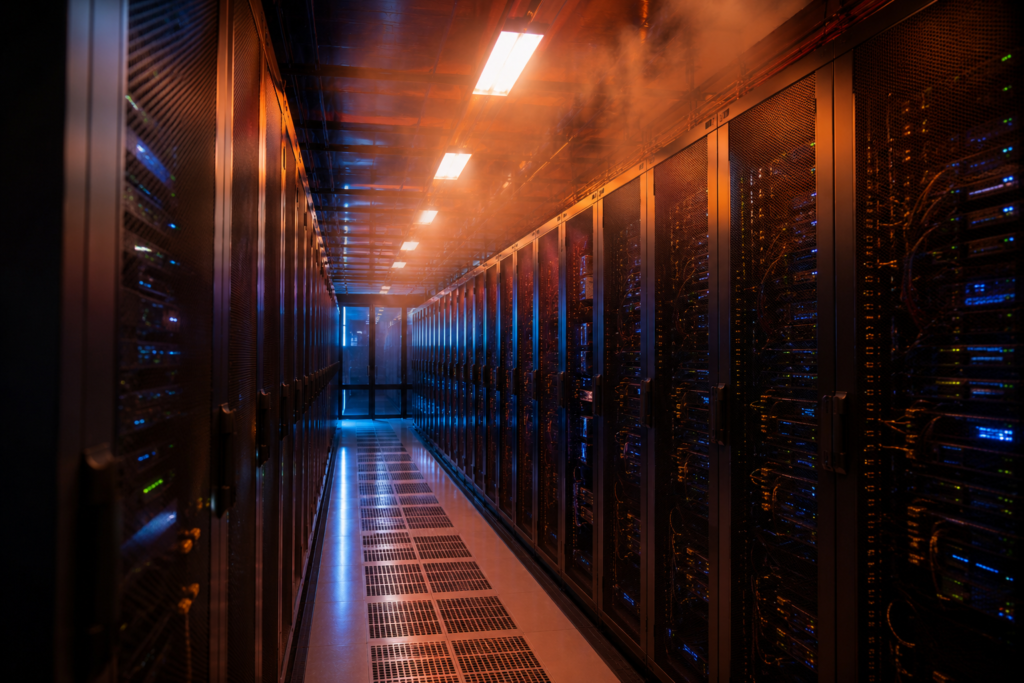
Redundancy strategies must be verified under realistic operating conditions. Experiqs validates whether backup cooling systems can maintain thermal safety when primary equipment is unavailable.
We help validate:
Our simulations provide engineering evidence to support redundancy planning and mission-critical uptime requirements.
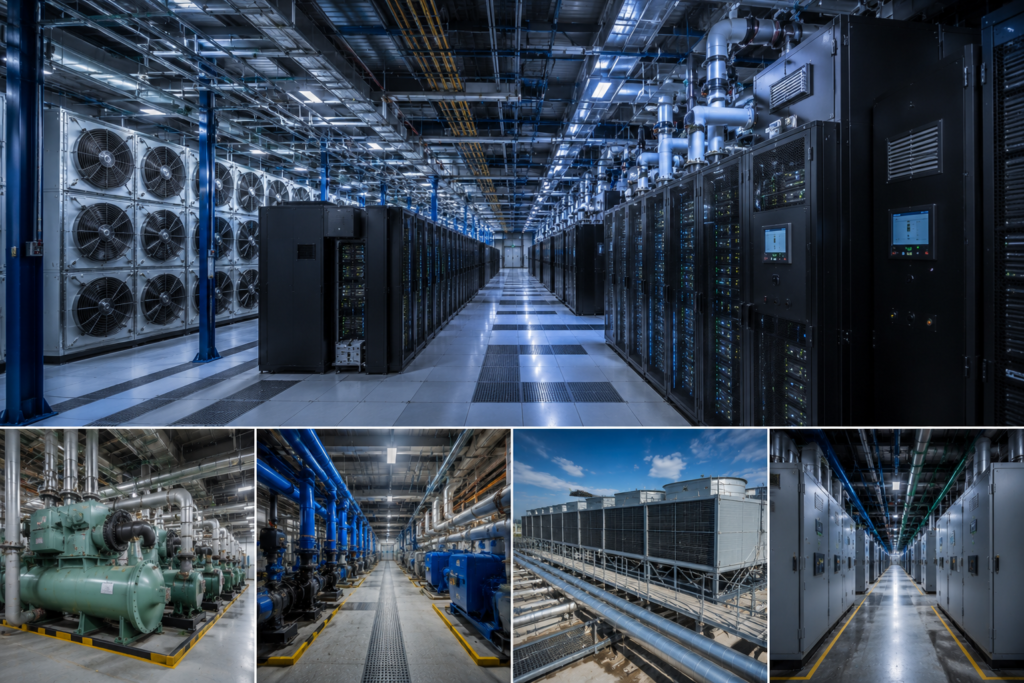
Abnormal operating conditions can create unexpected thermal behavior inside the data hall. Experiqs evaluates how the cooling system performs when operating outside standard design conditions.
We assess:
This helps data center teams prepare for emergency conditions before they occur.
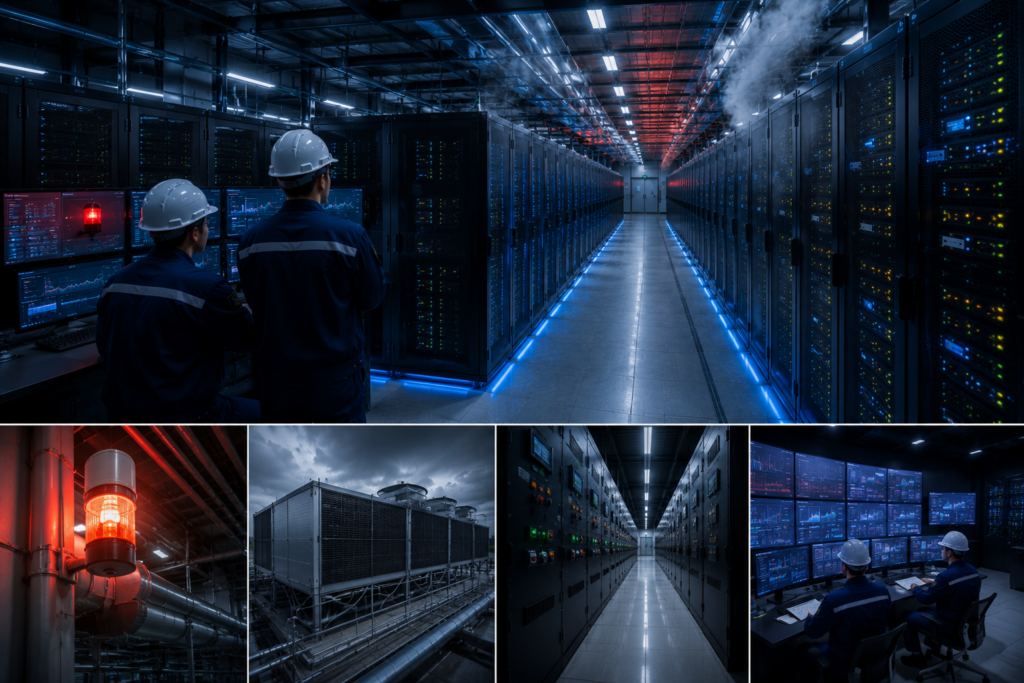
Experiqs helps data center teams address cooling resilience and redundancy challenges, including:
Understand how the data hall responds when cooling equipment fails or operates below normal capacity.
Verify whether backup cooling systems can maintain safe rack inlet temperatures during equipment downtime.
Identify how much time is available before temperatures reach critical limits during failure events.
Detect vulnerable rack zones, hotspot-prone areas, and airflow weak points before they affect uptime.
Evaluate cooling performance during planned shutdowns, service activities, or temporary equipment isolation.
Use CFD and transient thermal simulation results to support confident design, operation, and risk management decisions.
Our Cooling Failure & Redundancy Analysis service is suitable for:
Experiqs follows a simulation-led workflow to evaluate cooling failure and redundancy performance.
We review data hall layout, rack heat loads, cooling unit details, airflow rates, redundancy philosophy, containment design, operating conditions, and failure scenarios.
We first evaluate normal operating performance to understand airflow distribution, temperature behavior, pressure zones, and existing cooling stability.
Cooling unit shutdowns, reduced airflow conditions, delayed backup operation, and emergency scenarios are modelled using CFD and transient thermal simulation.
We assess whether remaining cooling units and backup systems can maintain rack inlet temperatures within acceptable limits.
We identify critical rack zones, temperature rise patterns, airflow gaps, and operational risks, then provide practical engineering recommendations for improvement.
Experiqs combines CFD simulation, thermal engineering, system modelling, and digital twin expertise to solve complex cooling reliability challenges in data centers and critical infrastructure.
Our strength lies in converting failure scenarios into clear engineering insights. We help clients understand what happens when cooling systems do not operate as planned, how quickly risks develop, and what actions can improve thermal resilience.
By validating cooling redundancy before failure occurs, Experiqs helps data center teams reduce operational risk, protect IT equipment, and strengthen mission-critical uptime.
Ensure your data center remains thermally safe during cooling unit failure, maintenance shutdowns, and emergency operating conditions with Experiqs’ CFD-based Cooling Failure & Redundancy Analysis services.
Talk to our experts to evaluate your cooling failure scenarios, validate redundancy performance, and identify practical improvements for reliable data center operation.
Partner with Experiqs to transform complex ideas into validated, industry-ready engineering solutions
Discover how to partner with Experiqs and get started quickly
Whether you’re exploring a new R&D initiative, seeking advanced simulations, planning experimental validation, or evaluating product feasibility—our experts are ready to assist you.
