
More results...
More results...
Mining, metal, and mineral processing facilities often generate dust, fumes, off-gases, hot air, and airborne particles during crushing, grinding, material transfer, smelting, refining, drying, screening, conveying, and high-temperature operations. If airflow, ventilation, extraction, and gas movement are not properly managed, plants can face poor air quality, unsafe exposure zones, dust accumulation, reduced visibility, emission control issues, and equipment reliability concerns.
Dust, Ventilation & Gas Flow Simulation helps plant teams understand how air, dust, fumes, and process gases move through buildings, underground areas, enclosed spaces, ducts, hoods, extraction systems, and emission control equipment. By using CFD simulation and airflow analysis, Experiqs helps identify risk zones, improve ventilation effectiveness, reduce dust dispersion, and optimize gas flow distribution.
Experiqs provides Dust, Ventilation & Gas Flow Simulation services for mining operations, mineral processing plants, smelters, refineries, underground facilities, process buildings, material handling systems, and emission control systems. We use ventilation CFD, dust dispersion analysis, gas flow simulation, duct flow optimization, pressure drop analysis, heat transfer studies, and extraction performance evaluation to improve safety, cleanliness, and plant operating reliability.
Dust and gas movement can directly affect worker safety, process reliability, environmental performance, and maintenance requirements. In mining and mineral processing plants, dust can be generated at crushers, screens, conveyors, chutes, transfer points, hoppers, mills, dryers, kilns, furnaces, and stockpile handling areas.
Poor ventilation can allow dust and fumes to accumulate in enclosed plant spaces, underground areas, equipment zones, tunnels, process buildings, and maintenance areas. Ineffective extraction systems may fail to capture dust at the source, allowing particles to spread across work zones and equipment.
Off-gas and duct systems also require proper flow distribution and pressure control. Poor gas flow behaviour can create high pressure drop, uneven distribution, poor heat transfer, reduced emission control performance, fan overload, and unstable operation.
Simulation-led airflow and gas flow analysis helps visualize dust movement, airflow paths, stagnant zones, extraction effectiveness, duct pressure losses, temperature distribution, and emission control flow behaviour. Experiqs helps clients improve air quality, reduce exposure risks, optimize ventilation, and support safer plant operation.
We simulate airflow in process buildings, underground areas, equipment zones, and enclosed plant spaces to evaluate ventilation performance.
Our analysis helps assess:
This helps improve ventilation effectiveness and reduce poor-airflow risk zones.
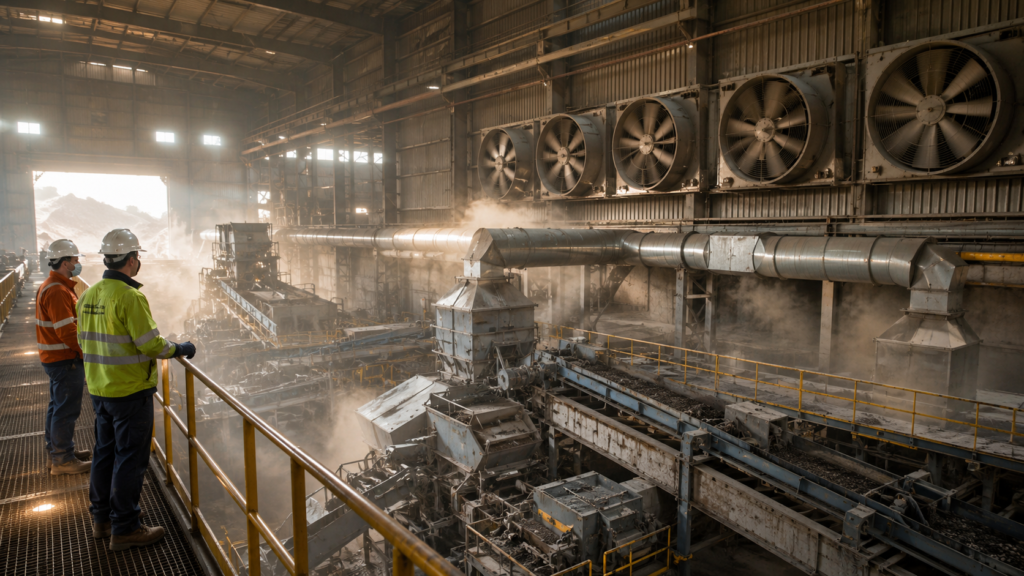
We study dust generation, movement, extraction effectiveness, and exposure risk zones across material handling and process areas.
Experiqs helps evaluate:
This helps reduce dust exposure, improve housekeeping, and support cleaner plant environments.
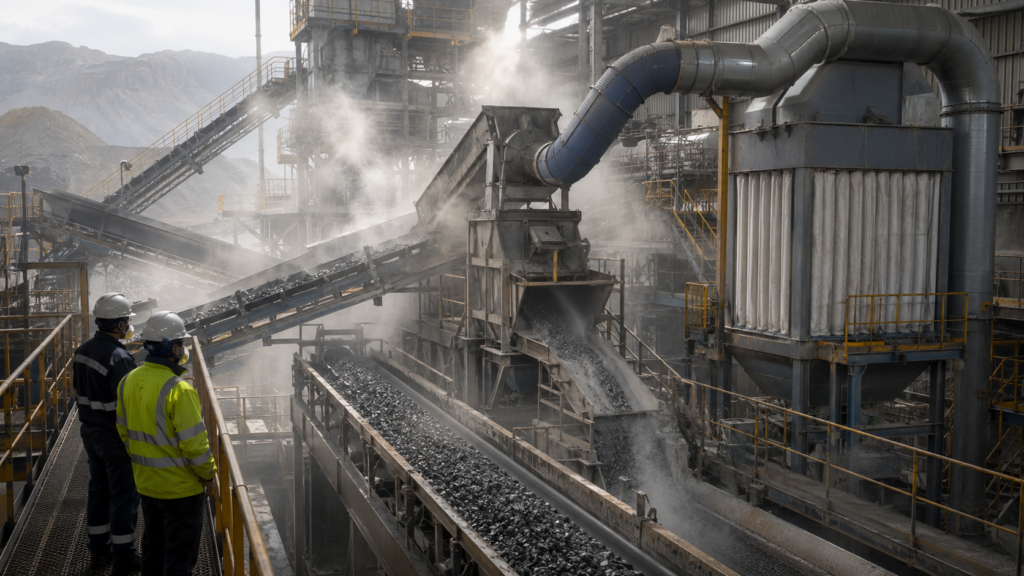
Off-gas and duct systems must maintain stable flow distribution, manageable pressure drop, and effective emission control performance.
We help optimize:
This helps improve gas handling efficiency and reduce operating losses.
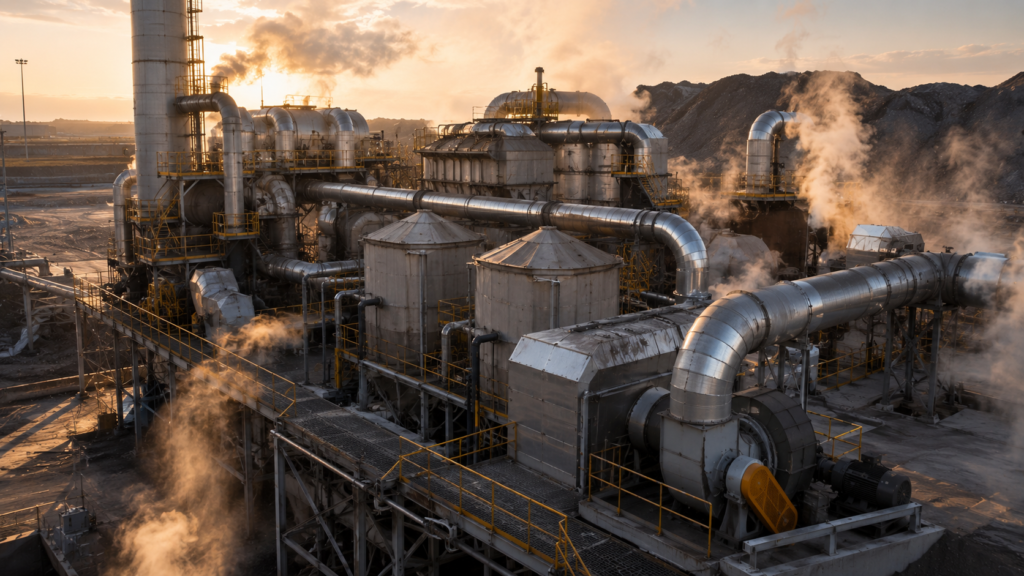
Dust collection systems must capture particles close to the source before they spread into the plant environment.
We help assess:
This helps improve dust collection efficiency and reduce airborne dust movement.
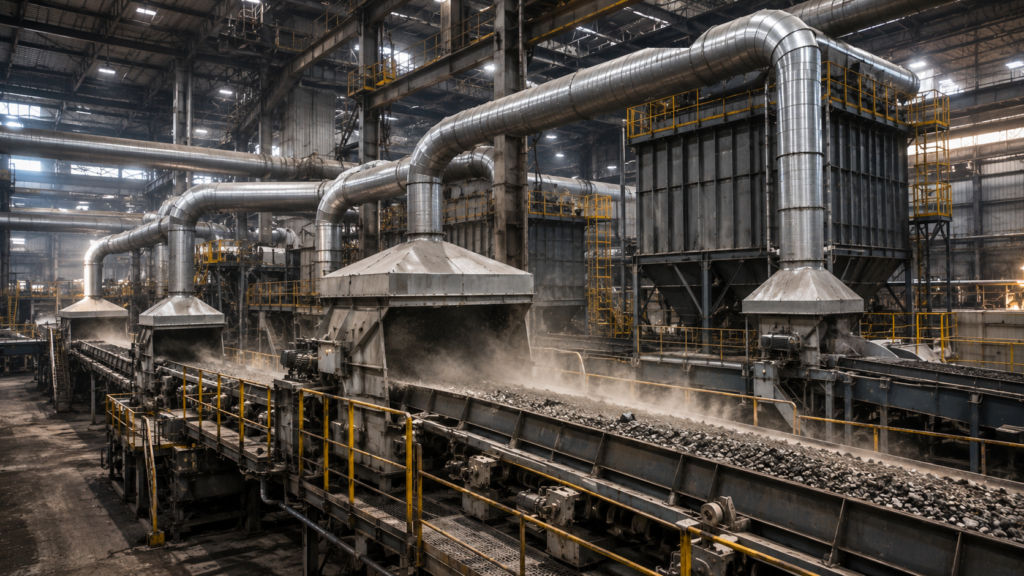
High-temperature operations can release heat, fumes, and process gases that affect ventilation, equipment zones, and worker access areas.
We analyze:
This helps improve thermal comfort, safety, and gas removal performance.
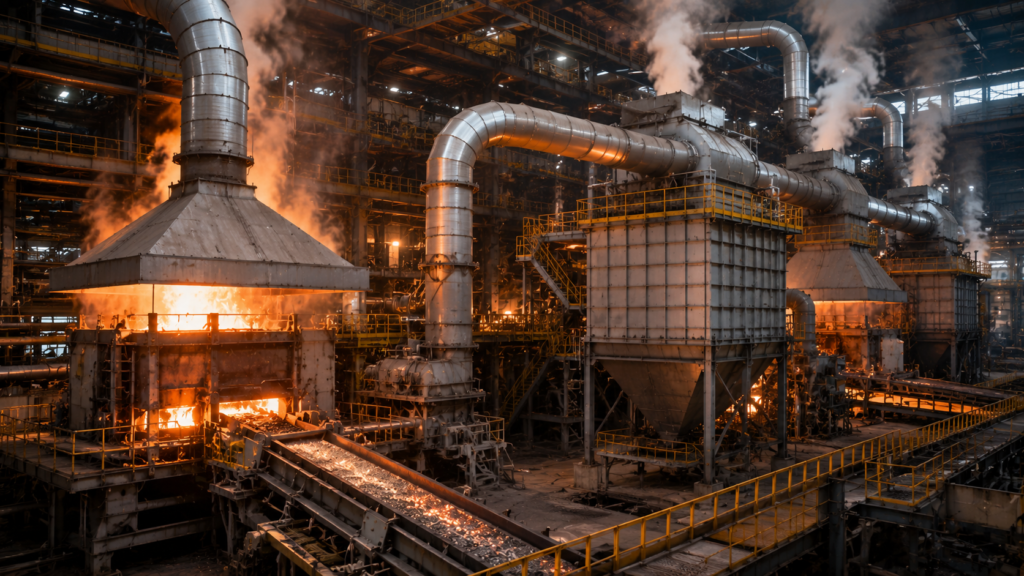
Plant layout, equipment placement, openings, ducts, and ventilation fans strongly influence dust and gas movement.
We support improvement of:
This helps create safer and cleaner operating environments.
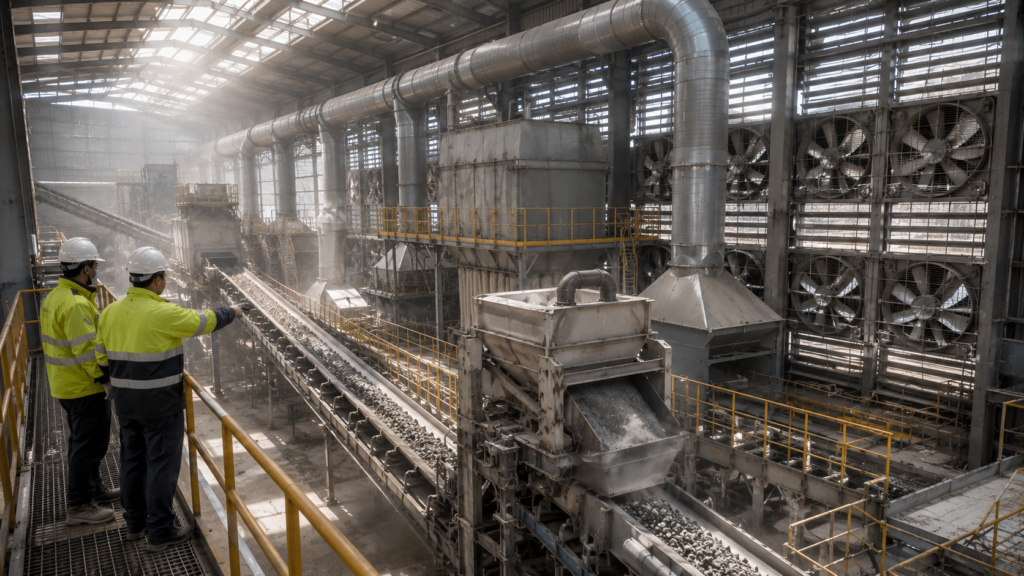
Experiqs helps mining, mineral processing, and metal production teams address dust, ventilation, and gas flow challenges, including:
Identify dust, fume, and gas movement patterns to reduce exposure risks in process and equipment areas.
Optimize airflow distribution, fresh air delivery, exhaust paths, and air change performance.
Improve dust capture, reduce dispersion, and identify high-risk dust generation and accumulation zones.
Reduce pressure drop, flow imbalance, recirculation, and fan energy losses in gas handling systems.
Improve off-gas flow distribution, duct balancing, and emission control system efficiency.
Use CFD-based airflow insights to compare ventilation, extraction, and gas flow improvement options before implementation.
Experiqs combines CFD simulation, ventilation analysis, dust dispersion modelling, thermal-fluid engineering, duct flow optimization, and process safety understanding to improve air and gas movement in mining and mineral facilities.
Our strength lies in identifying airflow and dust movement problems that are difficult to see through plant observations alone. We help clients understand where dust spreads, where gas accumulates, why ventilation is ineffective, and how extraction or duct systems can be improved.
By validating ventilation and gas flow behaviour virtually, Experiqs helps mining, mineral, and metal processing teams improve safety, reduce dust exposure, improve emission control performance, and make better plant improvement decisions.
Optimize ventilation, dust dispersion, extraction effectiveness, off-gas flow, duct pressure drop, and emission control performance with Experiqs’ Dust, Ventilation & Gas Flow Simulation services.
Talk to our experts to evaluate your plant airflow or gas handling system and identify practical opportunities for safer air quality, cleaner operation, and stronger ventilation performance.
Partner with Experiqs to transform complex ideas into validated, industry-ready engineering solutions
Discover how to partner with Experiqs and get started quickly
Whether you’re exploring a new R&D initiative, seeking advanced simulations, planning experimental validation, or evaluating product feasibility—our experts are ready to assist you.
