
More results...
More results...
Thermal equipment often operates under complex real-world conditions where heat transfer, fluid flow, pressure forces, structural response, and material behavior interact with each other. When these physics are studied separately, important performance risks may be missed.
Thermal and multiphysics analysis helps engineering teams understand how equipment behaves when temperature, flow, pressure, and structural loads act together. This is especially important for systems exposed to high heat generation, cooling demand, thermal gradients, vibration, pressure fluctuations, and mechanical stress.
Experiqs provides Thermal & Multiphysics Analysis services for thermal equipment, heat exchangers, cooling systems, HVAC systems, industrial machinery, fluid handling equipment, electronics cooling, process equipment, energy systems, and mission-critical infrastructure. We combine CFD simulation, FEA, thermal analysis, fluid-structure interaction, and coupled physics modeling to predict real-world performance more accurately.
Many equipment failures and performance problems occur because different physical effects interact. A component may pass a thermal check but fail due to thermal stress. A fluid system may meet flow requirements but create pressure forces that affect structural stability. A cooling system may remove heat but still create local hotspots, vibration risk, or deformation.
Thermal gradients can cause expansion, distortion, fatigue, sealing issues, stress concentration, and material degradation. Flow forces can create vibration, structural loading, pressure pulsation, and instability. Heat transfer behavior can change depending on airflow, liquid flow, geometry, materials, and operating conditions.
Traditional single-physics analysis may not fully capture these interactions. Multiphysics simulation helps connect thermal, fluid, and structural behavior into one engineering view.
Experiqs helps clients identify hidden risks, improve design reliability, and validate equipment performance before manufacturing, testing, or field implementation.
We evaluate heat generation, temperature distribution, heat transfer behavior, and cooling or heating effectiveness across equipment and systems.
Our analysis helps assess:
This helps improve thermal control and reduce overheating risks.
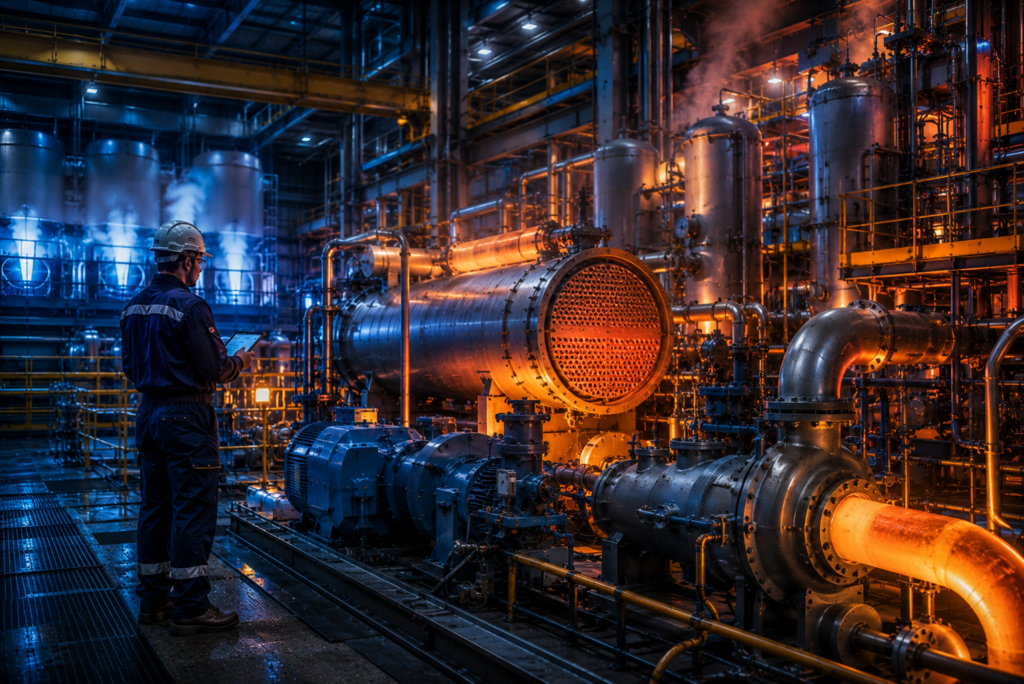
Fluid forces can affect structural stability, vibration response, deformation, fatigue, and equipment performance. Experiqs evaluates how flow behavior interacts with mechanical structures.
We help analyze:
This helps improve safe operation and long-term reliability.

We combine CFD, FEA, and thermal analysis to study real-world performance where multiple physics interact.
We support simulation of:
This helps provide a more accurate understanding of equipment behavior under operating conditions.

High temperatures and uneven thermal gradients can create stress, expansion, distortion, cracking, and fatigue risk.
We help evaluate:
This helps reduce failure risk and improve equipment durability.
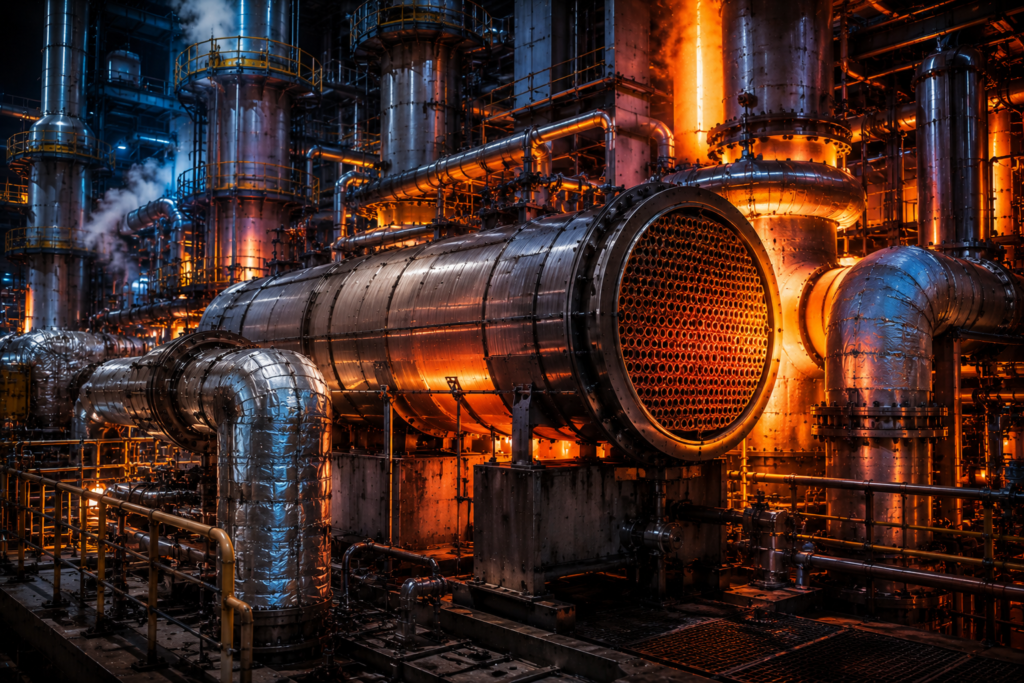
Efficient heat transfer is essential for maintaining performance, reliability, and safe operating temperatures.
We analyze and optimize:
This helps improve cooling efficiency and thermal performance.
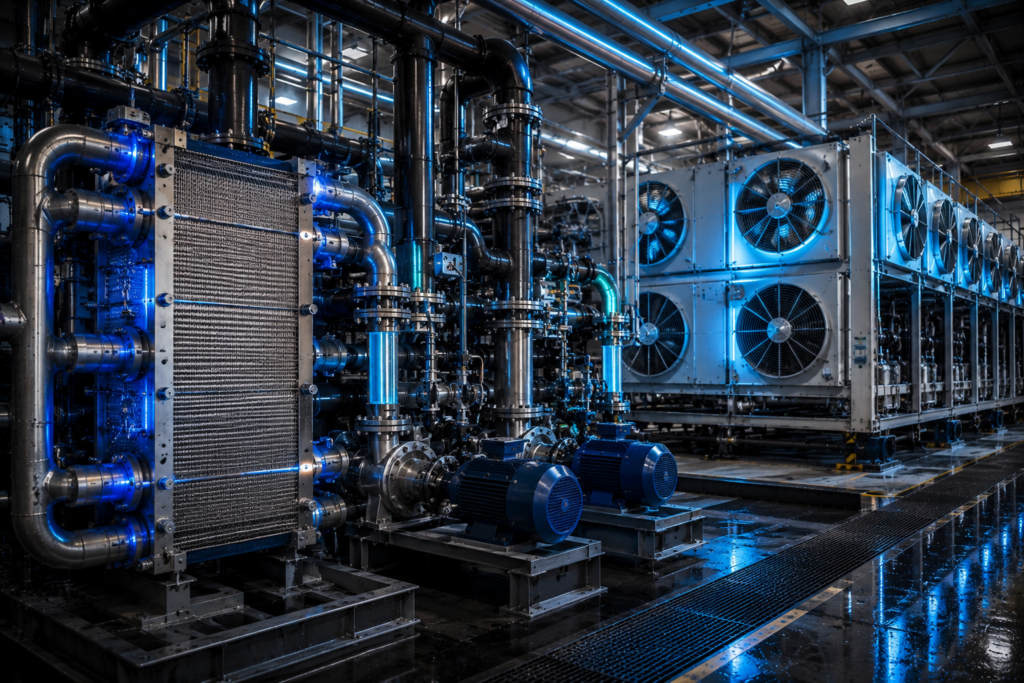
Equipment must perform reliably across different loads, flow conditions, temperatures, pressures, and operating environments.
Experiqs evaluates:
This helps validate equipment behavior before real-world operation.
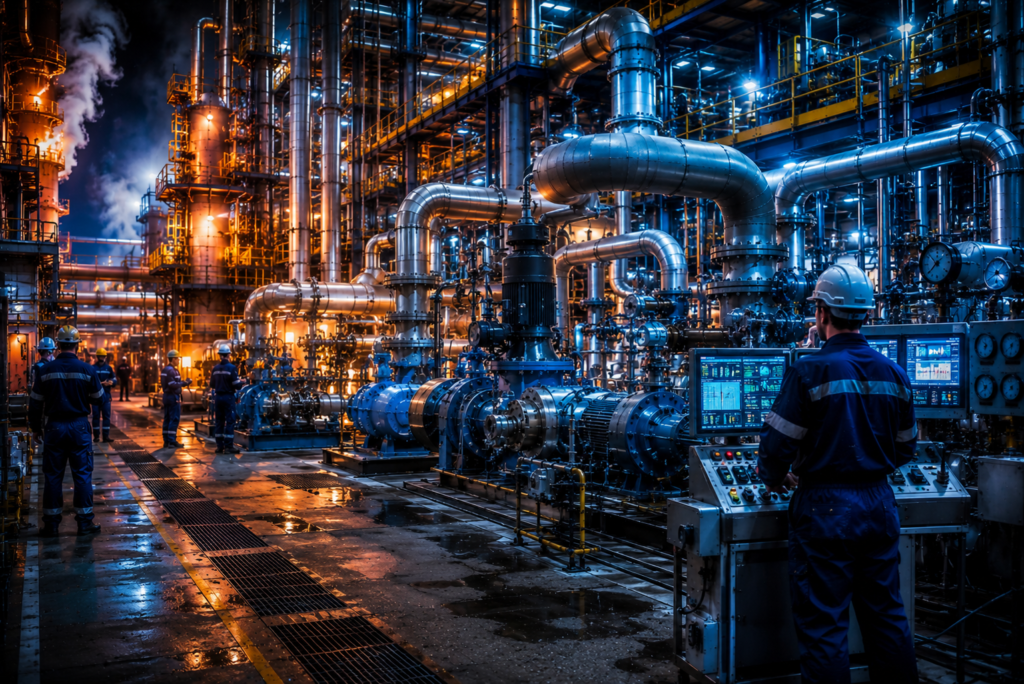
Understand how heat transfer, fluid flow, and structural behavior interact under actual operating conditions.
Identify hotspots, thermal gradients, thermal stress, and deformation before they cause equipment damage.
Improve temperature control, heat transfer efficiency, and cooling system effectiveness.
Evaluate pressure loads, thermal expansion, deformation, and flow-induced forces for safer operation.
Use coupled CFD and FEA simulation to validate designs before manufacturing, testing, or field deployment.
Compare design options and operating scenarios virtually to reduce development time and uncertainty.
Experiqs combines CFD simulation, FEA, thermal engineering, fluid flow analysis, structural assessment, and coupled physics modeling to analyze equipment under realistic operating conditions.
Our strength lies in understanding how heat, flow, pressure, and structural behavior interact inside real systems. We help clients identify hidden risks, improve performance, reduce failure potential, and validate designs with greater confidence.
By using simulation-led multiphysics analysis, Experiqs helps engineering teams reduce development risk, improve equipment reliability, optimize thermal performance, and make better design decisions before implementation.
Analyze heat transfer, fluid flow, thermal stress, pressure loading, and structural response with Experiqs’ Thermal & Multiphysics Analysis services.
Talk to our experts to evaluate your equipment and identify practical opportunities for better thermal performance, stronger reliability, and accurate real-world performance prediction.
Partner with Experiqs to transform complex ideas into validated, industry-ready engineering solutions
Discover how to partner with Experiqs and get started quickly
Whether you’re exploring a new R&D initiative, seeking advanced simulations, planning experimental validation, or evaluating product feasibility—our experts are ready to assist you.
