
More results...
More results...
Drones and unmanned aerial vehicles must operate reliably across changing payloads, wind conditions, flight speeds, battery states, sensor inputs, mission paths, terrain environments, and autonomous decision-making scenarios. A successful UAV platform depends on stable flight behaviour, accurate sensing, efficient power use, reliable control response, safe payload integration, and mission-ready system architecture.
Drones & UAV System Engineering helps robotics and autonomous system teams improve UAV stability, mission performance, payload integration, sensing reliability, and deployment readiness. By using simulation-led engineering, control-support studies, system-level analysis, aerodynamic evaluation, structural assessment, and autonomous mission validation, Experiqs helps reduce uncertainty before field deployment.
Experiqs provides Drones & UAV System Engineering services for UAV developers, drone manufacturers, inspection drone teams, delivery drone platforms, agricultural drones, industrial monitoring drones, autonomous aerial systems, and robotic mobility teams. We support flight control and stability analysis, mission path validation, obstacle avoidance evaluation, payload integration, sensor and camera integration, compute system packaging, and UAV performance optimization.
UAV performance is affected by multiple connected systems. Flight control, aerodynamic design, motor-propeller performance, payload placement, battery capacity, sensor reliability, camera positioning, onboard compute, thermal behaviour, structural stiffness, and mission planning all influence real-world operation.
A drone may perform well under basic test conditions but face instability, reduced endurance, sensing errors, payload imbalance, vibration issues, overheating, navigation uncertainty, or mission failure under real field conditions. Changes in payload weight, wind disturbance, altitude, temperature, terrain, route complexity, or obstacle density can significantly affect UAV reliability.
Autonomous UAVs require additional validation because mission execution depends on sensing, perception, route planning, obstacle avoidance, control response, and system-level decision-making. If these systems are not evaluated together, deployment risk increases.
Experiqs helps UAV teams identify performance limitations early and improve platform reliability through engineering-led validation, simulation, and system-level optimization.
We evaluate UAV response, control tuning, payload effects, and disturbance behaviour to improve stable flight performance.
Our analysis helps assess:
This helps improve UAV stability, handling, and mission reliability.
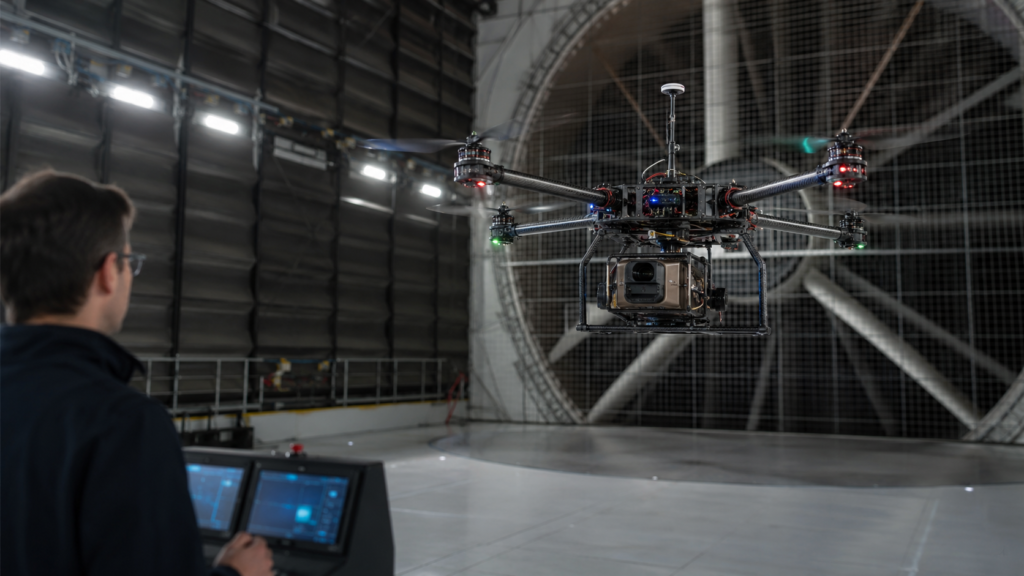
We test route planning, obstacle avoidance, sensing reliability, and autonomous mission execution.
Experiqs helps evaluate:
This helps improve confidence before field deployment and mission trials.
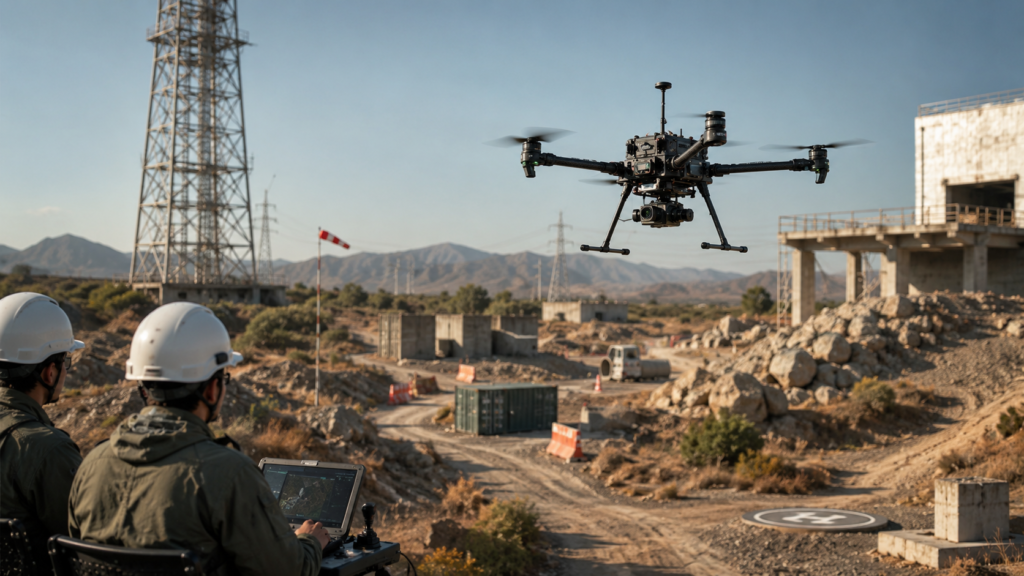
We support integration of sensors, cameras, compute systems, communication units, and mission-specific payloads.
We help assess:
This helps improve system integration without compromising stability or endurance.
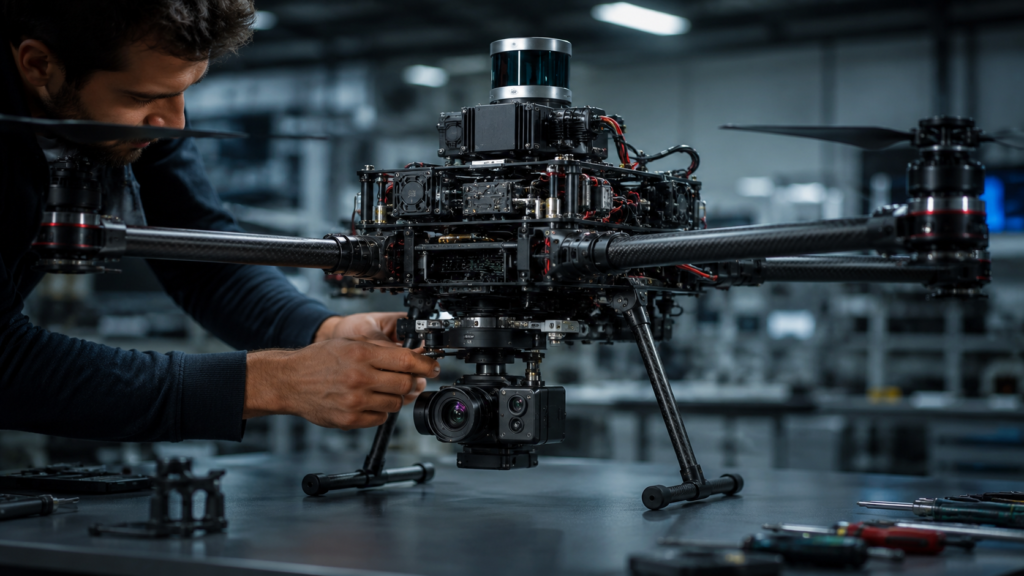
Aerodynamic efficiency and propulsion performance strongly affect UAV endurance, stability, lift capacity, and power consumption.
We help analyze:
This helps improve UAV efficiency, flight time, and operating performance.
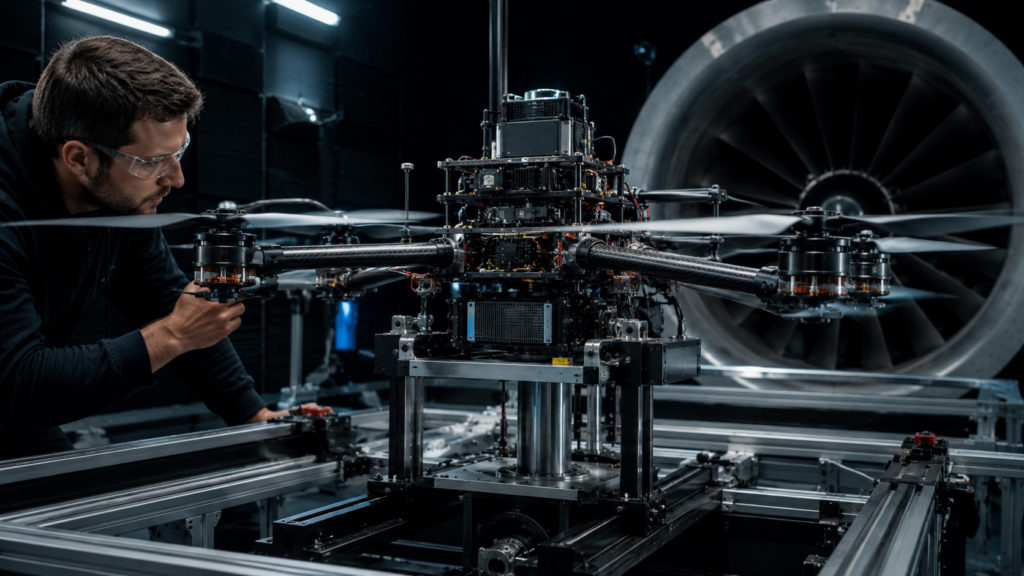
Drones experience vibration, landing loads, transport loads, payload loads, and occasional impact conditions.
We help evaluate:
This helps improve durability, sensor reliability, and platform robustness.
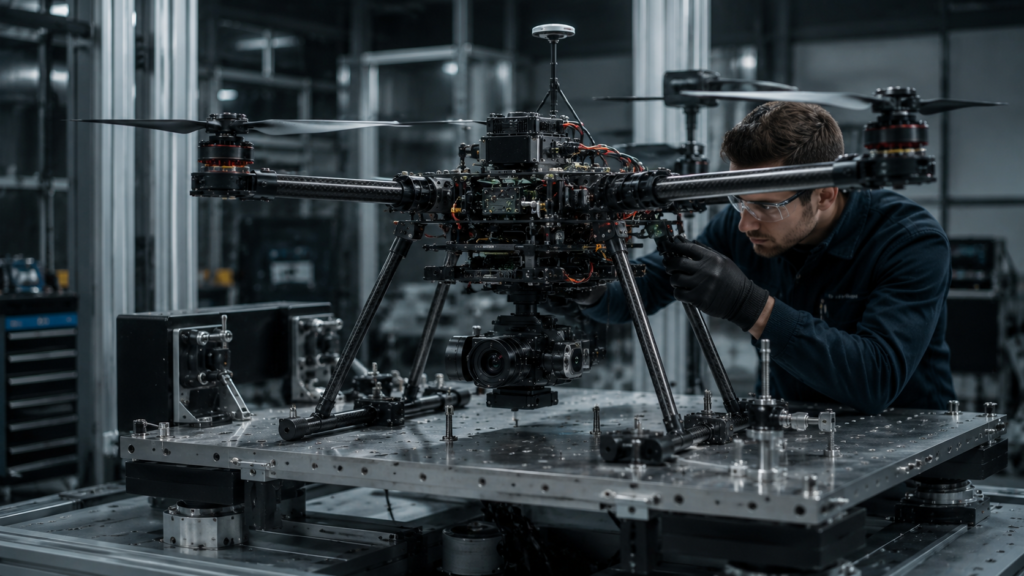
Compact UAV systems contain batteries, controllers, motors, ESCs, sensors, cameras, communication modules, and compute units that generate heat during operation.
We help assess:
This helps improve electronics reliability and reduce mission interruption risk.
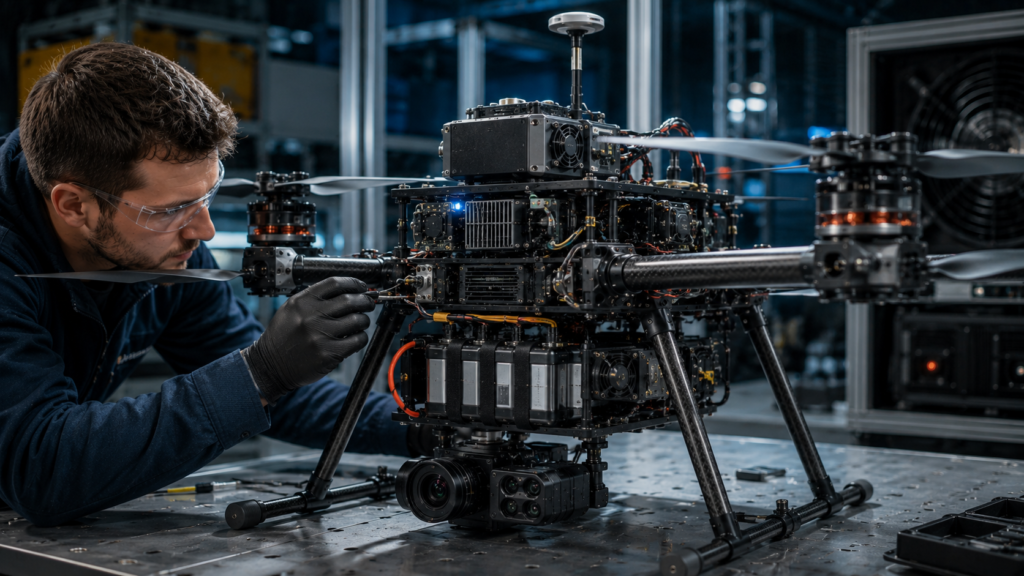
Experiqs helps UAV and drone development teams address engineering challenges, including:
Evaluate control response, payload effects, wind disturbance behaviour, and operating limits before deployment.
Validate route planning, obstacle avoidance, sensing reliability, and autonomous mission execution.
Integrate cameras, sensors, compute systems, and mission payloads without compromising flight performance.
Reduce thermal, structural, vibration, sensor, and electronics-related risks in field operation.
Improve aerodynamic behaviour, propulsion performance, power demand, and mission energy usage.
Use engineering-led validation to reduce prototype iterations and improve deployment readiness.
Experiqs combines CFD, FEA, thermal analysis, vibration assessment, system engineering, AI/ML support, and simulation-led product development to improve drone and UAV platforms.
Our strength lies in evaluating the UAV as a complete system. We help teams understand how payloads, sensors, control systems, propulsion, thermal behaviour, structures, and mission conditions interact during real-world operation.
By validating UAV behaviour virtually before field trials, Experiqs helps drone development teams reduce uncertainty, improve flight reliability, optimize mission performance, and make stronger engineering decisions.
Optimize flight stability, payload integration, mission validation, sensing reliability, propulsion performance, structural durability, and thermal reliability with Experiqs’ Drones & UAV System Engineering services.
Talk to our experts to evaluate your UAV platform and identify practical opportunities for better flight performance, stronger reliability, and safer autonomous mission execution.
Partner with Experiqs to transform complex ideas into validated, industry-ready engineering solutions
Discover how to partner with Experiqs and get started quickly
Whether you’re exploring a new R&D initiative, seeking advanced simulations, planning experimental validation, or evaluating product feasibility—our experts are ready to assist you.
