
More results...
More results...
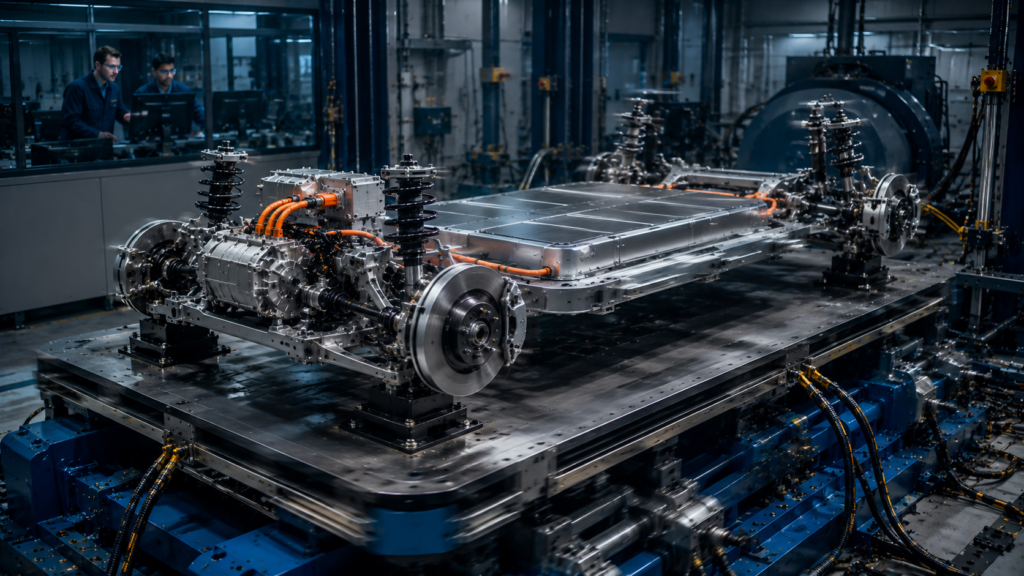
Vehicle structures and components must remain strong, safe, lightweight, and reliable under real operating conditions. Chassis systems, suspension parts, battery enclosures, brackets, mounts, panels, frames, housings, and safety-critical components are exposed to road loads, vibration, thermal stress, cyclic loading, impact forces, and long-term durability requirements.
Structural Durability & FEA Analysis helps automotive and electric mobility teams understand how vehicle components respond to mechanical loads before physical testing or field failures occur. By using simulation-led engineering, Experiqs helps identify weak regions, reduce unnecessary weight, improve stiffness, evaluate fatigue life, and validate structural safety.
Experiqs provides Structural Durability & FEA Analysis services for automotive OEMs, EV manufacturers, mobility startups, component suppliers, and engineering teams. We use finite element analysis, stress and deformation studies, fatigue life evaluation, vibration assessment, road load analysis, thermal stress evaluation, and lightweight design optimization to improve component strength, safety, and durability.
Automotive components operate under repeated and changing loads throughout their service life. Road inputs, acceleration, braking, cornering, vibration, thermal cycling, battery pack loads, motor loads, mounting constraints, and assembly conditions can all create stress and deformation.
A component may appear strong under static loading but may still fail under cyclic road loads, vibration, fatigue, thermal stress, or long-term operating conditions. This is especially important for safety-critical parts, suspension components, battery enclosures, brackets, mounts, chassis structures, and EV powertrain supports.
For electric vehicles, structural durability becomes even more important because battery packs, e-axles, power electronics, and compact powertrain layouts introduce new load paths, thermal interactions, and packaging constraints. Battery enclosures must support structural protection, thermal management, sealing, crash safety, and vibration resistance.
Simulation-led FEA helps identify high-stress zones, deformation patterns, fatigue-sensitive regions, stiffness limitations, and overdesigned areas before prototype development. Experiqs helps automotive teams improve reliability, reduce weight, validate designs, and make stronger engineering decisions early in the development cycle.
We assess chassis, suspension parts, battery enclosures, brackets, mounts, panels, and safety-critical components under operating loads.
Our analysis helps assess:
This helps identify stress concentration, excessive deformation, stiffness issues, and structural risk areas.
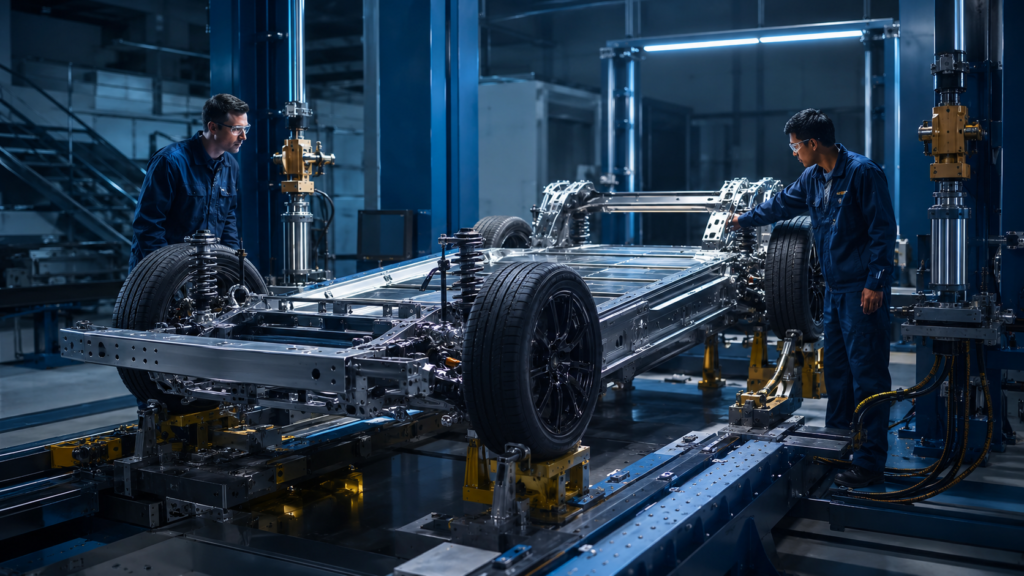
Repeated road loads, vibration effects, thermal stress, and cyclic loading can reduce component life over time.
Experiqs helps evaluate:
This helps improve durability and reduce the risk of premature failure.
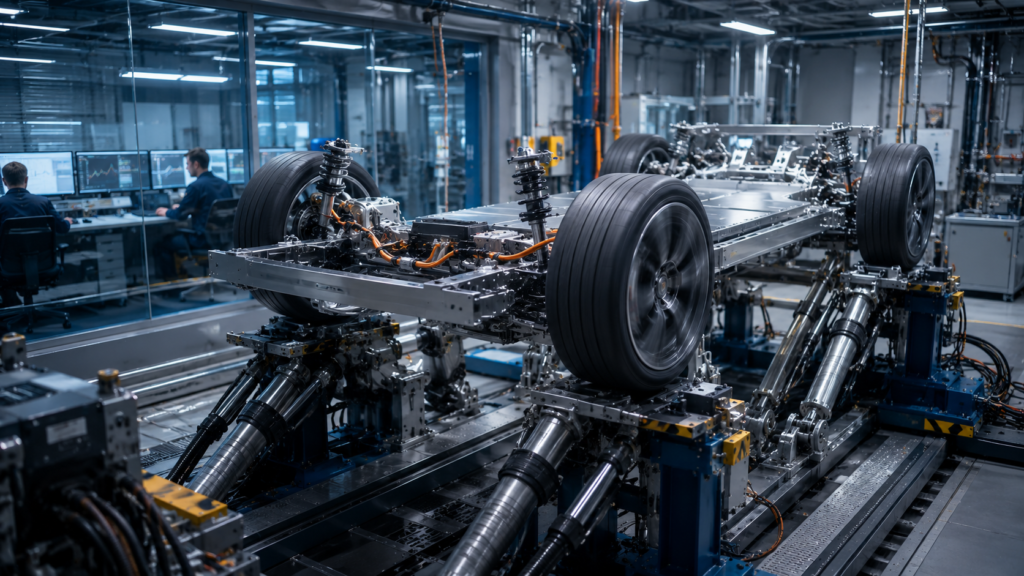
Automotive and EV teams need lighter components without compromising strength, stiffness, safety, or manufacturability.
We support optimization of:
This helps reduce unnecessary weight while maintaining structural performance and safety.
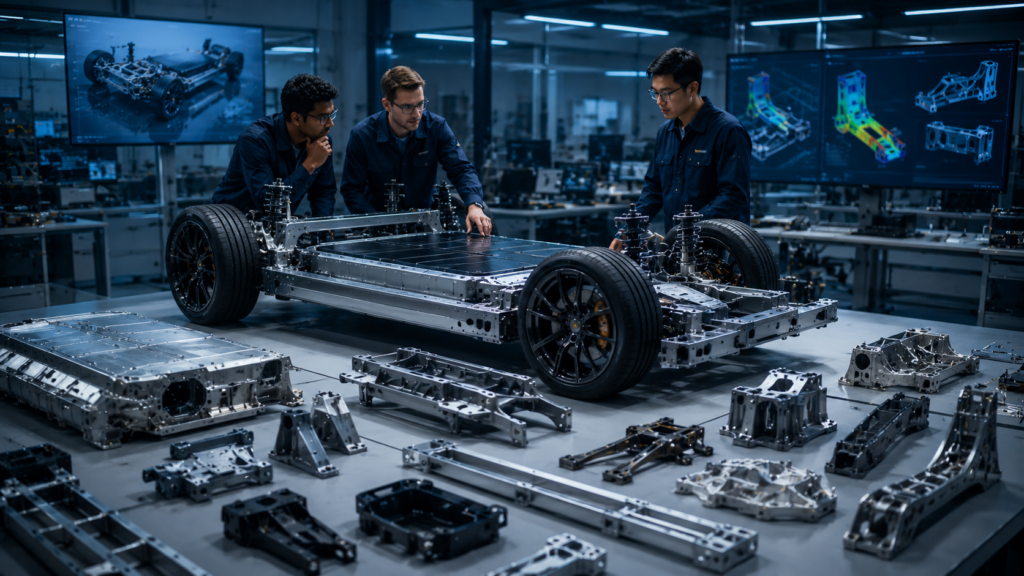
Battery enclosures must protect cells and modules while meeting structural, thermal, sealing, and durability requirements.
We help analyze:
This helps improve EV battery pack safety, durability, and integration reliability.
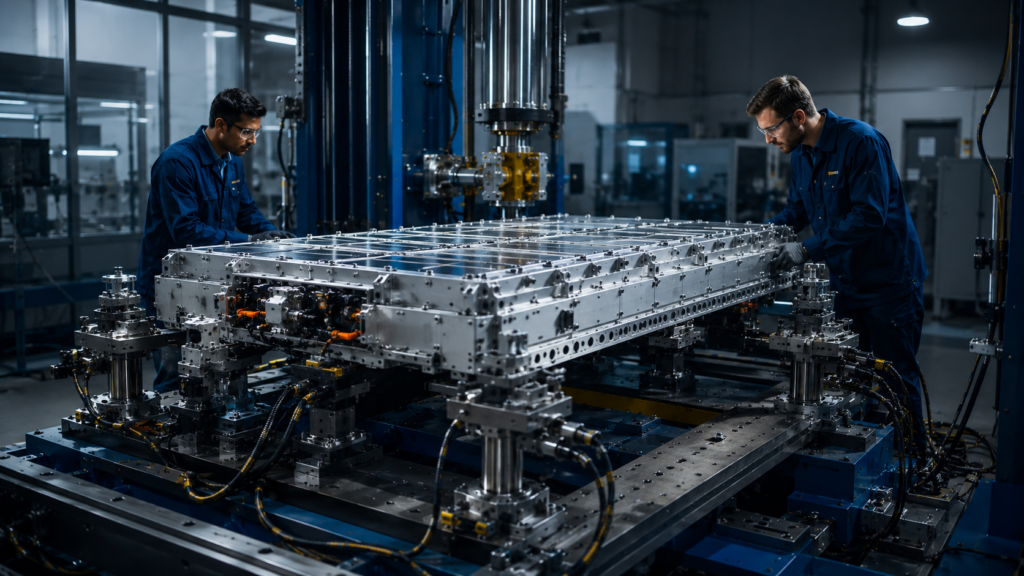
Vehicle components are exposed to vibration from road inputs, motors, powertrain systems, suspension movement, and rotating components.
We evaluate:
This helps reduce vibration-related durability risks and improves vehicle reliability.
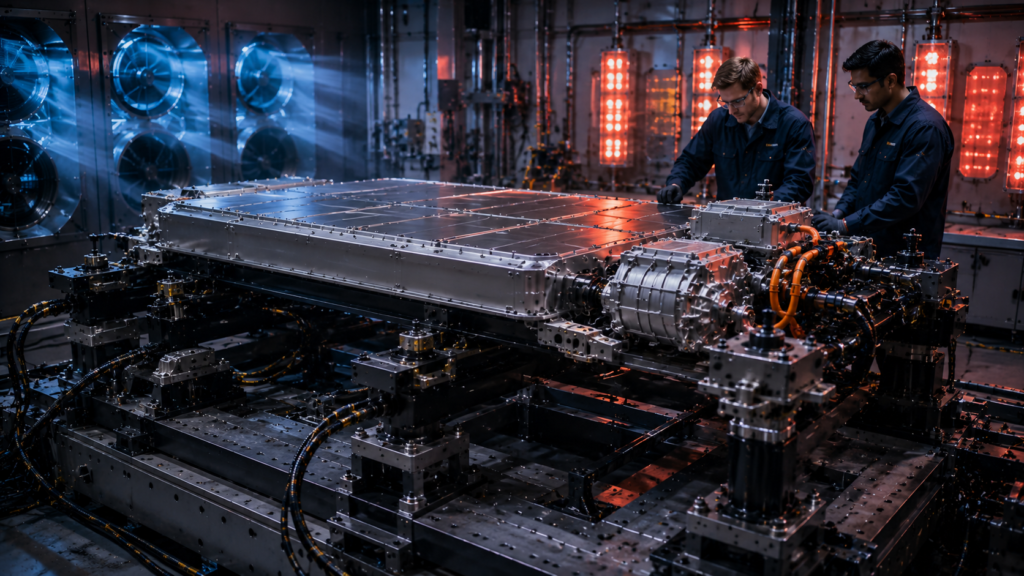
Thermal loads can affect structural behaviour in EV batteries, power electronics, motor housings, underhood components, and thermal management systems.
We help assess:
This helps identify structural risks caused by heat and temperature variation.
Experiqs helps automotive OEMs, EV manufacturers, mobility startups, and component suppliers address structural durability challenges, including:
Evaluate vehicle structures and critical components under realistic mechanical, thermal, and vibration loads.
Identify fatigue-prone regions, cyclic loading risks, and durability concerns before they cause failure.
Optimize material usage and structural design to reduce unnecessary weight while maintaining strength and stiffness.
Improve battery enclosure strength, stiffness, mounting reliability, and durability under vehicle loads.
Use FEA simulation to validate designs before prototype manufacturing, testing, or production decisions.
Identify weak regions, deformation risks, and structural improvements early in the product development cycle.
Experiqs combines FEA simulation, structural engineering, fatigue assessment, vibration analysis, thermal-structural evaluation, and lightweight design expertise to improve automotive and EV component durability.
Our strength lies in identifying structural risks before they become prototype failures or field issues. We help clients understand where stress concentration occurs, how road loads and vibration affect durability, and how components can be improved without unnecessary weight.
By validating structural behaviour virtually, Experiqs helps automotive teams reduce prototype iterations, improve safety, strengthen reliability, and make better design decisions before physical testing.
Evaluate stress, deformation, fatigue life, road load durability, vibration response, and lightweight design opportunities with Experiqs’ Structural Durability & FEA Analysis services.
Talk to our experts to assess your vehicle structures or components and identify practical opportunities for stronger, safer, lighter, and more durable designs.
Partner with Experiqs to transform complex ideas into validated, industry-ready engineering solutions
Discover how to partner with Experiqs and get started quickly
Whether you’re exploring a new R&D initiative, seeking advanced simulations, planning experimental validation, or evaluating product feasibility—our experts are ready to assist you.
