
More results...
More results...
As AI, HPC, cloud computing, and high-density rack deployments continue to grow, traditional air-cooling systems may not be sufficient to manage increasing heat loads. Liquid cooling offers a more effective path for high-performance computing environments, but successful implementation requires careful engineering validation.
Liquid cooling performance depends on coolant flow distribution, pressure drop, pumping power, heat removal capability, CDU integration, rack-level connections, facility water availability, and thermal interaction with the existing cooling infrastructure.
Experiqs provides simulation-driven Liquid Cooling Readiness & Integration services for data centers and mission-critical facilities. Using CFD analysis, hydraulic modelling, transient thermal simulation, and system-level engineering evaluation, we help operators, consultants, EPC teams, and facility owners assess readiness for liquid-cooled systems and plan reliable integration strategies.
Liquid cooling is not only a rack-level upgrade. It affects the complete cooling ecosystem, including chilled water loops, coolant distribution units, pumps, manifolds, heat exchangers, pipe networks, rack layout, monitoring strategy, and backup cooling philosophy.
Without proper readiness assessment, data centers may face flow imbalance, excessive pressure drop, insufficient heat rejection, unstable supply temperature, poor redundancy, integration conflicts, and reliability risks during high-density operation.
Experiqs helps teams move from assumption-based planning to data-driven liquid cooling deployment by simulating coolant behavior, heat transfer performance, hydraulic resistance, transient thermal response, and facility-level integration requirements.
We evaluate coolant movement across liquid-cooled racks, manifolds, CDUs, and connected cooling circuits to ensure balanced and reliable flow delivery.
Our coolant flow distribution analysis helps assess:
This helps ensure that every liquid-cooled load receives the required coolant flow for effective heat removal.
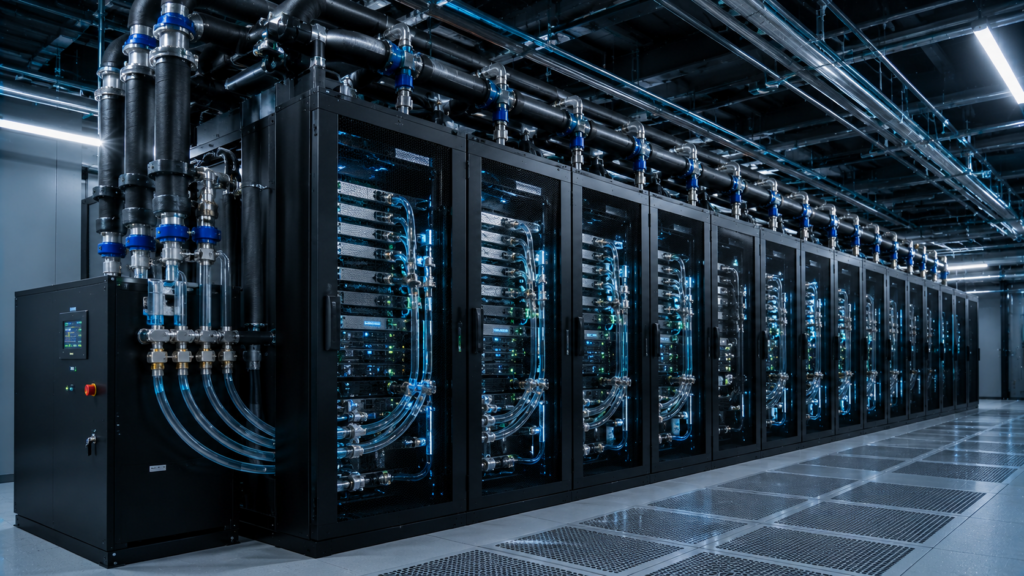
Liquid cooling systems must be designed with the right hydraulic performance to avoid excessive pumping energy, flow starvation, or unstable operation.
Experiqs analyzes:
Our recommendations help reduce unnecessary pumping power while maintaining reliable cooling delivery.
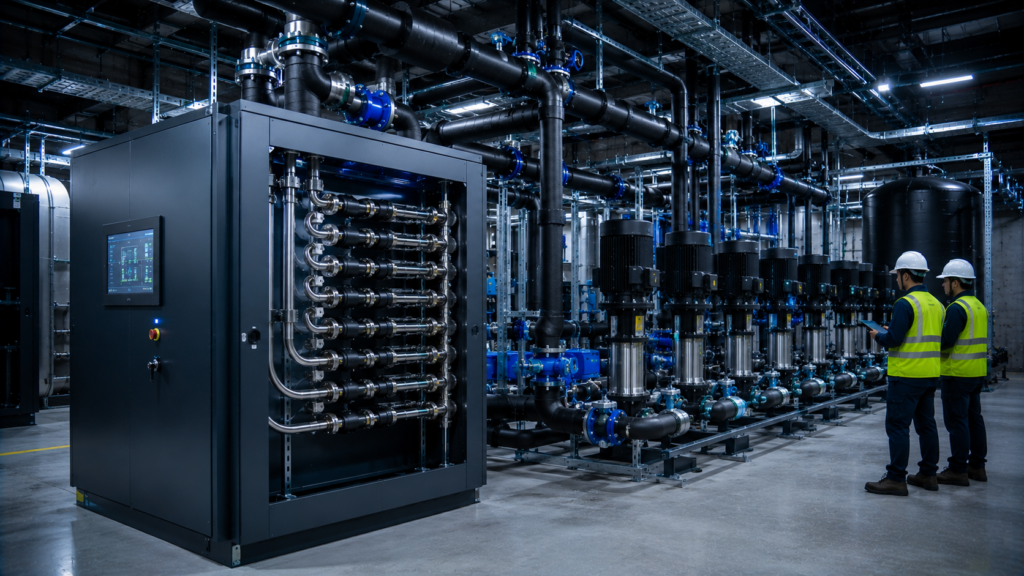
Advanced liquid cooling systems may involve rapid load changes, thermal transients, phase change behavior, or high heat flux cooling applications. Experiqs supports detailed thermal simulation to evaluate system response over time.
We assess:
This helps validate system reliability under real operating and emergency scenarios.
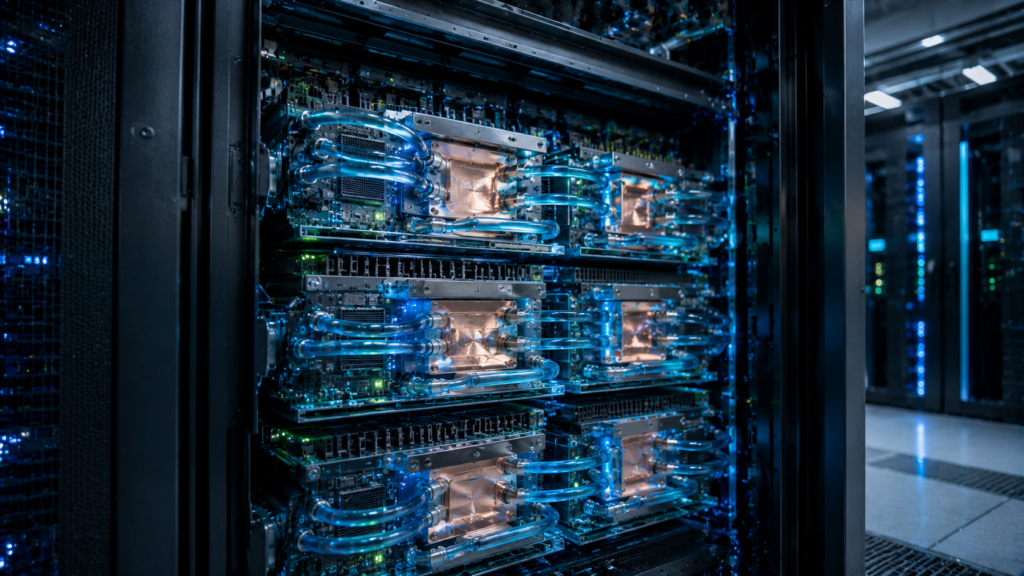
Liquid cooling requires careful integration between IT cooling equipment and the facility cooling network. Experiqs evaluates how liquid-cooled systems connect with chilled water, condenser water, process cooling, or secondary coolant loops.
We analyze:
This helps ensure that liquid cooling deployment aligns with the facility’s thermal and hydraulic capacity.
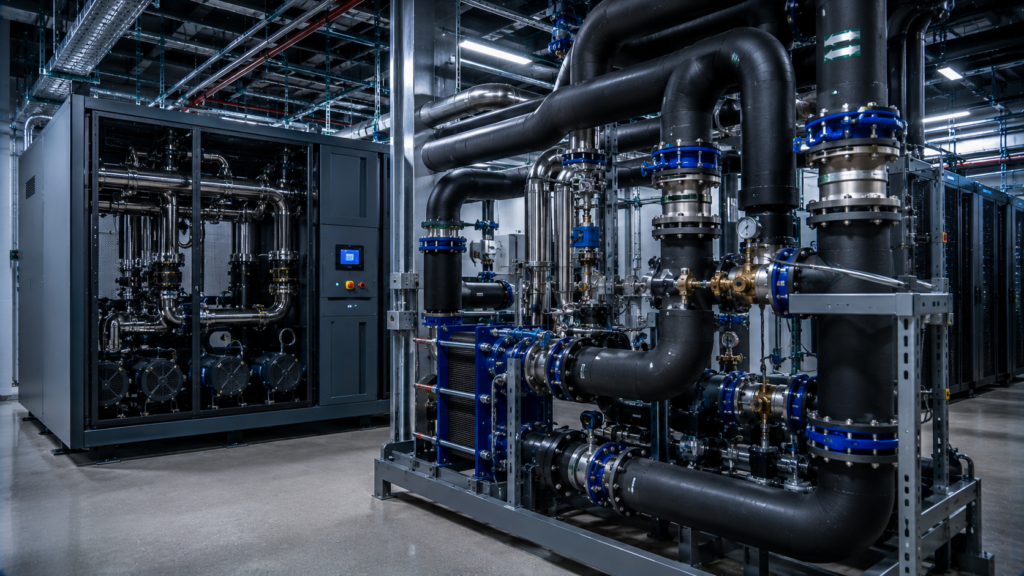
Different liquid cooling technologies require different infrastructure planning. Experiqs supports readiness assessment for both direct-to-chip and immersion cooling applications.
We help evaluate:
This helps data center teams select and integrate the right liquid cooling approach for their workload and facility conditions.
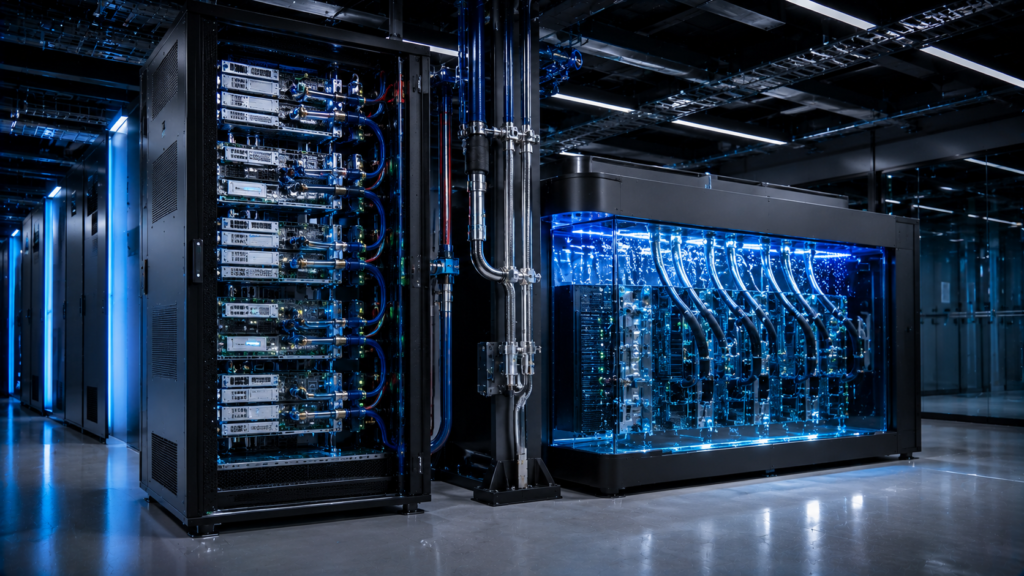
Many data centers operate liquid-cooled racks alongside air-cooled equipment. Experiqs evaluates how hybrid cooling environments perform when both systems operate together.
We analyze:
This helps maintain stable data hall conditions during gradual transition to liquid cooling.
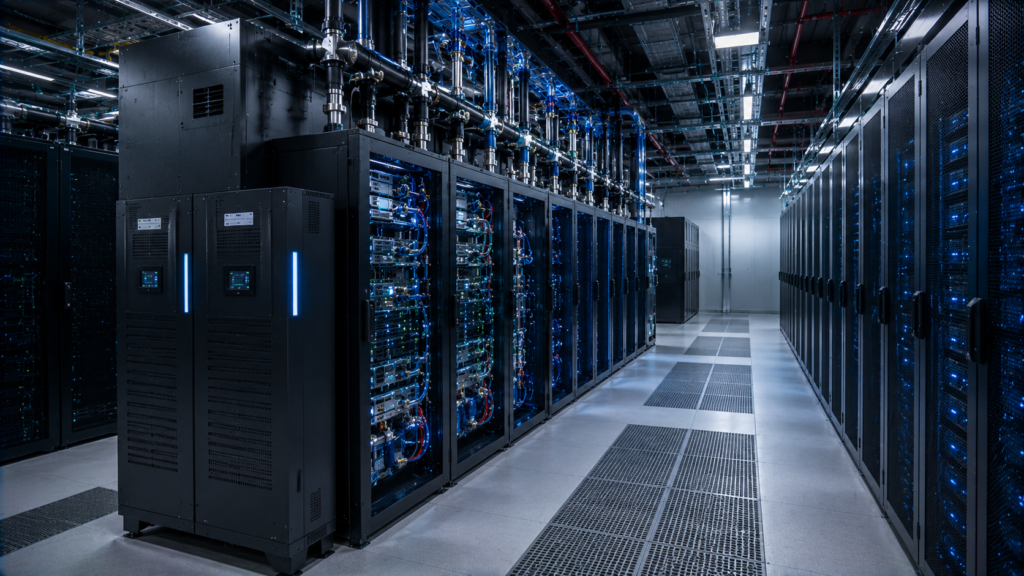
Experiqs helps data center and critical infrastructure teams address liquid cooling challenges, including:
Ensure coolant is distributed effectively across racks, manifolds, CDUs, and connected cooling circuits.
Validate that cooling coils, CRAH units, AHUs, PAHUs, and other connected loads receive the required chilled water flow.
Estimate pressure drop and pumping requirements to reduce unnecessary hydraulic energy consumption.
Validate thermal performance for direct-to-chip, immersion, two-phase, and hybrid liquid cooling systems.
Assess facility water compatibility, CDU placement, pipe routing, redundancy, and operational constraints.
Support scalable infrastructure planning for AI, HPC, cloud, and next-generation rack densities.
Our Liquid Cooling Readiness & Integration service is suitable for:
Experiqs follows a simulation-led workflow to evaluate liquid cooling readiness and integration performance.
We review rack power densities, cooling technology type, CDU details, coolant properties, pipe routing, manifold layout, pump data, heat exchanger specifications, facility water conditions, redundancy requirements, and operating scenarios.
A detailed model is developed to represent coolant loops, racks, CDUs, pumps, manifolds, heat exchangers, piping, valves, and connected facility cooling systems.
We evaluate current infrastructure capability, including available cooling capacity, flow distribution, pressure drop, pumping power, supply temperature compatibility, and integration constraints.
Multiple operating scenarios are tested, including peak IT load, part load, pump failure, CDU failure, redundancy operation, future rack expansion, and hybrid air-liquid cooling conditions.
We assess CDU placement, pipe sizing, manifold design, flow balancing, facility water connection, heat exchanger performance, and backup cooling strategy.
We provide practical recommendations for liquid cooling integration, hydraulic optimization, thermal performance improvement, redundancy planning, and future-ready deployment.
Experiqs combines CFD simulation, thermal engineering, hydraulic modelling, system modelling, and digital twin expertise to solve complex cooling challenges in high-density data centers and critical infrastructure.
Our strength lies in understanding how coolant flow, pressure drop, heat transfer, pumping energy, facility water systems, and data hall airflow interact during liquid cooling deployment. We convert complex liquid cooling behavior into practical engineering insights that help clients improve reliability, reduce deployment risk, and make confident infrastructure decisions.
By validating liquid cooling readiness before implementation, Experiqs helps data center teams support AI workloads, improve cooling efficiency, and prepare for the next generation of high-density computing.
Support AI-ready infrastructure, improve coolant flow distribution, reduce hydraulic losses, and validate system-level integration with Experiqs’ Liquid Cooling Readiness & Integration services.
Talk to our experts to evaluate your data center’s liquid cooling readiness and identify practical steps for reliable high-density cooling deployment.
Partner with Experiqs to transform complex ideas into validated, industry-ready engineering solutions
Discover how to partner with Experiqs and get started quickly
Whether you’re exploring a new R&D initiative, seeking advanced simulations, planning experimental validation, or evaluating product feasibility—our experts are ready to assist you.
