
More results...
More results...
Efficient flow movement is critical for the performance of thermal equipment, cooling systems, HVAC systems, ducts, manifolds, valves, diffusers, passages, and piping networks. When flow paths are not properly designed, systems can experience high pressure drop, uneven flow distribution, recirculation, dead zones, turbulence, poor heat transfer, unstable operation, and unnecessary energy consumption.
CFD-based flow path optimization helps engineering teams understand how air, liquid, gas, or process fluid moves through equipment before physical modifications are made. By using simulation, internal flow behavior can be visualized, measured, and improved with greater accuracy.
Experiqs provides CFD-Based Flow Path Optimization services for thermal equipment, industrial cooling systems, HVAC systems, heat exchangers, fans, blowers, pumps, ducting systems, manifolds, piping networks, and process equipment. We use CFD simulation, pressure drop analysis, flow distribution studies, velocity balancing, turbulence analysis, and geometry optimization to improve equipment efficiency, reduce resistance, and enhance system performance.
Flow path performance directly affects system efficiency, energy use, heat transfer, equipment output, and operational reliability. Even a small restriction, sharp bend, poor transition, or uneven branch distribution can create significant pressure losses and reduce overall system performance.
In many thermal and fluid systems, performance losses are hidden inside the equipment. These losses may not be visible during physical inspection but can appear as high fan or pump power, weak cooling performance, unstable flow delivery, vibration, fouling, overheating, or reduced process efficiency.
Traditional testing can confirm that a system is underperforming, but it may not clearly show where the problem occurs. CFD simulation helps identify high-loss regions, flow separation, stagnant zones, recirculation paths, velocity imbalance, and pressure drop sources.
Experiqs helps clients move from trial-and-error modifications to simulation-led optimization by identifying the root causes of flow inefficiency and validating improved flow path designs before implementation.
We analyze flow behavior inside equipment and system components to understand how fluid moves through complex internal paths.
Our analysis helps assess:
This helps improve fluid movement and ensures more stable flow delivery through the equipment.
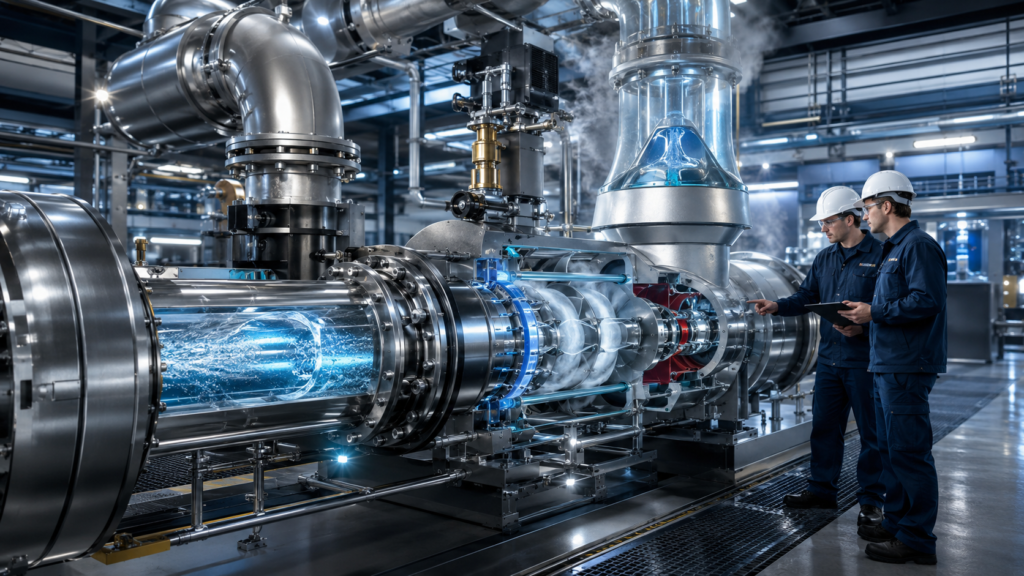
High pressure drop increases fan or pump power requirements and reduces system efficiency. Experiqs identifies high-loss regions and recommends geometry improvements to reduce unnecessary resistance.
We help evaluate:
This helps improve energy efficiency, reduce operating cost, and increase useful system output.

Uneven flow distribution can reduce thermal performance, create unstable operation, and cause poor equipment output. We use CFD simulation to improve velocity balance and reduce poor flow regions.
We analyze:
This helps improve cooling, heating, process consistency, and equipment reliability.
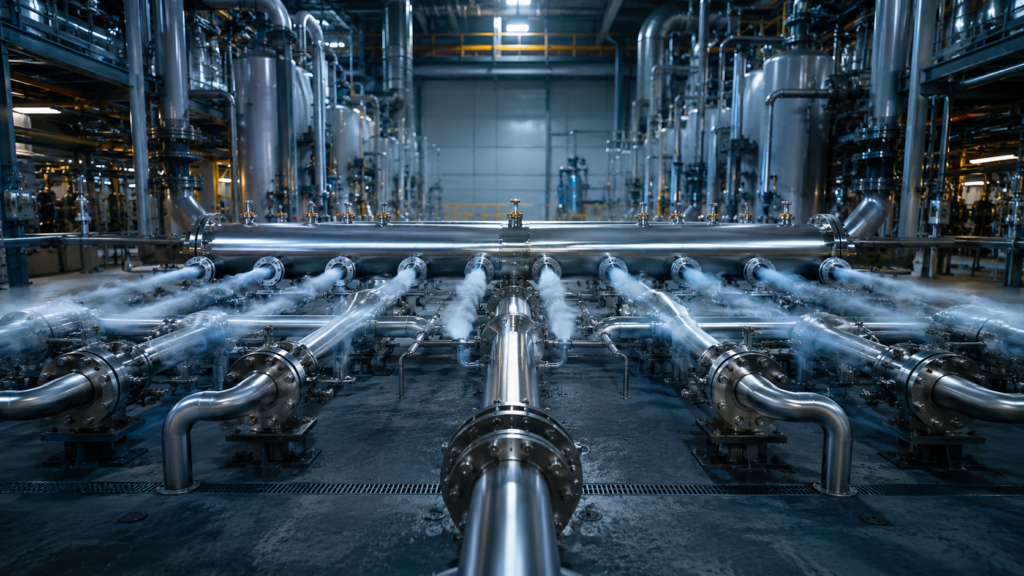
Dead zones and recirculation regions can reduce flow effectiveness, create localized heating, increase contamination buildup, and affect system stability.
Experiqs helps identify:
This helps improve active flow movement and reduces performance losses caused by stagnant or unstable flow.
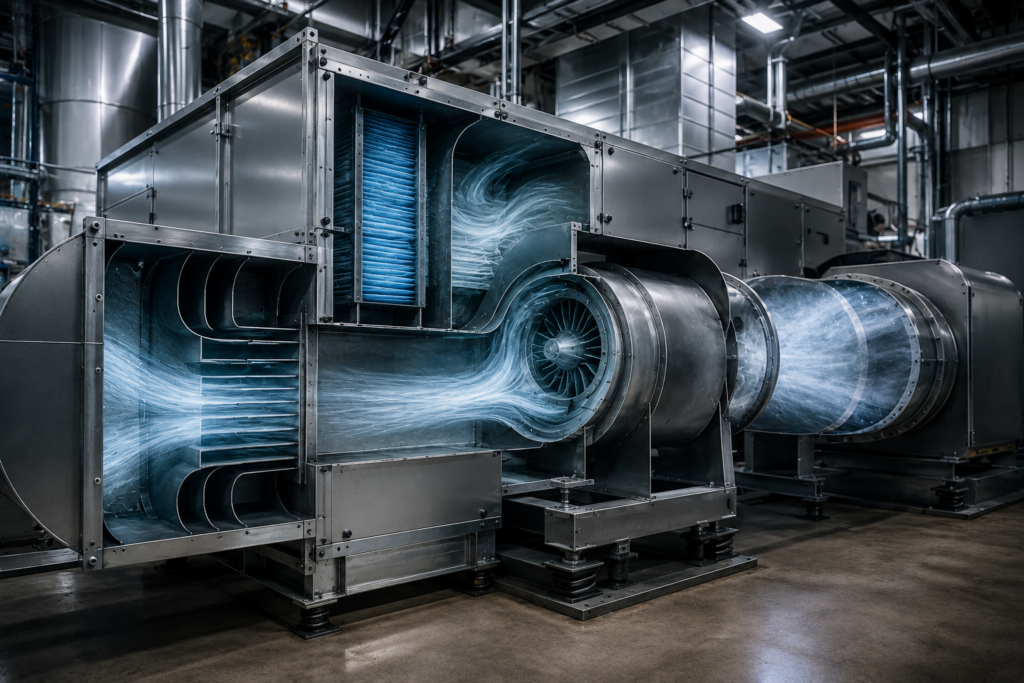
Flow path geometry has a major influence on pressure drop, velocity balance, turbulence, and system efficiency. Experiqs helps refine geometry to improve flow quality and reduce resistance.
We support optimization of:
This helps improve system performance without unnecessary physical trial-and-error.
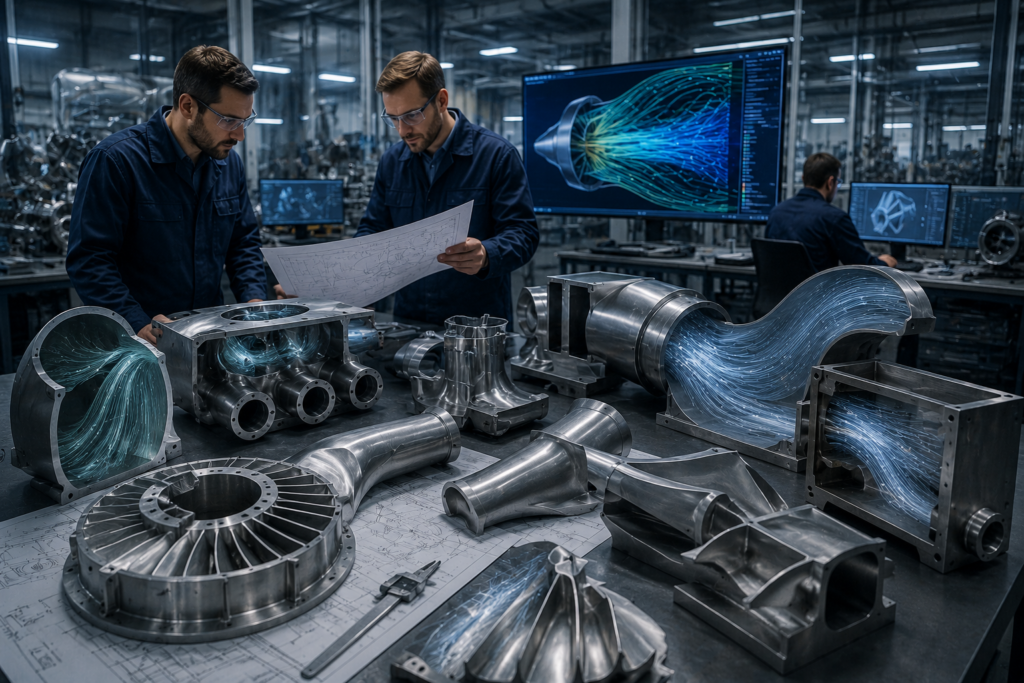
External airflow around equipment can affect cooling performance, ventilation effectiveness, heat rejection, and environmental performance.
We analyze:
This helps improve cooling performance and prevent external flow conditions from limiting equipment efficiency.

Reduce unnecessary resistance inside ducts, pipes, manifolds, valves, diffusers, passages, and equipment flow paths.
Balance flow delivery across branches, channels, heat transfer surfaces, and internal components.
Reduce fan and pump power demand by improving flow quality and minimizing pressure losses.
Improve cooling, heating, and heat transfer efficiency through better airflow or fluid flow distribution.
Minimize stagnant flow regions, reverse flow zones, and inefficient recirculation paths.
Compare multiple flow path designs virtually before manufacturing, testing, or field implementation.
Experiqs combines CFD simulation, thermal engineering, fluid flow analysis, pressure drop evaluation, and design optimization expertise to improve internal and external flow path performance.
Our strength lies in identifying hidden flow losses that are difficult to detect through physical testing alone. We help clients understand where resistance occurs, why flow distribution becomes uneven, and how geometry can be improved for better system performance.
By validating flow improvements virtually before implementation, Experiqs helps teams reduce development risk, lower energy consumption, improve equipment output, and deliver more reliable thermal and fluid systems.
Improve internal flow behavior, reduce pressure drop, balance flow distribution, eliminate dead zones, and enhance equipment efficiency with Experiqs’ CFD-Based Flow Path Optimization services.
Talk to our experts to evaluate your flow path design and identify practical opportunities for smoother flow, lower resistance, and better system performance.
Partner with Experiqs to transform complex ideas into validated, industry-ready engineering solutions
Discover how to partner with Experiqs and get started quickly
Whether you’re exploring a new R&D initiative, seeking advanced simulations, planning experimental validation, or evaluating product feasibility—our experts are ready to assist you.
