
More results...
More results...
Chilled water systems are the backbone of cooling infrastructure in data centers, mission-critical facilities, commercial buildings, and industrial plants. The performance of the cooling system depends not only on chiller capacity, but also on how effectively chilled water is distributed through pipes, pumps, valves, heat exchangers, CRAH units, AHUs, PAHUs, and cooling coils.
Poor hydraulic balance, high pressure losses, flow restrictions, incorrect pump operation, or uneven chilled water distribution can reduce cooling performance, increase energy consumption, and create reliability risks for critical equipment.
Experiqs provides simulation-driven Chilled Water Circuit Modelling services using hydraulic analysis, thermal performance evaluation, and system-level engineering modelling. We help data center operators, consultants, EPC teams, facility owners, and MEP designers improve chilled water flow distribution, validate cooling capacity delivery, and reduce unnecessary pumping energy.
A chilled water network must deliver the right flow rate at the right temperature to every cooling load. When the circuit is not properly balanced, some equipment may receive excess flow while other zones experience insufficient cooling.
This can lead to low delta-T syndrome, high pump power, unstable control valve operation, poor heat transfer, overloading of pumps, and reduced cooling reliability during peak load conditions.
Experiqs helps teams move from rule-of-thumb system checks to data-driven chilled water optimization by modelling pipe networks, flow distribution, pressure drops, pump operation, valve behavior, heat transfer, and cooling demand across the entire circuit.
We perform detailed hydraulic modelling to evaluate flow movement, pressure losses, and hydraulic balance across chilled water circuits.
Our pipe network analysis helps assess:
This helps ensure chilled water is delivered efficiently and reliably to all critical cooling loads.

Chilled water systems must transfer cooling capacity effectively under different operating conditions. Experiqs evaluates the thermal behavior of the circuit to understand how cooling energy is delivered across the network.
We analyze:
The outcome is improved cooling reliability, better thermal control, and stronger confidence in system performance.
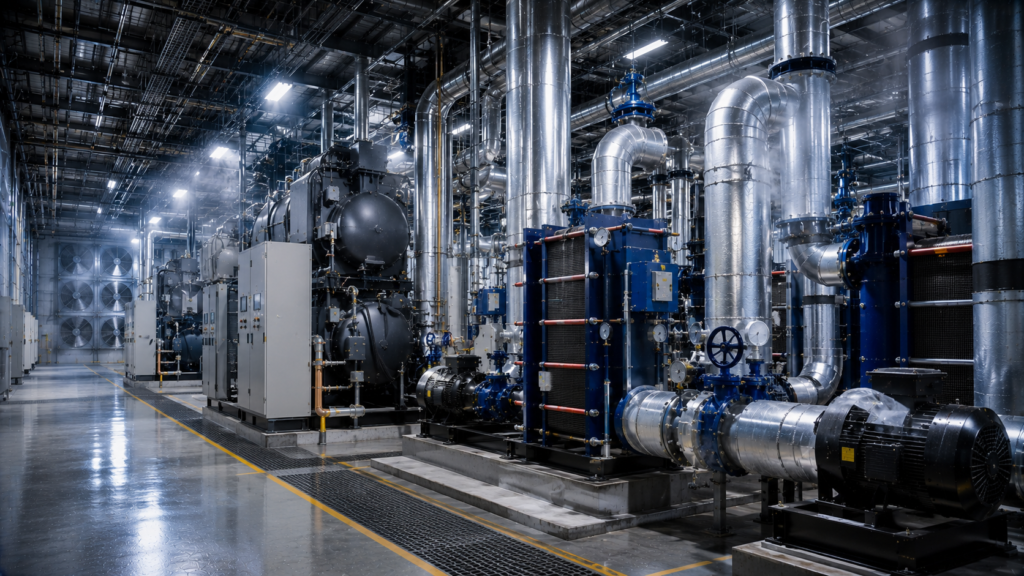
Pumping energy can become a major contributor to cooling system operating cost, especially in large data centers and critical infrastructure facilities. Experiqs identifies opportunities to reduce pumping power while maintaining reliable cooling delivery.
We help evaluate:
Our recommendations help reduce avoidable pump energy consumption without compromising cooling reliability.
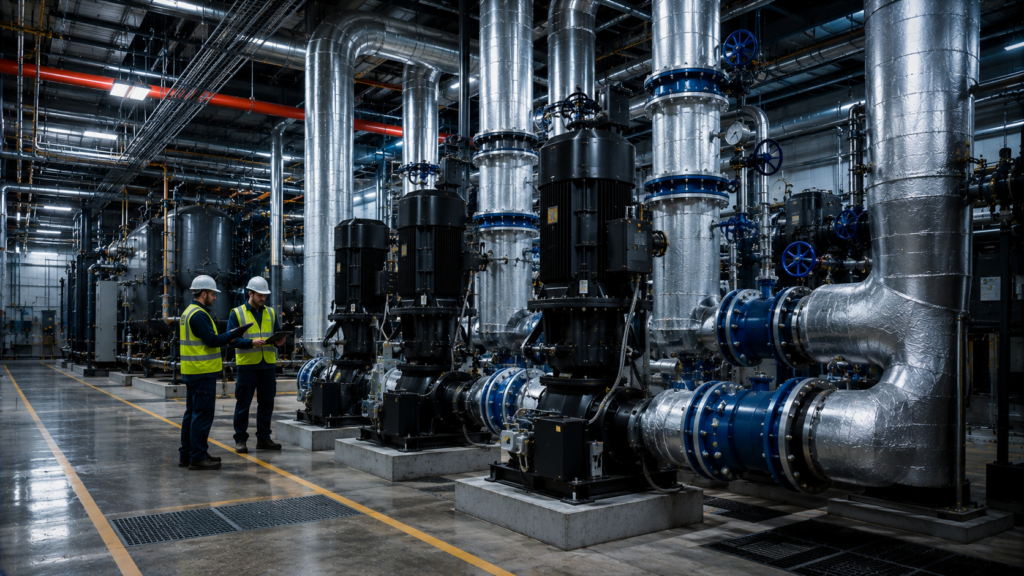
Unbalanced chilled water circuits can cause unstable operation, uneven cooling, and unnecessary energy use. Experiqs supports hydraulic balancing by identifying how chilled water flow is distributed across the network.
We assess and optimize:
This helps achieve stable flow delivery and improved chilled water utilization.
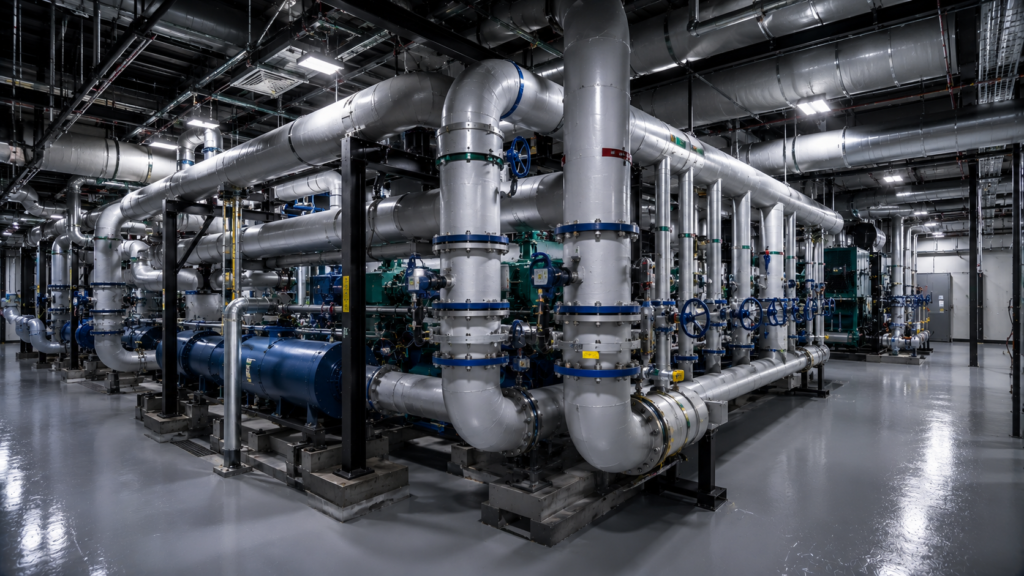
Chilled water systems must respond reliably during peak demand, load changes, maintenance conditions, and equipment failures. Experiqs evaluates how the circuit performs under different operating scenarios.
We analyze:
This helps validate whether the chilled water network can support current and future cooling requirements.
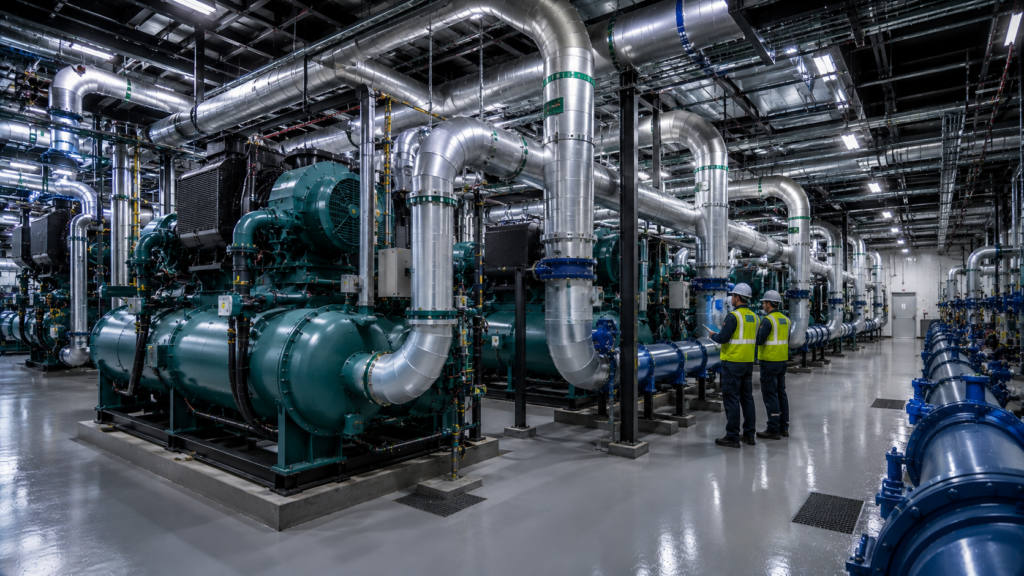
Experiqs helps facility and data center teams address chilled water system challenges, including:
Ensure chilled water flow is properly distributed across critical cooling loads.
Validate that cooling coils, CRAH units, AHUs, PAHUs, and other connected loads receive the required chilled water flow.
Identify over-pumping, excessive pressure drop, and pump optimization opportunities.
Support better heat transfer, return water temperature performance, and chilled water utilization.
Understand system behavior under full-load, part-load, emergency, and maintenance conditions.
Use hydraulic and thermal modelling results to support confident engineering decisions before implementation.
Our Chilled Water Circuit Modelling service is suitable for:
Experiqs follows a system-level modelling workflow to evaluate chilled water circuit performance.
We review chilled water schematics, pipe routing, pipe sizes, pump details, chiller data, valve schedules, cooling coil specifications, flow requirements, operating temperatures, and control philosophy.
A detailed chilled water network model is developed to represent pipes, fittings, valves, pumps, headers, risers, branches, coils, heat exchangers, and connected cooling loads.
We evaluate current or proposed system performance, including flow distribution, pressure drops, pump operating points, hydraulic balance, and cooling capacity delivery.
Multiple operating conditions are tested, including peak load, part load, pump staging, valve modulation, equipment isolation, maintenance operation, and future expansion scenarios.
We provide clear recommendations for pipe sizing, valve settings, pump operation, differential pressure control, balancing strategy, and energy optimization.
Experiqs combines CFD simulation, thermal engineering, hydraulic modelling, system modelling, and digital twin expertise to solve complex cooling infrastructure challenges.
Our strength lies in understanding how chilled water flow, pressure, temperature, pump operation, and cooling loads interact across the complete network. We convert complex hydraulic and thermal behavior into practical engineering insights that help clients improve cooling reliability, reduce energy consumption, and make confident design decisions.
By validating chilled water circuit performance before construction, commissioning, retrofit, or expansion, Experiqs helps facility teams reduce operational risk and improve long-term cooling efficiency.
Improve chilled water flow distribution, reduce pressure losses, optimize pump energy, and strengthen cooling reliability with Experiqs’ Chilled Water Circuit Modelling services.
Talk to our experts to evaluate your chilled water network and identify practical opportunities for hydraulic and thermal performance improvement.
Partner with Experiqs to transform complex ideas into validated, industry-ready engineering solutions
Discover how to partner with Experiqs and get started quickly
Whether you’re exploring a new R&D initiative, seeking advanced simulations, planning experimental validation, or evaluating product feasibility—our experts are ready to assist you.
