
Rising rack density is turning cooling from a utility into the decision that sets how much compute a site can run. Here is how to plan the transition before it becomes a crisis.
For most of the last decade, a data centre rack drawing 10 kW was considered substantial. Halls across India were designed around that reality: raised floors, perimeter cooling units, hot and cold aisles, and enough airflow to carry the heat away. That design served the industry well.
Artificial intelligence has changed the arithmetic. Racks built for AI training and inference now enter production at well above 100 kW, and published industry roadmaps point higher still. The servers can be bought and shipped in weeks. The building around them was designed for a different era.
India is building fast, and AI is a growing share
India’s data centre market is expanding quickly. CBRE expects more than 200 MW of new capacity in the second half of 2026, taking total operational capacity to roughly 2 GW by the end of the year. Mumbai accounted for 94 percent of new supply in the first half of 2026, and more than 15 percent of investment commitments are already linked to AI.
That combination matters. A large share of new capacity is concentrated in one hot, humid coastal city, and a growing share of the workloads coming into it are the most thermally demanding the industry has ever seen.
Why air runs out of headroom
Air is a convenient coolant, but not a powerful one. Its ability to carry heat is low, so removing more heat means moving more air, faster. Beyond a certain density, the fans, ducting and floor space needed to do that become impractical. Hot spots appear at the top of racks, recirculation creeps in at the ends of aisles, and fan energy climbs.
Analysts have started to say this plainly. In its 2026 analysis of AI data centres, Roland Berger argued that power, not GPU supply, has become the main constraint, and that infrastructure designed for racks of 10 to 40 kW cannot simply be stretched to serve AI racks of 200 kW and more. The industry response is a shift toward liquid cooling, most often delivered directly to the chip.
What a liquid cooling transition really involves
Moving to liquid cooling is not a component swap. It changes the facility. Coolant distribution, pipework routes, floor loading, heat rejection plant, redundancy strategy and maintenance procedures all need to be revisited. Most operators will not rebuild entire halls at once. They will run mixed environments, with air-cooled and liquid-cooled racks side by side, for years. Mixed environments are where planning gets difficult. A liquid-cooled AI row still rejects some heat to the room. Its pumps and coolant units take space and power. Its presence changes airflow patterns for the air-cooled racks around it. Decisions made rack by rack, without a view of the whole system, can quietly erode the margin that keeps a facility safe.
Test the retrofit before you build it
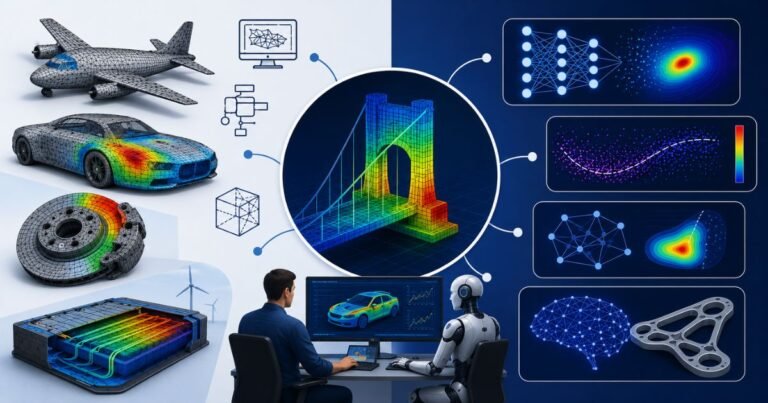
This is where simulation earns its place. A physics-based model of the hall, combining computational fluid dynamics for air with thermal and hydraulic models for the liquid loop, lets an engineering team ask the questions that matter before any money is spent.
How many high density racks can this hall take, and where should they go? What happens to the neighbouring air-cooled rows? Is the existing chilled water plant enough, or does heat rejection need to change? What happens in the first minutes after a pump or chiller fails? And how does all of this behave in Mumbai’s climate, not in a generic design condition?
Each answer can be checked against measurements once the change is made, so the model becomes more trustworthy with every change and stays useful for the next decision.
How we approach it at Experiqs
At Experiqs, we treat data centre cooling as an R&D problem rather than a catalogue choice. Our team models airflow, liquid cooling and heat rejection for the specific site and its weather, studies failure and redundancy scenarios, and helps operators plan liquid cooling readiness step by step. When liquid cooling is the right step, we help work out how it fits into the existing hall, from coolant distribution to heat rejection, so the transition can happen in stages without disrupting live operations.
The goal is simple: every rack added to a facility should be added with evidence, not hope.
The conversation to have now
AI racks are not a distant scenario. They are being ordered today, and many will land in buildings designed for a fraction of their heat. The operators who plan the cooling transition early, with a clear model of how their facility will behave, will add capacity faster and with less risk than those who discover the limits after installation. If you are planning for higher densities, or simply want to know how much headroom your current halls really have, we would be glad to help you find out. Reach out to the Experiqs team at www.experiqs.tech.