
More results...
More results...
A building’s thermal performance is ultimately measured by the comfort of the people using it. Temperature, humidity, air movement, radiant heat, and ventilation all influence how occupants perceive indoor conditions. Even when HVAC systems maintain the desired temperature, uneven airflow or localized heat buildup can reduce occupant comfort and increase energy consumption. Thermal Comfort Simulation enables engineers and designers to evaluate these factors before construction or building operation.
At Experiqs, we perform Thermal Comfort Simulations to analyze indoor environmental conditions under realistic operating scenarios. These simulations help engineers, architects, and facility designers evaluate occupant comfort, optimize HVAC performance, improve indoor environmental quality, and support sustainable building design across residential, commercial, healthcare, educational, and industrial facilities.
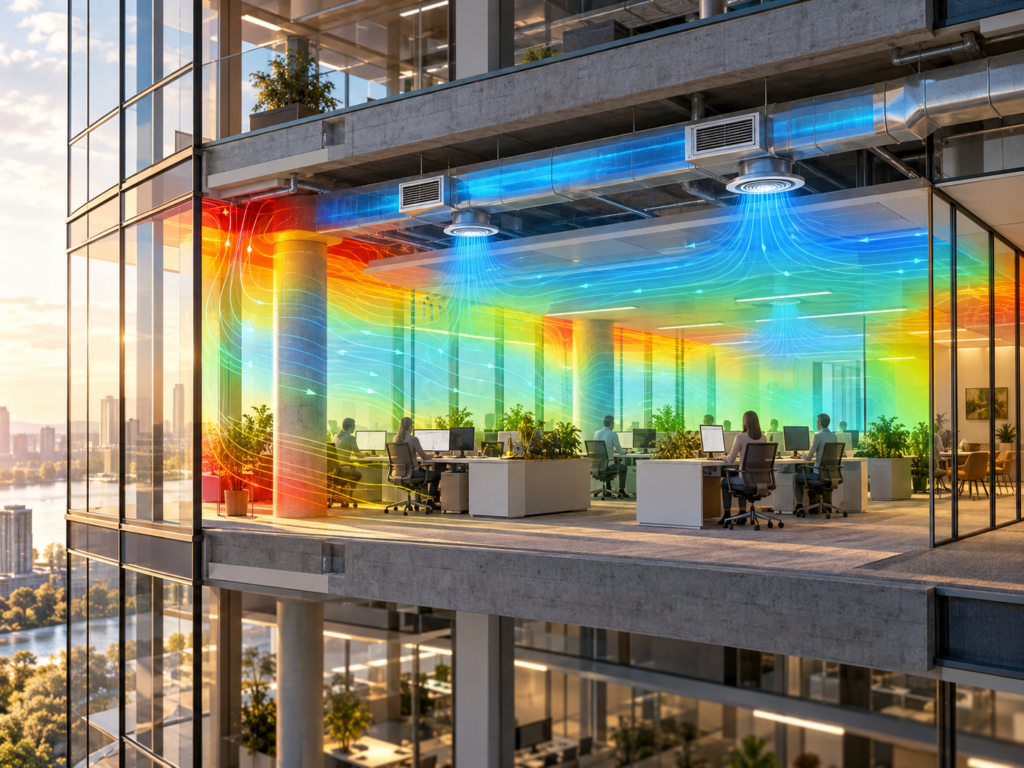
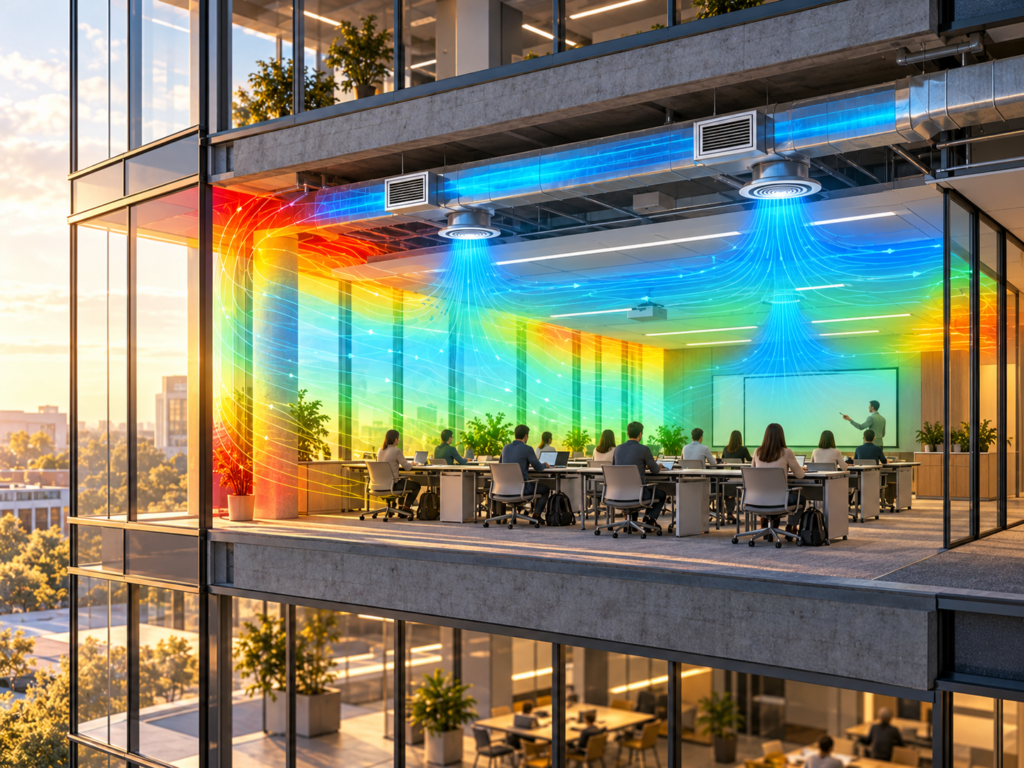
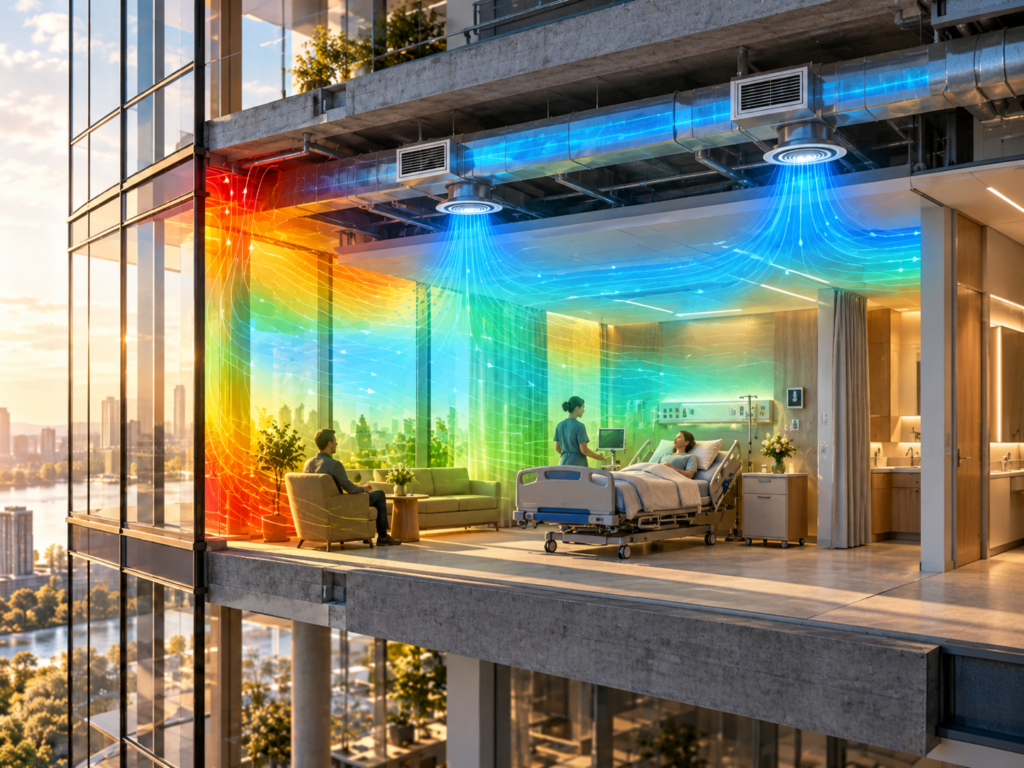
Providing a comfortable indoor environment requires balancing multiple environmental factors rather than maintaining a single temperature. Poor thermal comfort can affect occupant well-being, productivity, energy efficiency, and building performance while increasing operational costs due to inefficient HVAC operation.
Thermal Comfort Simulation enables engineers to evaluate indoor thermal conditions during the design stage. By analyzing temperature distribution, airflow patterns, humidity, and radiant heat effects, design teams can optimize building layouts, HVAC systems, and ventilation strategies before construction begins.
Our thermal comfort simulation capabilities support the evaluation of indoor environmental conditions across residential, commercial, and industrial buildings. These analyses help engineers assess occupant comfort, optimize HVAC performance, improve ventilation, and support energy-efficient building design.
Thermal Comfort Simulations are widely applied across office buildings, residential developments, hospitals, educational institutions, hotels, airports, shopping centres, industrial facilities, data centres, and green building projects where occupant comfort and indoor environmental quality are critical to building performance.
Depending on the project requirements, clients may receive:
Whether you’re designing an energy-efficient building, improving occupant comfort, optimizing HVAC performance, or validating indoor environmental conditions, our engineers can help identify the appropriate thermal comfort simulation approach for your project.
Partner with Experiqs to transform complex ideas into validated, industry-ready engineering solutions
Discover how to partner with Experiqs and get started quickly
Whether you’re exploring a new R&D initiative, seeking advanced simulations, planning experimental validation, or evaluating product feasibility—our experts are ready to assist you.
Whether you’re exploring a new R&D initiative, seeking advanced simulations, planning experimental validation, or evaluating product feasibility—our experts are ready to assist you.
