
More results...
More results...
The performance of engineering materials is often governed not only by their bulk properties but also by their surfaces, interfaces, and microscopic defects. Grain boundaries, vacancies, dislocations, surface interactions, and interface behaviour can significantly influence mechanical strength, corrosion resistance, thermal conductivity, electrical performance, and long-term reliability. Computational modelling enables engineers to investigate these phenomena before experimental validation or product development.
At Experiqs, we perform interface, surface, and defect modelling using advanced computational techniques to study atomic-scale interactions and material behaviour. These analyses support material development, failure investigation, semiconductor technologies, energy storage systems, coatings, catalysis, and advanced manufacturing applications.
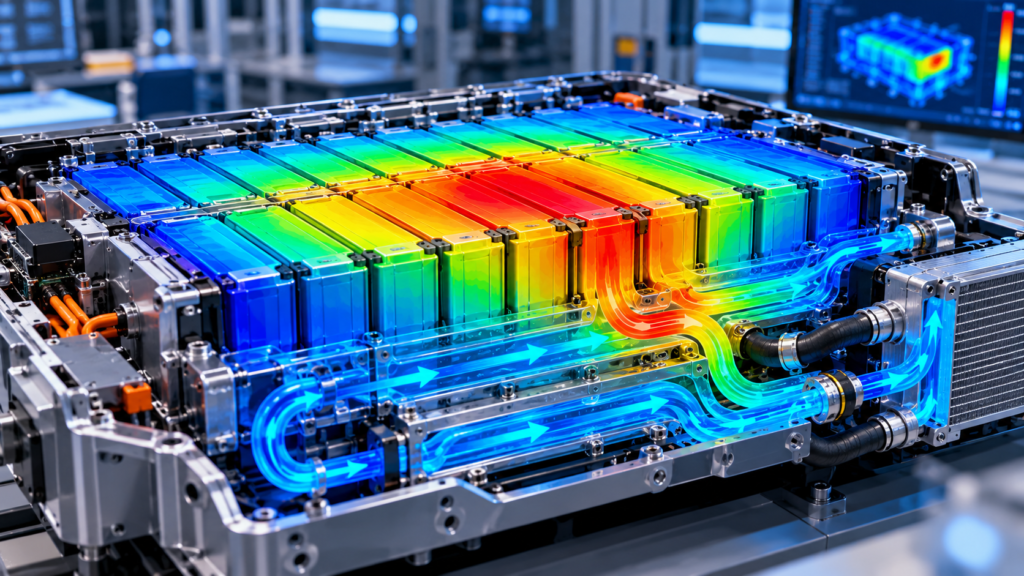
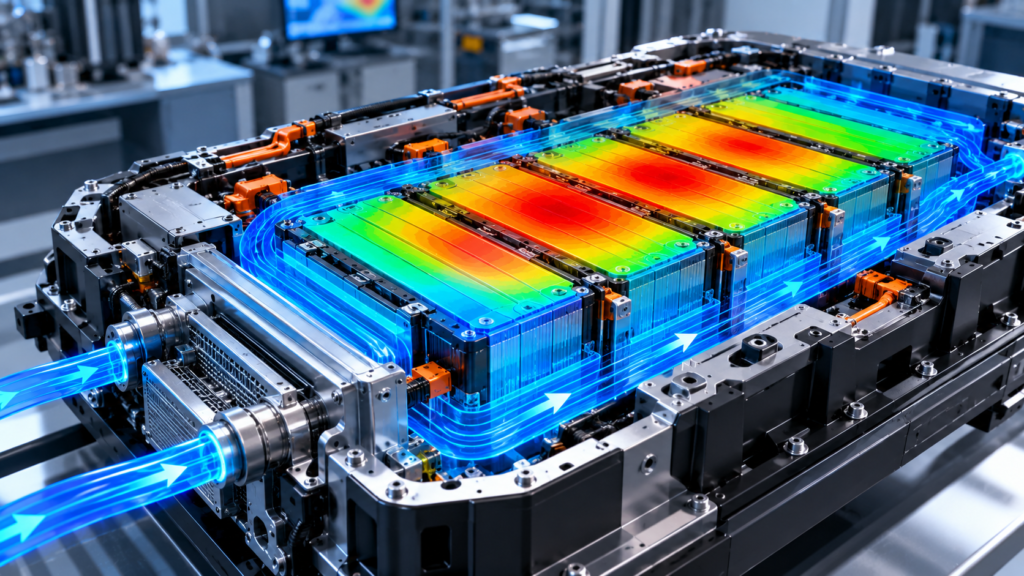
Many material failures originate at the microscopic level. Surface defects, interface degradation, and atomic imperfections can influence crack initiation, corrosion, diffusion, electrical behaviour, and material stability long before visible damage occurs. Traditional experimental techniques often provide limited insight into these mechanisms.
Simulation enables engineers to investigate these phenomena at the atomic and microstructural scale, helping them understand failure mechanisms, optimize material performance, improve manufacturing processes, and make informed material selection decisions before physical testing.
Our interface, surface, and defect modelling capabilities support the analysis of atomic-scale interactions that influence material performance across a wide range of engineering applications. These simulations help engineers investigate interface behaviour, surface properties, defect formation, diffusion pathways, and material stability to support research, product development, and engineering validation.
Interface, surface, and defect modelling is widely applied across semiconductor engineering, battery technologies, catalysts, advanced materials, nanotechnology, coatings, aerospace, electronics, energy systems, biomedical materials, and research organizations where atomic-scale behaviour directly influences material performance.
Whether you’re investigating material defects, studying interface behaviour, or optimizing surface performance for advanced engineering applications, our engineers can help identify the appropriate simulation and modelling approach for your project.
Partner with Experiqs to transform complex ideas into validated, industry-ready engineering solutions
Discover how to partner with Experiqs and get started quickly
Whether you’re exploring a new R&D initiative, seeking advanced simulations, planning experimental validation, or evaluating product feasibility—our experts are ready to assist you.
Whether you’re exploring a new R&D initiative, seeking advanced simulations, planning experimental validation, or evaluating product feasibility—our experts are ready to assist you.
