
More results...
More results...
The accuracy of thermal simulations depends on how well a material’s thermal behaviour is represented within the model. Properties such as thermal conductivity, specific heat capacity, density, emissivity, and temperature-dependent material response directly influence heat transfer and temperature distribution throughout an engineering system.
At Experiqs, we develop and implement material models for thermal simulations that accurately represent the thermal behaviour of engineering materials under different operating conditions. These models help engineers improve the reliability of thermal analyses during product development, performance evaluation, and engineering validation across a wide range of industries.
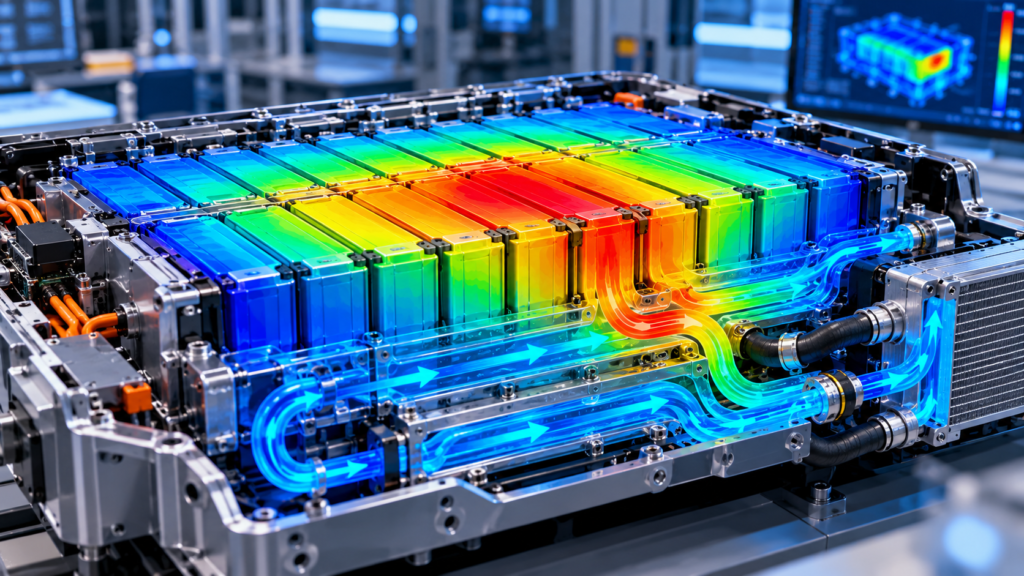
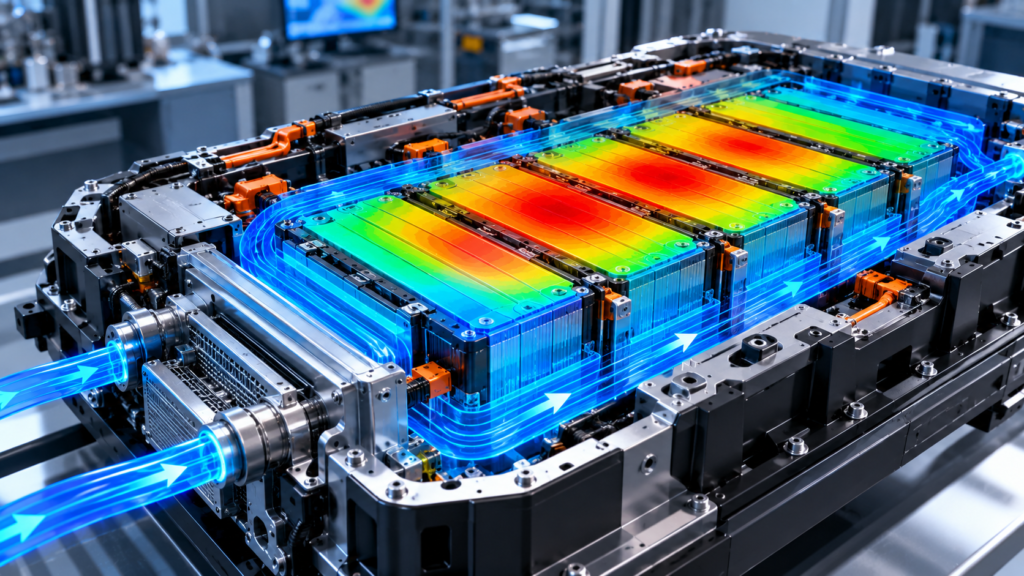
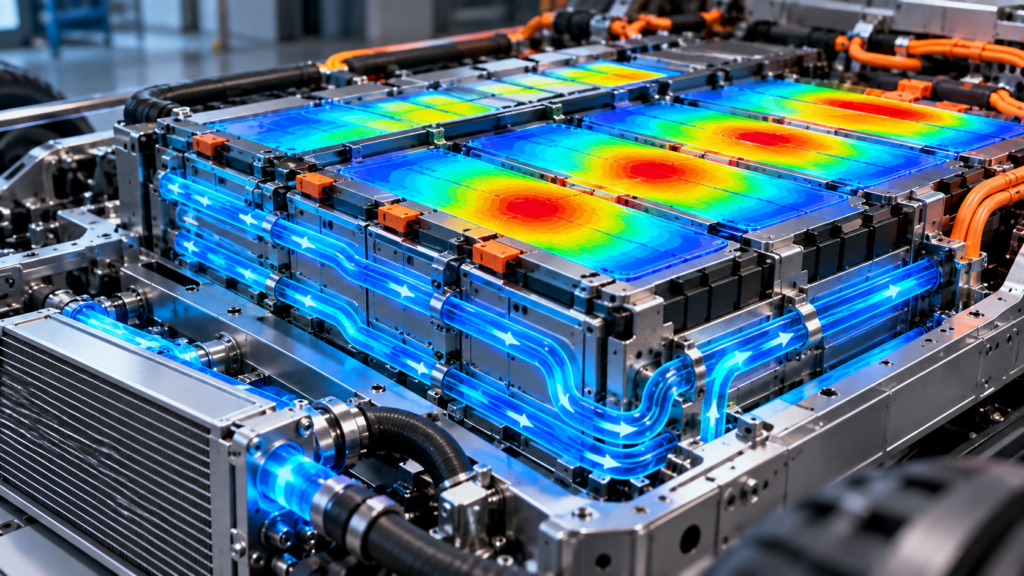
Materials do not transfer or store heat in the same way under all operating conditions. Thermal properties can vary with temperature, material composition, manufacturing processes, and environmental exposure. Using simplified material assumptions may result in inaccurate temperature predictions and unreliable thermal performance assessments.
Material models enable thermal simulations to capture these variations more realistically, helping engineers evaluate heat transfer, cooling performance, thermal stability, and temperature distribution before physical testing or product deployment.
Our material modelling capabilities support the development and implementation of thermal material models for engineering simulations across metals, polymers, composites, ceramics, electronic materials, insulation systems, and advanced functional materials. These models improve the accuracy of thermal analyses by representing realistic material behaviour under varying operating conditions.
Material models for thermal simulation are widely used across electronics cooling, battery systems, aerospace, automotive, industrial equipment, energy systems, medical devices, building technologies, and advanced manufacturing where accurate prediction of thermal behaviour supports better engineering decisions.
Whether you’re developing accurate thermal material models, improving heat transfer simulations, or validating the thermal performance of engineering materials, our engineers can help identify the appropriate modelling approach for your application.
Partner with Experiqs to transform complex ideas into validated, industry-ready engineering solutions
Discover how to partner with Experiqs and get started quickly
Whether you’re exploring a new R&D initiative, seeking advanced simulations, planning experimental validation, or evaluating product feasibility—our experts are ready to assist you.
Whether you’re exploring a new R&D initiative, seeking advanced simulations, planning experimental validation, or evaluating product feasibility—our experts are ready to assist you.
