
More results...
More results...
Structural simulations are only as accurate as the material models used to represent the behaviour of engineering materials. While simple material assumptions may be sufficient for basic analyses, many engineering applications require advanced material models that capture nonlinear behaviour, plastic deformation, anisotropy, viscoelasticity, hyperelasticity, creep, and damage mechanisms under realistic operating conditions.
At Experiqs, we develop and implement material models for structural simulations to accurately represent the mechanical behaviour of metals, polymers, composites, elastomers, ceramics, and advanced engineering materials. These models support reliable structural analysis across product development, failure investigation, and engineering validation.
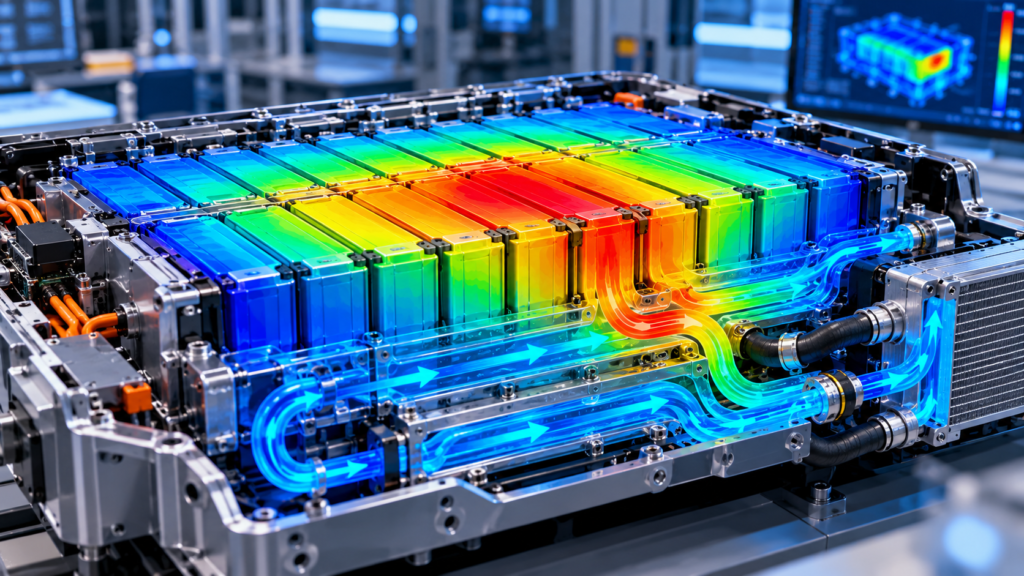
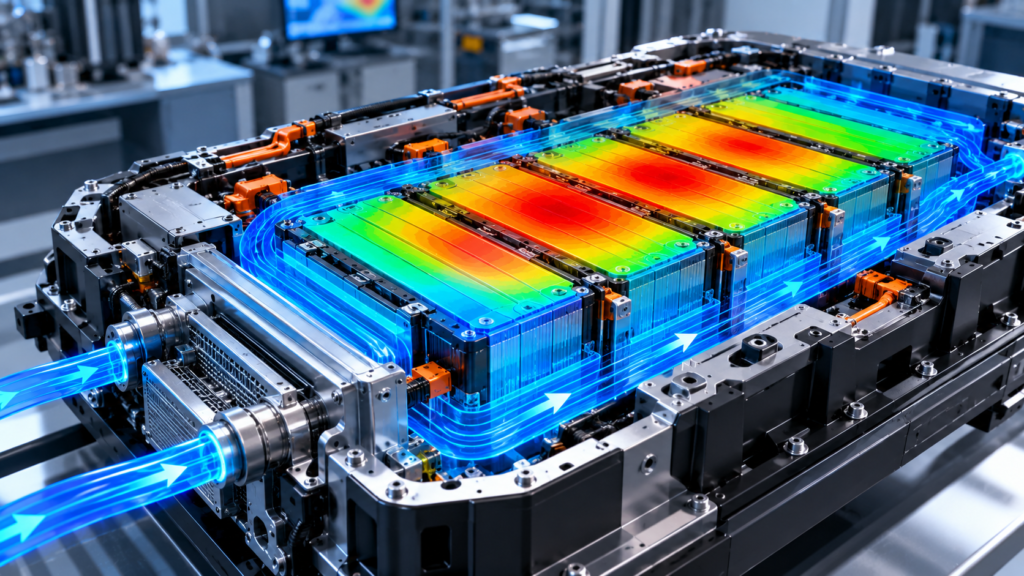
Real engineering materials rarely behave as perfectly elastic solids. Their response changes with loading conditions, strain rate, temperature, manufacturing history, and service environment. Using an inappropriate material model can lead to inaccurate stress predictions, unrealistic deformation behaviour, and unreliable engineering decisions.
Material models allow structural simulations to replicate actual material behaviour more accurately, enabling engineers to evaluate product performance, investigate failure mechanisms, compare design alternatives, and improve confidence before manufacturing or physical testing.
Our material modelling capabilities support the development and implementation of constitutive material models for structural simulations across a wide range of engineering applications. These models help engineers capture realistic material response under static, dynamic, nonlinear, and complex loading conditions to improve the accuracy of finite element analyses.
Material models for structural simulation are widely used in aerospace, automotive, energy, industrial equipment, biomedical devices, consumer products, heavy engineering, and advanced manufacturing where accurate prediction of material behaviour is essential for design validation and structural performance assessment.
Whether you’re developing a custom material model, improving the accuracy of structural simulations, or validating material behaviour for a complex engineering application, our engineers can help identify the appropriate modelling approach for your requirements.
Partner with Experiqs to transform complex ideas into validated, industry-ready engineering solutions
Discover how to partner with Experiqs and get started quickly
Whether you’re exploring a new R&D initiative, seeking advanced simulations, planning experimental validation, or evaluating product feasibility—our experts are ready to assist you.
Whether you’re exploring a new R&D initiative, seeking advanced simulations, planning experimental validation, or evaluating product feasibility—our experts are ready to assist you.
