
More results...
More results...
Acoustic comfort has become a critical requirement in modern buildings, influencing occupant well-being, productivity, privacy, and overall user experience. Noise transmission through walls, floors, ceilings, façades, doors, windows, and building systems can significantly affect acoustic performance if not properly addressed during the design stage. Building Acoustic Simulation enables engineers and architects to evaluate these factors before construction, helping optimize acoustic comfort and reduce costly modifications later.
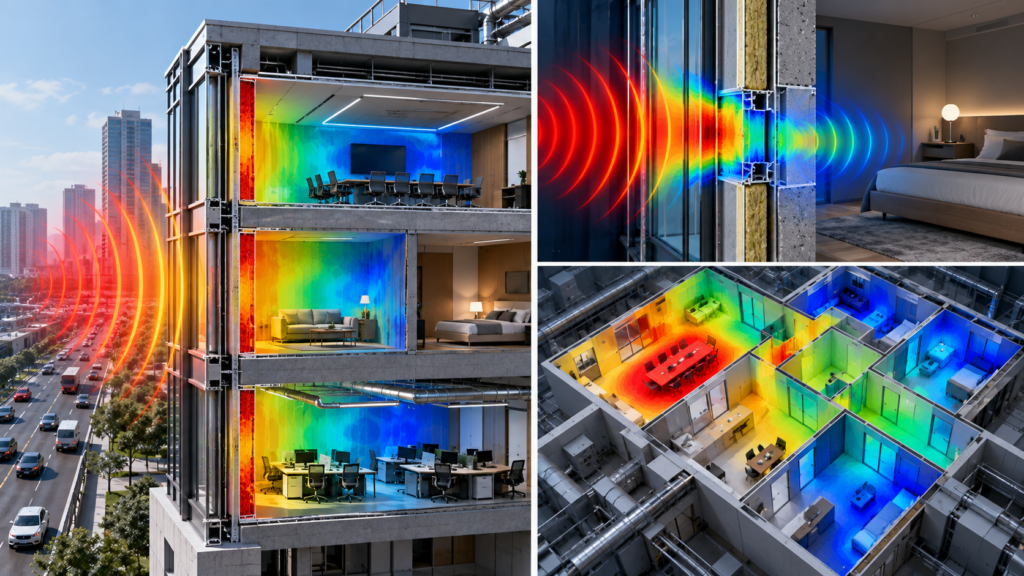
At Experiqs, we perform Building Acoustic Simulations to analyze sound transmission, airborne and structure-borne noise, sound insulation performance, façade acoustics, room-to-room noise transfer, and overall building acoustic behaviour under realistic operating conditions. Our simulations help organizations improve occupant comfort, meet regulatory requirements, and validate acoustic designs before implementation.
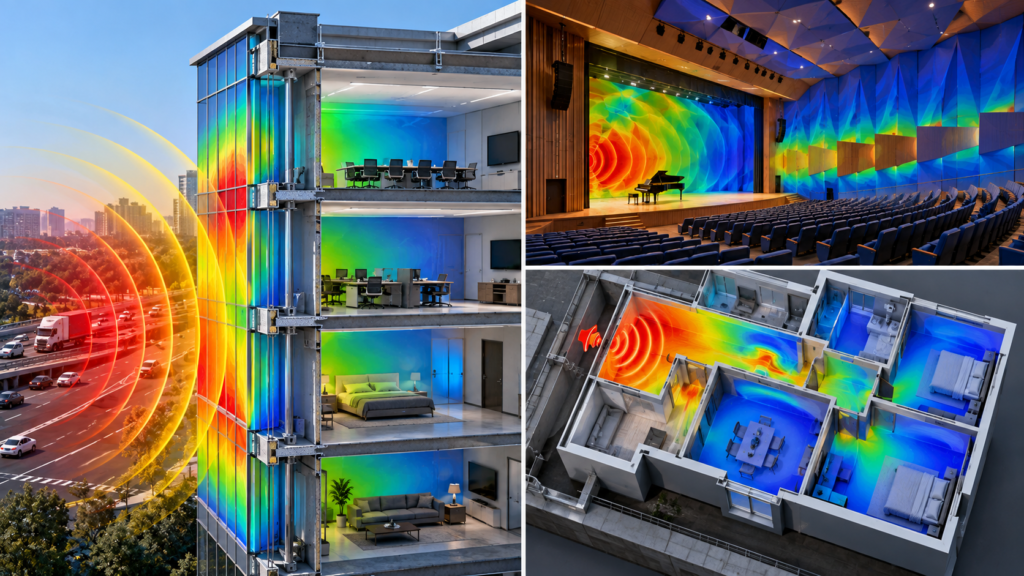
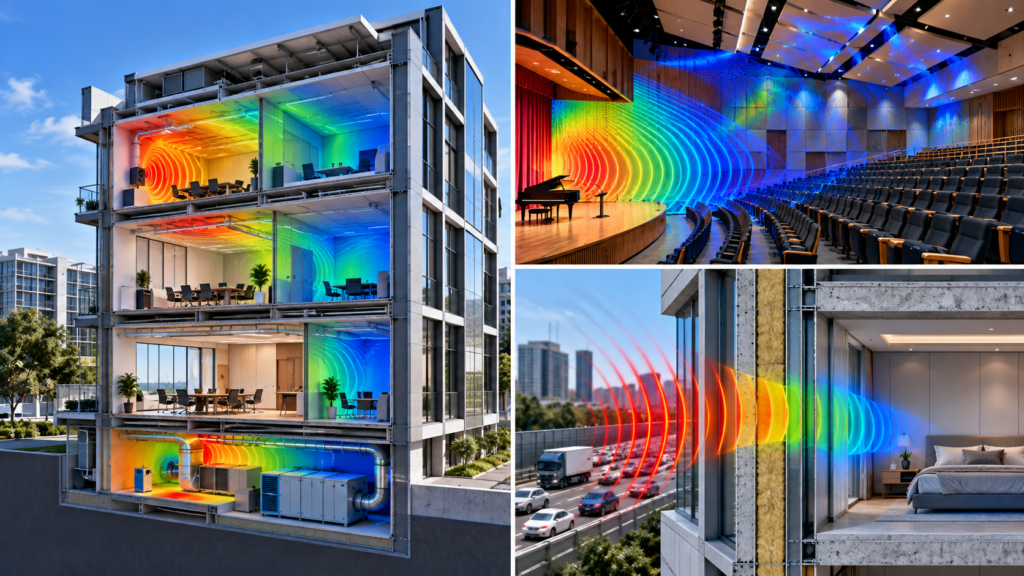
Poor acoustic design can result in excessive noise intrusion, inadequate privacy, occupant discomfort, reduced productivity, and compliance challenges. Addressing these issues after construction can be both technically difficult and financially expensive.
Building Acoustic Simulation enables engineers and designers to identify potential acoustic challenges before construction. By evaluating sound transmission paths and acoustic performance virtually, project teams can optimize building designs, improve indoor environments, and ensure compliance with applicable acoustic standards.
Our building acoustic simulation capabilities support the evaluation and optimization of acoustic performance across residential, commercial, industrial, and public infrastructure projects.
Building Acoustic Simulations are widely applied across residential developments, commercial buildings, office complexes, healthcare facilities, hotels, educational institutions, mixed-use developments, transportation hubs, industrial facilities, public infrastructure projects, and architectural environments where acoustic comfort and noise control are essential.
Depending on project requirements, clients may receive:
Whether you’re designing a new building, improving acoustic privacy, reducing noise transmission, or validating building acoustic performance before construction, our engineers can help identify the appropriate building acoustic simulation approach for your application.
Partner with Experiqs to transform complex ideas into validated, industry-ready engineering solutions
Discover how to partner with Experiqs and get started quickly
Whether you’re exploring a new R&D initiative, seeking advanced simulations, planning experimental validation, or evaluating product feasibility—our experts are ready to assist you.
Whether you’re exploring a new R&D initiative, seeking advanced simulations, planning experimental validation, or evaluating product feasibility—our experts are ready to assist you.
