
More results...
More results...
Certain engineering problems involve large deformations, free-surface flows, splashing, fragmentation, impact events, and highly dynamic fluid interactions that are difficult to model using conventional mesh-based simulation techniques. Smoothed Particle Hydrodynamics (SPH) Simulation provides a mesh-free computational approach for accurately analyzing these complex fluid phenomena under realistic operating conditions.
At Experiqs, we perform Smoothed Particle Hydrodynamics (SPH) Simulations to evaluate highly dynamic fluid behaviour, fluid–structure interactions, free-surface flows, and particle-based phenomena. These simulations support product development, engineering validation, safety assessments, and design optimization across industries including automotive, aerospace, marine, energy, manufacturing, and industrial engineering.
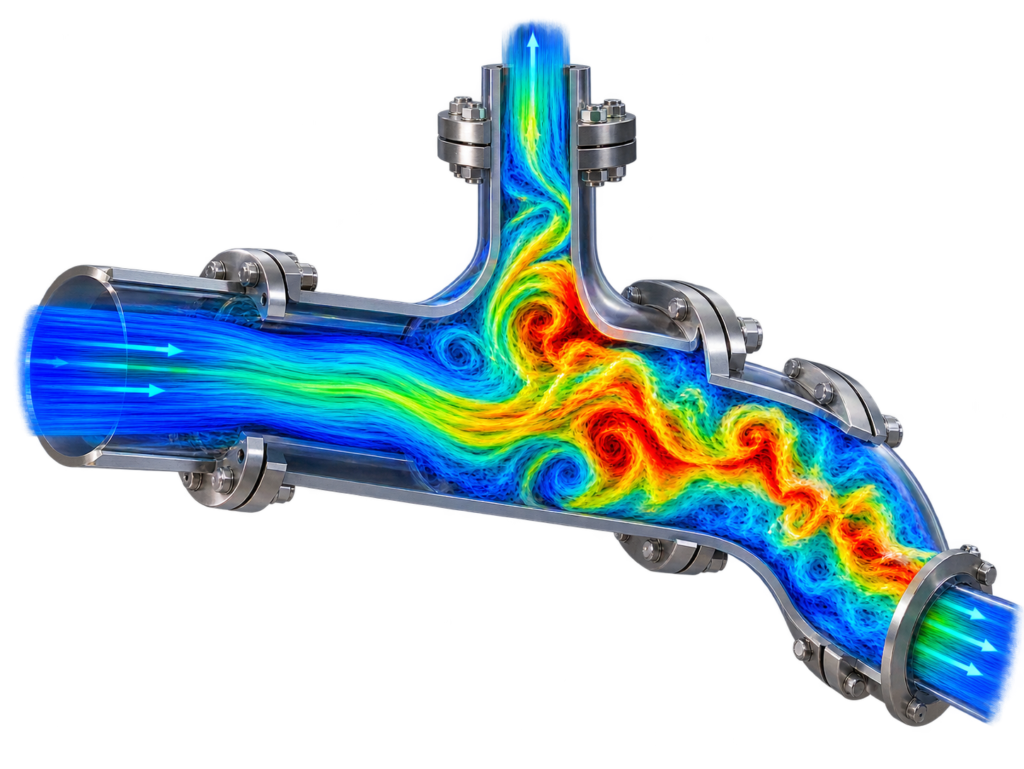
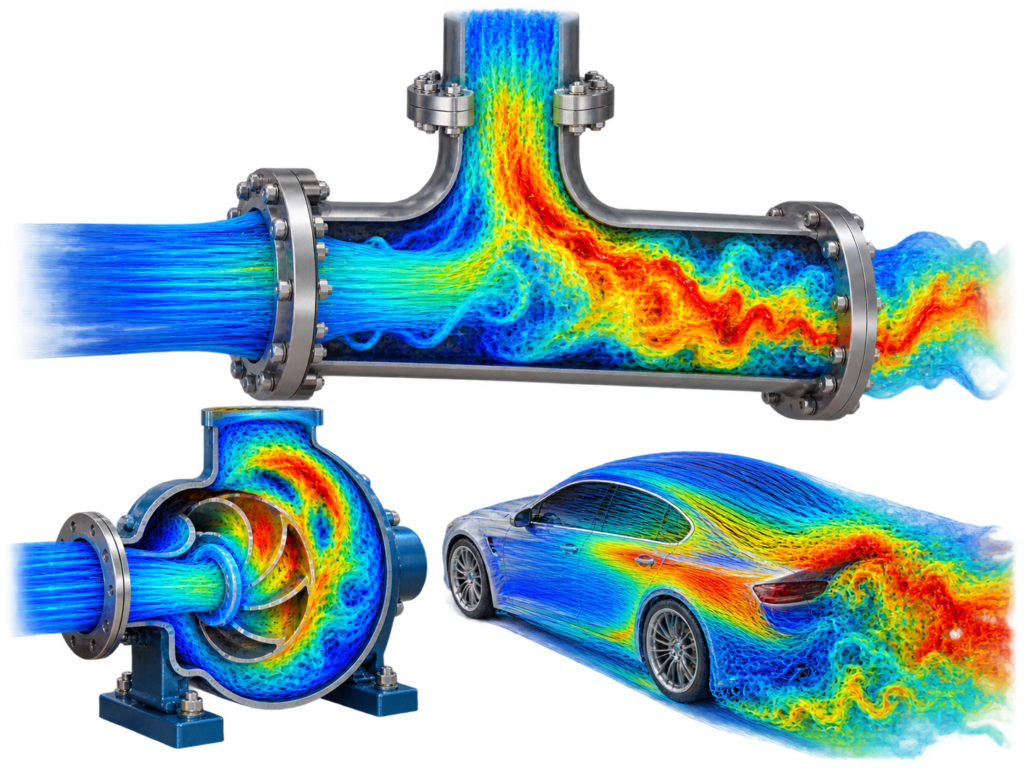
Traditional computational methods can become less effective when fluids experience extreme deformation, fragmentation, wave breaking, or rapidly changing interfaces. Such conditions are common in impact events, sloshing, flooding, dam breaks, and other highly dynamic engineering applications.
SPH Simulation enables engineers to accurately model these complex scenarios by representing fluids as interacting particles instead of relying on a fixed computational mesh. This approach provides greater flexibility for evaluating transient fluid behaviour, predicting system response, and optimizing engineering designs before physical testing.
Our SPH simulation capabilities support the analysis of highly dynamic fluid behaviour across engineering systems operating under complex conditions. These analyses help engineers evaluate free-surface flow, impact events, fluid–structure interactions, and transient fluid dynamics while supporting product development and engineering validation.
SPH Simulations are widely applied across dam break analysis, sloshing in storage tanks, marine engineering, offshore structures, wave impact studies, crash and impact engineering, hydraulic systems, flood modelling, industrial process equipment, aerospace, automotive, and defence applications where highly dynamic fluid behaviour influences system performance and safety.
Depending on project requirements, clients may receive:
Whether you’re analysing highly dynamic fluid behaviour, evaluating impact-driven fluid interactions, or validating complex free-surface flow problems, our engineers can help identify the appropriate SPH simulation approach for your application.
Partner with Experiqs to transform complex ideas into validated, industry-ready engineering solutions
Discover how to partner with Experiqs and get started quickly
Whether you’re exploring a new R&D initiative, seeking advanced simulations, planning experimental validation, or evaluating product feasibility—our experts are ready to assist you.
Whether you’re exploring a new R&D initiative, seeking advanced simulations, planning experimental validation, or evaluating product feasibility—our experts are ready to assist you.
