
More results...
More results...
Many engineering systems involve the transport of discrete particles, droplets, or solid contaminants within a continuous fluid. The interaction between these phases directly influences equipment performance, erosion, separation efficiency, combustion, filtration, and product quality. Discrete Phase Model (DPM) Simulation enables engineers to evaluate these interactions before physical testing or industrial implementation.
At Experiqs, we perform Discrete Phase Model (DPM) Simulations using Computational Fluid Dynamics (CFD) to predict the behaviour of particles suspended within fluid flows under realistic operating conditions. These simulations help engineers understand particle trajectories, deposition patterns, residence time, and phase interactions, supporting product development, process optimization, and engineering validation across multiple industries.
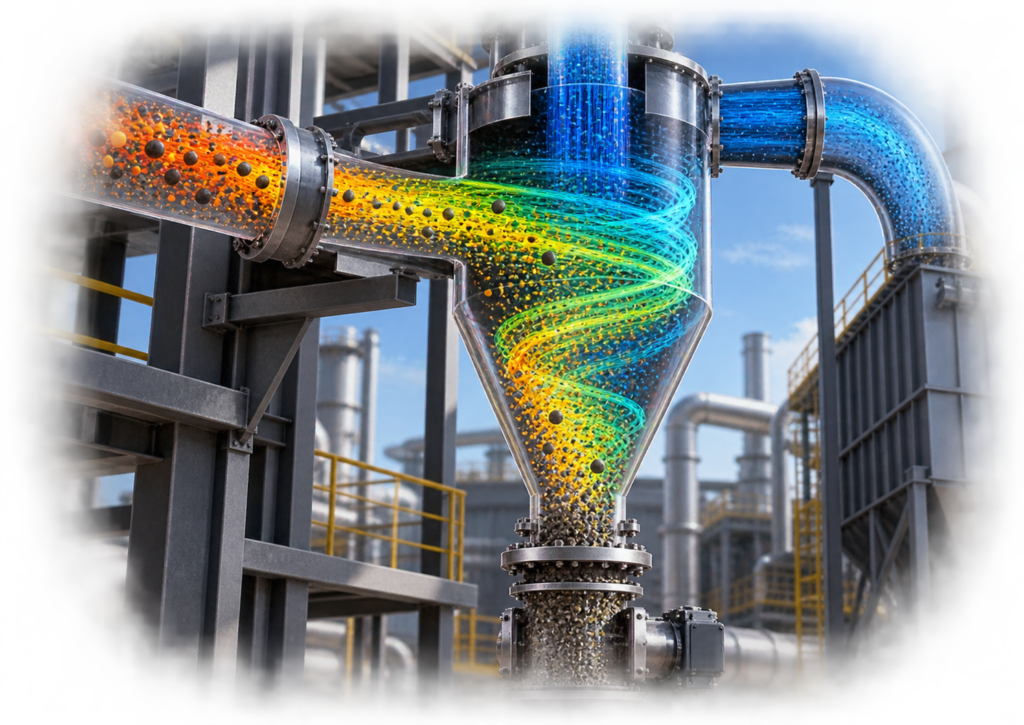
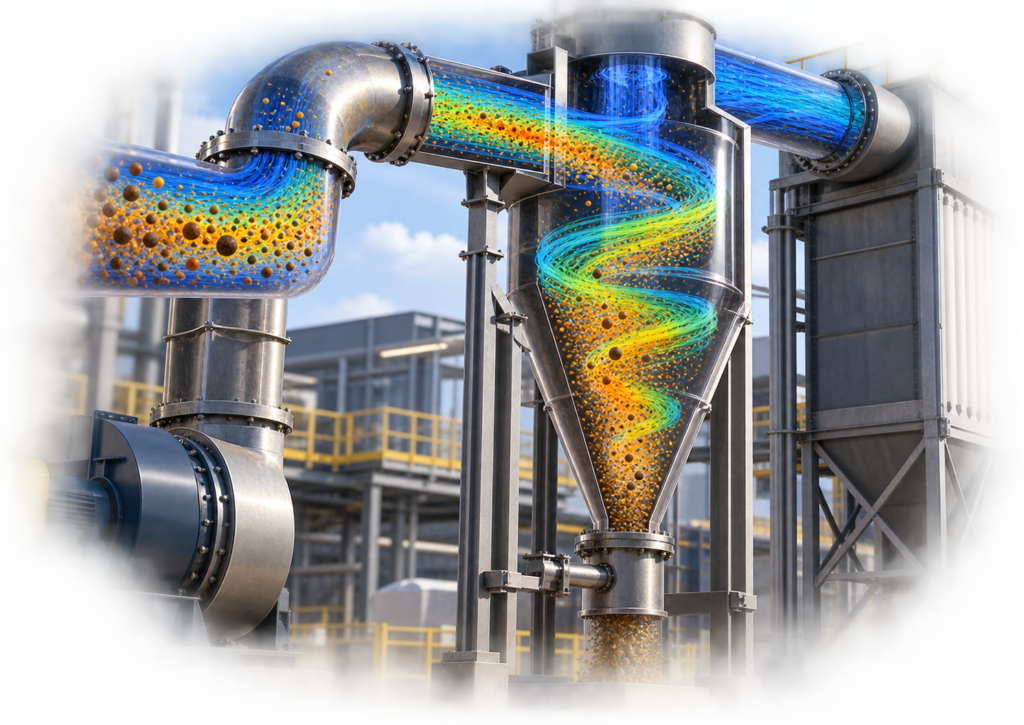
In many industrial applications, particles do not simply follow the surrounding fluid. Their behaviour depends on particle size, density, shape, flow velocity, turbulence, gravity, and interactions with surrounding surfaces. These effects can significantly influence equipment efficiency, product quality, material wear, and process performance.
Discrete Phase Model Simulation enables engineers to predict particle behaviour during the design stage. By evaluating particle transport, dispersion, deposition, and collection efficiency, engineering teams can optimize system designs, improve operational reliability, and reduce costly experimental testing.
Our Discrete Phase Model simulation capabilities support the analysis of particle transport within continuous fluid systems across a wide range of engineering applications. These analyses help engineers investigate particle motion, deposition behaviour, erosion potential, separation efficiency, and particle–fluid interactions under realistic operating conditions.
Discrete Phase Model Simulations are widely applied across cyclone separators, filtration systems, spray dryers, combustion systems, pneumatic conveying, dust collection equipment, chemical processing plants, pharmaceutical manufacturing, mining operations, HVAC systems, and industrial process equipment where particle behaviour directly influences system performance and operational efficiency.
Depending on project requirements, clients may receive:
Whether you’re optimizing particle transport, improving separation efficiency, minimizing particle deposition, or validating particle-laden flow systems, our engineers can help identify the appropriate simulation approach for your application.
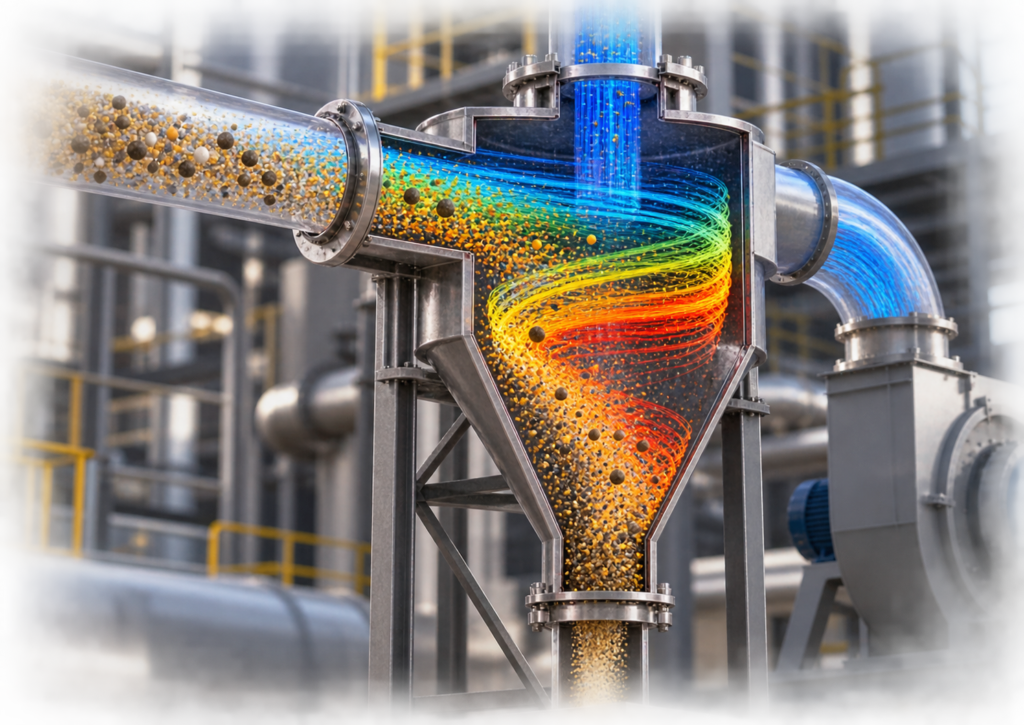
Partner with Experiqs to transform complex ideas into validated, industry-ready engineering solutions
Discover how to partner with Experiqs and get started quickly
Whether you’re exploring a new R&D initiative, seeking advanced simulations, planning experimental validation, or evaluating product feasibility—our experts are ready to assist you.
Whether you’re exploring a new R&D initiative, seeking advanced simulations, planning experimental validation, or evaluating product feasibility—our experts are ready to assist you.
