
More results...
More results...
Labyrinth seals are widely used in turbines, compressors, pumps, and rotating machinery to restrict fluid leakage without direct contact between rotating and stationary components. Their performance directly affects efficiency, pressure retention, energy consumption, and equipment reliability. Labyrinth-Seal Simulation enables engineers to evaluate seal effectiveness before physical testing, helping improve operational performance while reducing development risks.
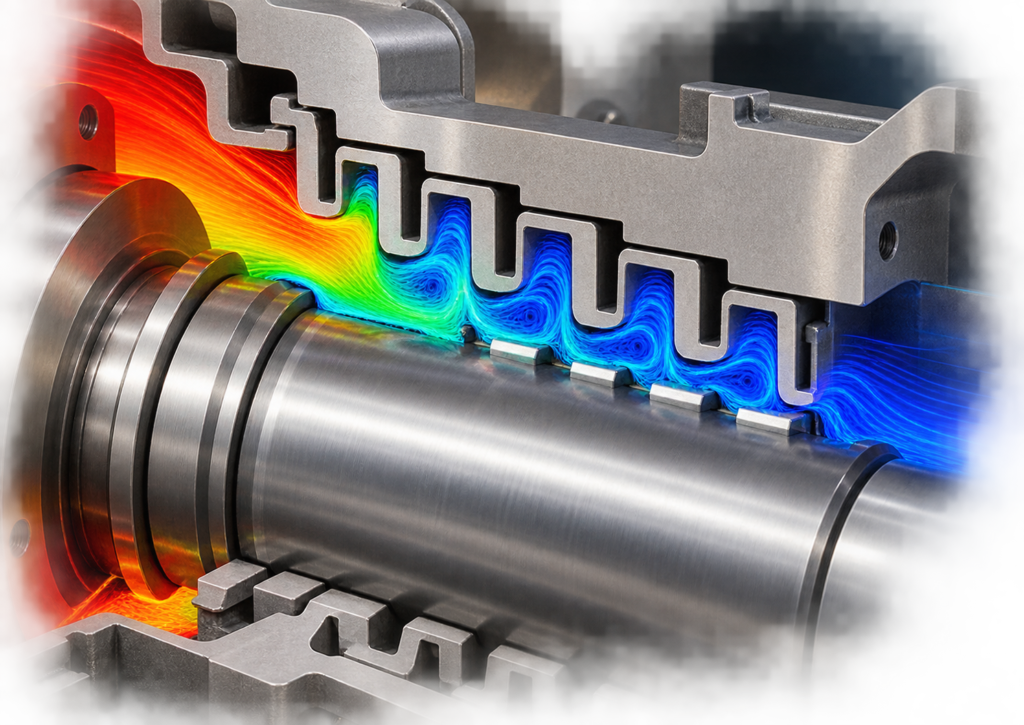
At Experiqs, we perform Labyrinth-Seal Simulations to analyze leakage behaviour, pressure distribution, flow resistance, vortex formation, seal geometry performance, and fluid interactions under realistic operating conditions. Our simulations help organizations optimize seal designs, improve efficiency, and validate engineering performance before implementation.
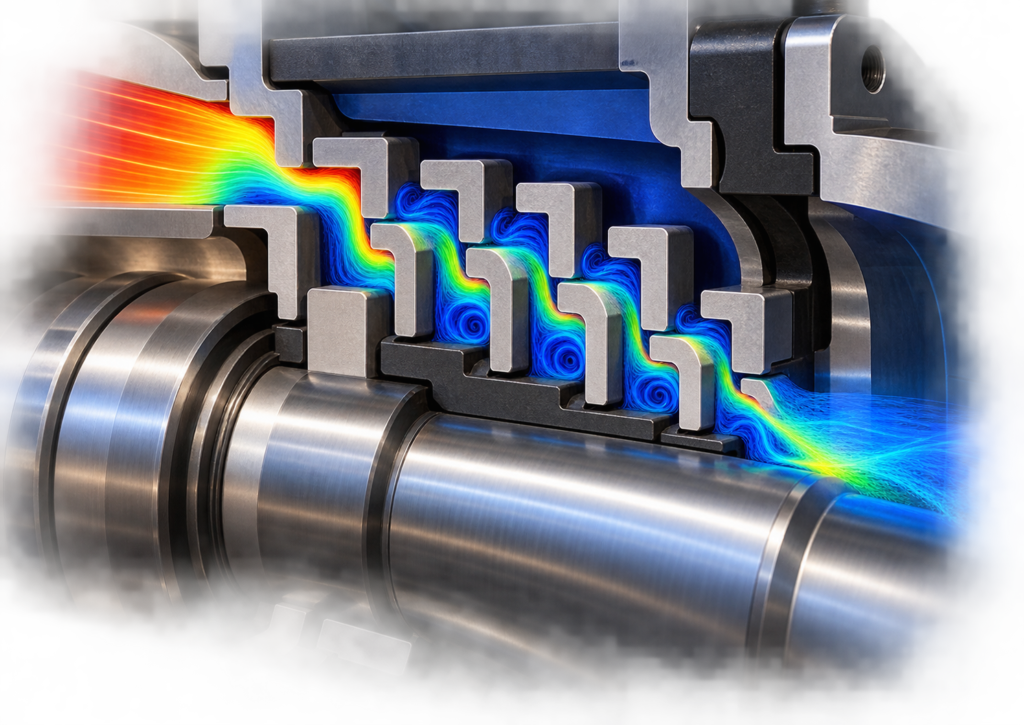
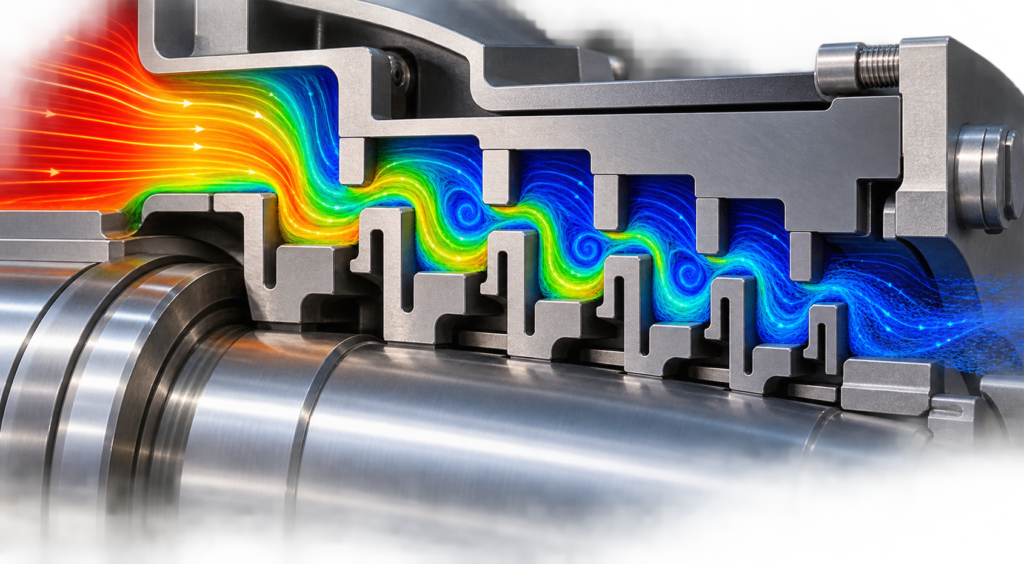
The performance of a labyrinth seal depends on factors such as seal geometry, clearance gaps, pressure differentials, flow characteristics, and operating conditions. Poorly optimized seal designs can result in excessive leakage, reduced efficiency, increased operating costs, and diminished equipment performance.
Labyrinth-Seal Simulation enables engineers to study these effects before manufacturing or testing. By understanding fluid behaviour through the seal passages, engineering teams can optimize seal configurations, improve pressure retention, and enhance overall system efficiency.
Our labyrinth-seal simulation capabilities support the evaluation and optimization of sealing systems used in rotating and high-performance fluid machinery.
Labyrinth-Seal Simulations are widely applied across gas turbines, steam turbines, compressors, pumps, turbochargers, aerospace propulsion systems, power generation equipment, process industries, oil & gas systems, and rotating machinery where leakage control is critical to performance and reliability.
Depending on project requirements, clients may receive:
Whether you’re reducing leakage, improving rotating-equipment efficiency, optimizing seal geometry, or validating labyrinth-seal performance before implementation, our engineers can help identify the appropriate labyrinth-seal simulation approach for your application.
Partner with Experiqs to transform complex ideas into validated, industry-ready engineering solutions
Discover how to partner with Experiqs and get started quickly
Whether you’re exploring a new R&D initiative, seeking advanced simulations, planning experimental validation, or evaluating product feasibility—our experts are ready to assist you.
Whether you’re exploring a new R&D initiative, seeking advanced simulations, planning experimental validation, or evaluating product feasibility—our experts are ready to assist you.
