
More results...
More results...
Marine hydrodynamics focuses on the interaction between water and marine structures, vessels, and offshore systems operating in oceans, rivers, lakes, and coastal environments. Understanding these interactions is essential for evaluating vessel resistance, wave-induced loads, stability, maneuverability, and overall operational efficiency. Marine Hydrodynamic Simulation enables engineers to analyze these complex phenomena before physical testing, helping improve performance, safety, and design reliability.
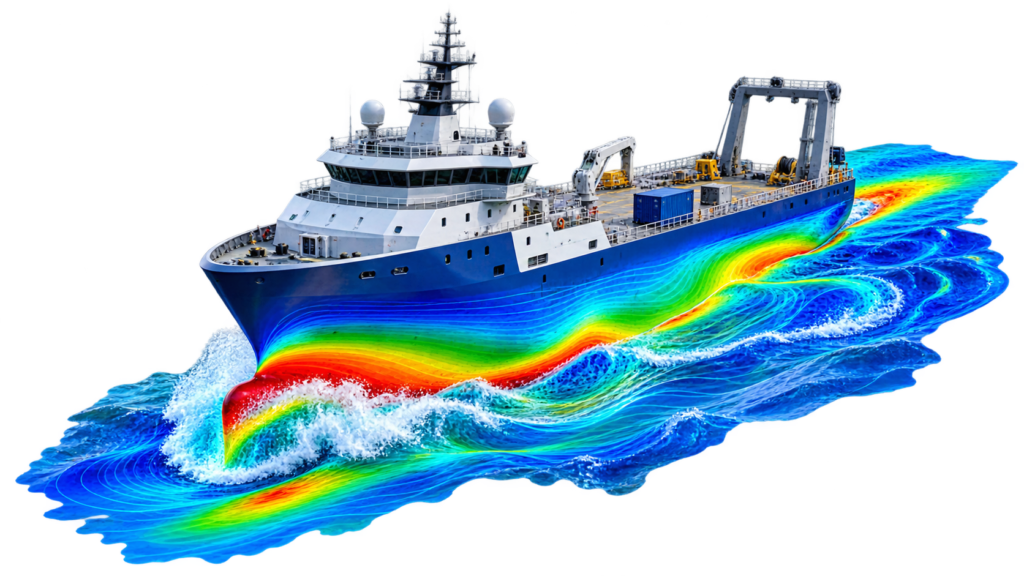
At Experiqs, we perform Marine Hydrodynamic Simulations to analyze vessel resistance, wave interactions, hydrodynamic forces, flow patterns, stability characteristics, and marine-operating conditions under realistic environments. Our simulations help organizations optimize designs, reduce operational risks, and validate marine-system performance before implementation.
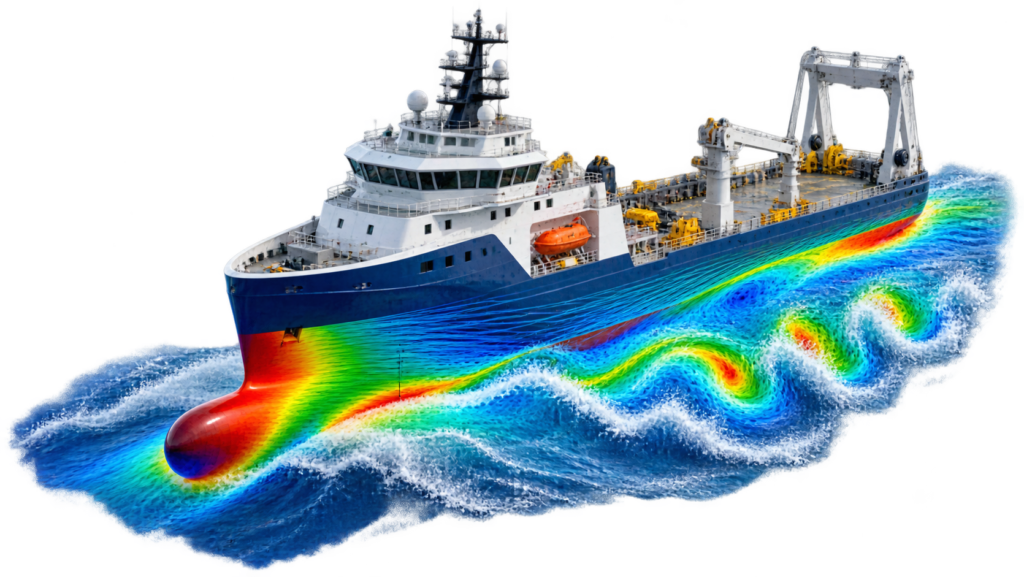
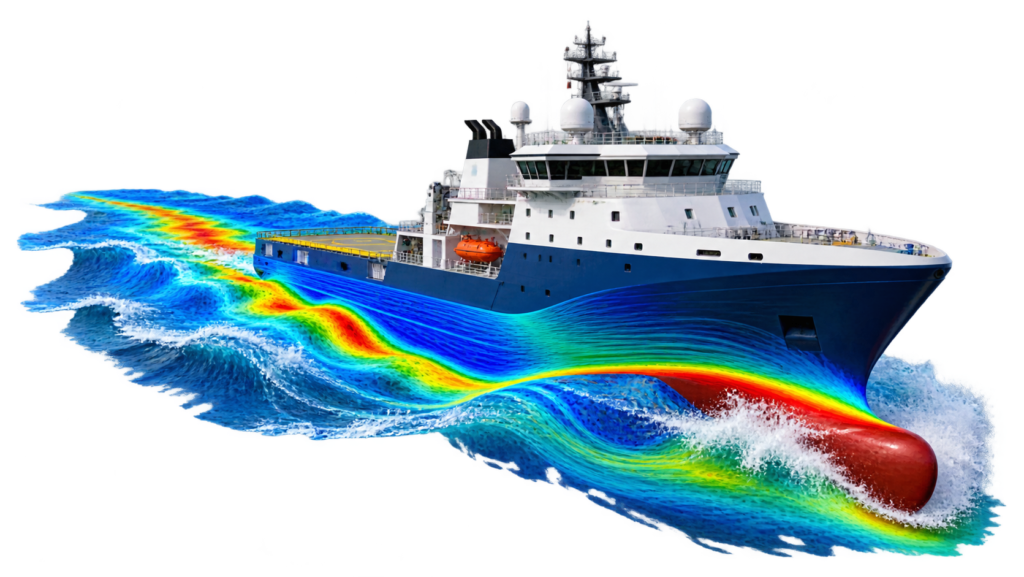
Marine systems are continuously subjected to complex environmental conditions including waves, currents, water resistance, and dynamic loading. These factors significantly influence fuel efficiency, structural loading, vessel stability, operational safety, and long-term performance.
Marine Hydrodynamic Simulation enables engineers to study these interactions before physical testing. By understanding how marine structures behave under realistic operating conditions, engineering teams can optimize designs, improve efficiency, and reduce costly prototype testing and sea trials.
Our marine hydrodynamic simulation capabilities support the evaluation and optimization of marine systems across a wide range of offshore and maritime applications.
Marine Hydrodynamic Simulations are widely applied across ships, offshore platforms, floating structures, underwater vehicles, renewable marine energy systems, coastal infrastructure, marine equipment, harbor facilities, naval applications, and offshore engineering projects where hydrodynamic performance directly affects efficiency, safety, and operational reliability.
Depending on project requirements, clients may receive:
Whether you’re optimizing vessel performance, evaluating wave-induced loads, improving marine stability, or validating an offshore design before deployment, our engineers can help identify the appropriate marine hydrodynamic simulation approach for your application.
Partner with Experiqs to transform complex ideas into validated, industry-ready engineering solutions
Discover how to partner with Experiqs and get started quickly
Whether you’re exploring a new R&D initiative, seeking advanced simulations, planning experimental validation, or evaluating product feasibility—our experts are ready to assist you.
Whether you’re exploring a new R&D initiative, seeking advanced simulations, planning experimental validation, or evaluating product feasibility—our experts are ready to assist you.
