
More results...
More results...
Convection is the transfer of heat between a surface and a moving fluid, such as air or liquid. It plays a key role in cooling electronic devices, regulating engine temperatures, optimizing heat exchangers, designing HVAC systems, and improving industrial processes. Convection Simulation enables engineers to evaluate heat transfer between fluids and solid surfaces before products are manufactured or systems are commissioned.
At Experiqs, we perform Convection Simulations to analyze heat transfer caused by fluid motion under realistic operating conditions. These simulations help engineers evaluate cooling performance, temperature distribution, fluid circulation, and thermal efficiency, supporting product development, engineering validation, and process optimization across multiple industries.
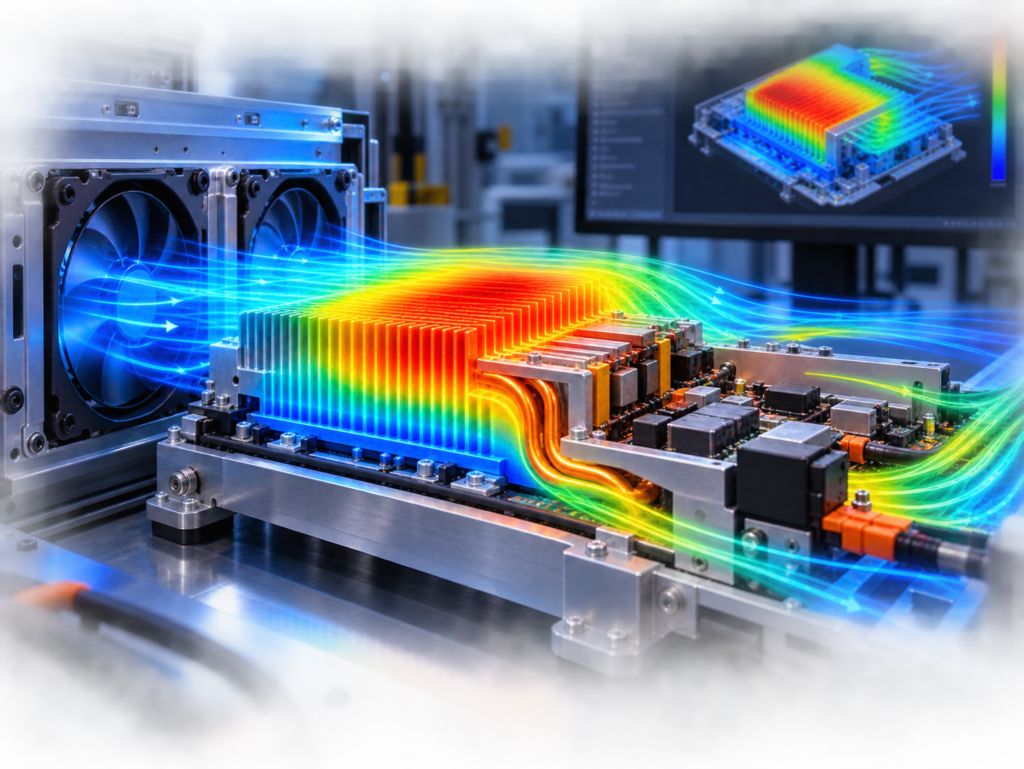
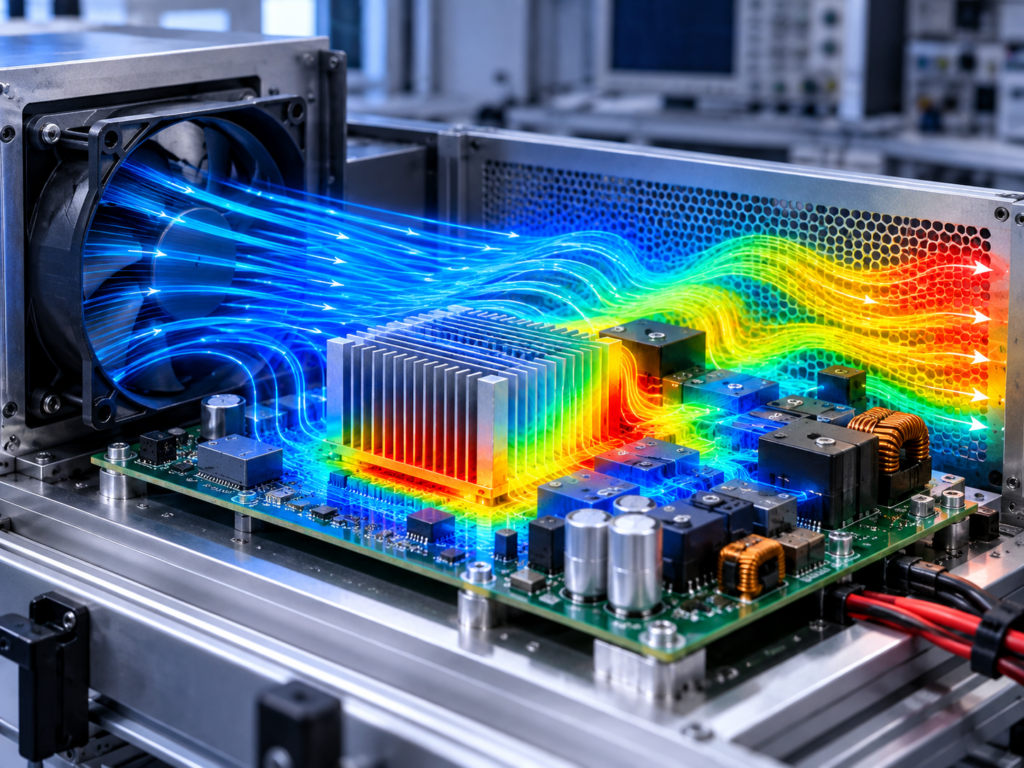
The effectiveness of convective heat transfer depends on fluid velocity, temperature differences, flow patterns, surface geometry, and operating conditions. Inadequate convection can lead to overheating, reduced system efficiency, higher energy consumption, and shorter equipment life.
Convection Simulation enables engineers to predict cooling performance during the design stage by analyzing fluid flow and heat transfer simultaneously. This helps optimize cooling strategies, improve energy efficiency, and reduce dependence on repeated physical testing and prototype development.
Our convection simulation capabilities support the evaluation of heat transfer between solid surfaces and moving fluids across a wide range of engineering systems. These analyses help engineers investigate cooling efficiency, temperature distribution, airflow or liquid flow behaviour, and overall thermal performance under realistic operating conditions.
Convection Simulations are widely applied across electronics cooling, automotive cooling systems, aerospace components, HVAC equipment, heat exchangers, battery cooling systems, industrial machinery, power generation, renewable energy systems, and consumer products where efficient cooling directly influences performance and reliability.
Depending on the project requirements, clients may receive:
Whether you’re improving cooling performance, optimizing airflow or liquid cooling systems, or validating convective heat transfer within an engineering product, our engineers can help identify the appropriate simulation approach for your application.
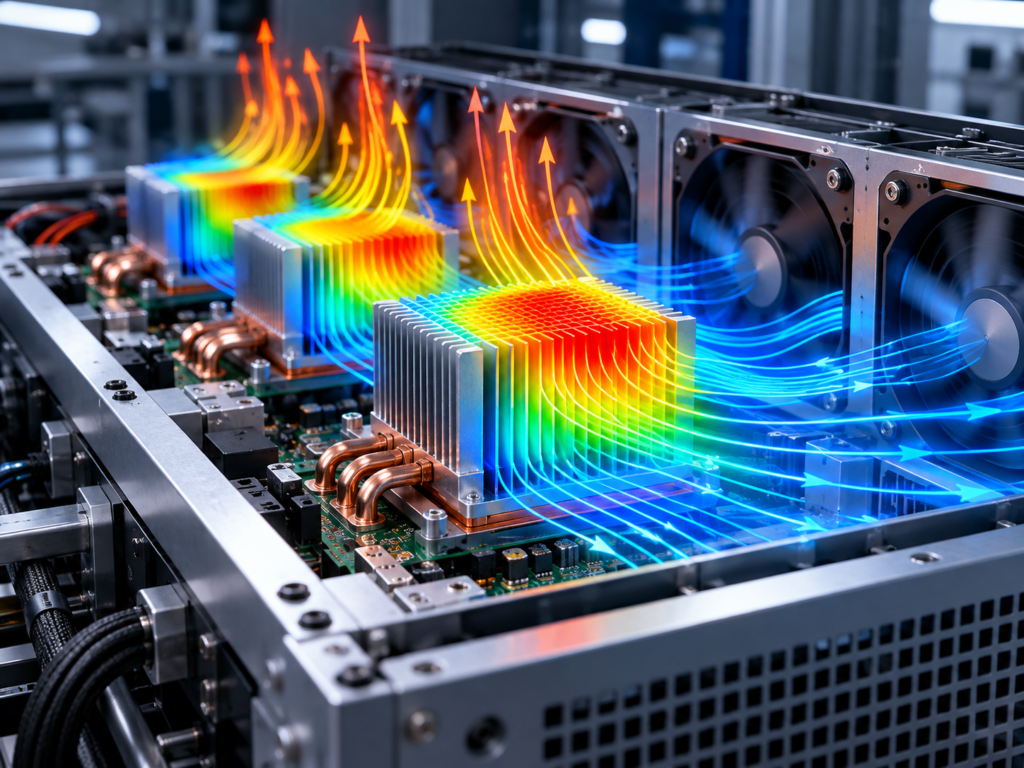
Partner with Experiqs to transform complex ideas into validated, industry-ready engineering solutions
Discover how to partner with Experiqs and get started quickly
Whether you’re exploring a new R&D initiative, seeking advanced simulations, planning experimental validation, or evaluating product feasibility—our experts are ready to assist you.
Whether you’re exploring a new R&D initiative, seeking advanced simulations, planning experimental validation, or evaluating product feasibility—our experts are ready to assist you.
