
More results...
More results...
Autonomous vehicles and intelligent mobility platforms must operate reliably across changing terrain, speed, load, obstacle, traffic-like conditions, sensor inputs, control behaviour, and mission requirements. These systems depend on the smooth integration of perception, navigation, control, sensing, actuation, compute, power, mechanical design, and safety-critical decision-making.
Autonomous Vehicles & Mobility Platforms helps robotics and mobility teams improve autonomous ground vehicle performance, system integration, real-world reliability, and deployment confidence. By using simulation-led engineering, system-level analysis, autonomy validation support, mobility performance evaluation, and safety-critical studies, Experiqs helps reduce uncertainty before field deployment.
Experiqs provides Autonomous Vehicles & Mobility Platforms services for autonomous ground vehicles, AMRs, AGVs, delivery robots, inspection vehicles, warehouse mobility systems, industrial mobility platforms, service robots, and intelligent ground-based robotic systems. We support autonomous ground vehicle analysis, mobility performance validation, perception and navigation support, control system evaluation, safety-critical system studies, and deployment readiness engineering.
Autonomous mobility systems are complex because they must make reliable decisions while moving through real-world environments. A platform may perform well during controlled testing but face challenges when exposed to different surfaces, payload changes, obstacles, slopes, turns, vibration, dust, sensor noise, lighting variation, or traffic-like interactions.
Autonomous ground vehicles depend on multiple subsystems working together. Perception systems must detect the environment accurately. Navigation algorithms must plan safe paths. Control systems must respond smoothly. Mechanical systems must provide stability and traction. Power systems must support the required duty cycle. Safety systems must handle failures and abnormal conditions.
If these systems are not validated together, the platform may face unstable motion, poor obstacle response, localization errors, traction loss, payload imbalance, excessive power draw, thermal issues, or unsafe behaviour during deployment.
Experiqs helps robotics and mobility teams evaluate platform behaviour early, identify safety and reliability risks, and improve design confidence before real-world operation.
We support perception, control, navigation, and system integration for mobile platforms.
Our analysis helps assess:
This helps improve autonomous mobility performance and reduce deployment uncertainty.
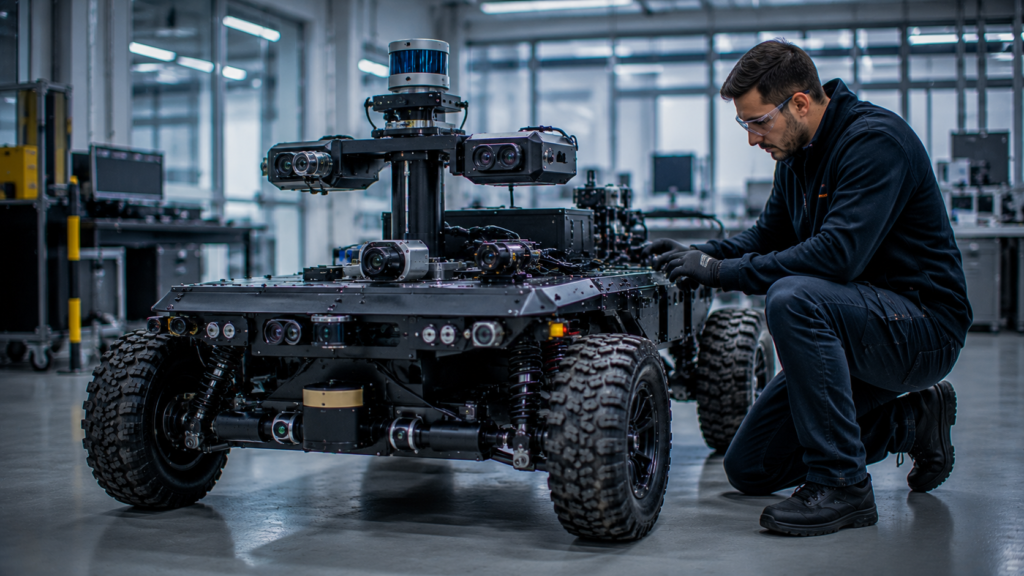
We evaluate behaviour across terrain, speed, load, obstacle, and traffic-like conditions.
Experiqs helps analyze:
This helps validate whether the platform can operate reliably across real-world mobility scenarios.
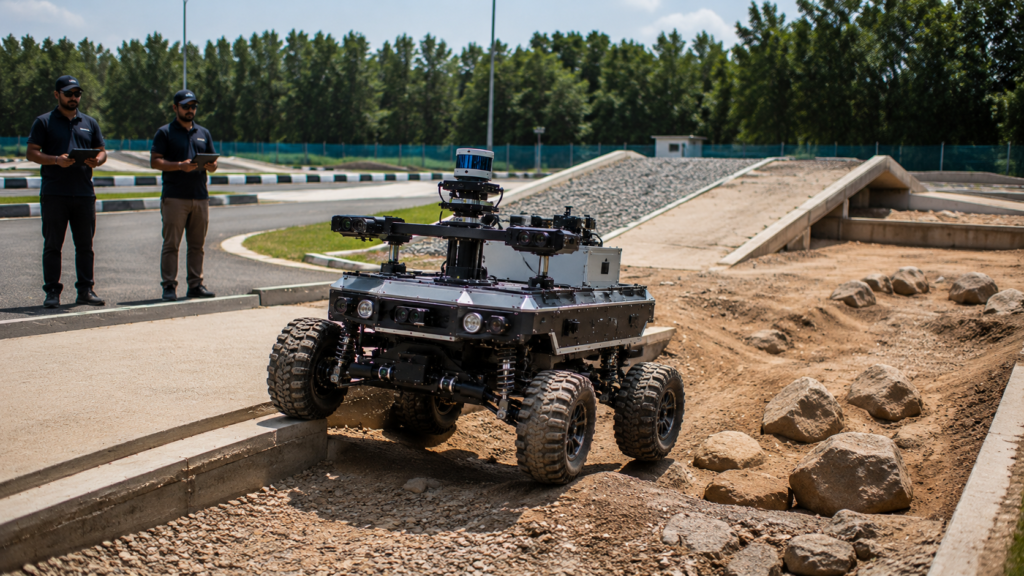
We study failure modes, response behaviour, and operational risk in autonomous mobility systems.
We help evaluate:
This helps improve safety confidence before field trials or customer deployment
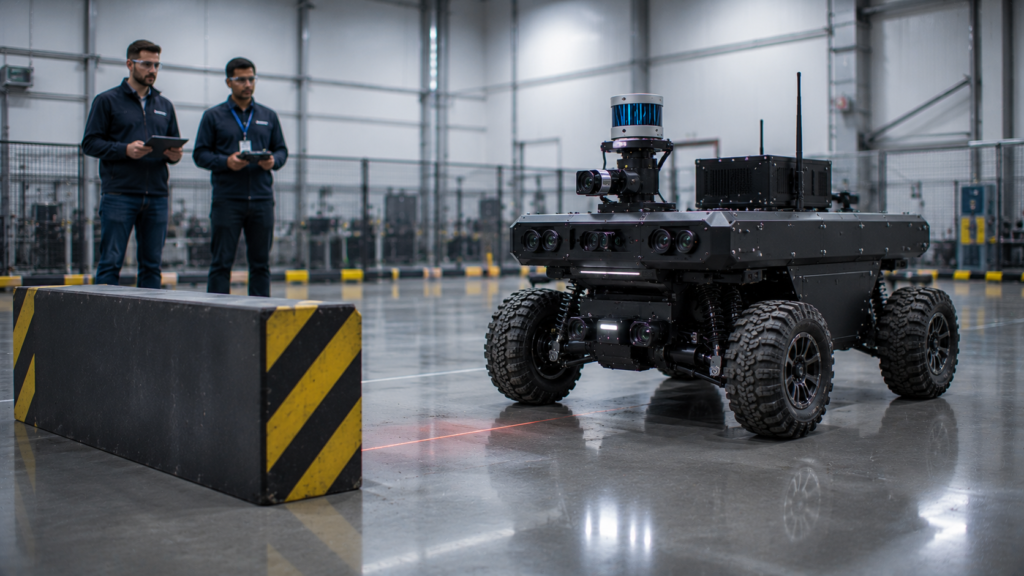
Autonomous vehicles depend on reliable sensor data for safe and consistent operation.
We support evaluation of:
This helps improve sensing quality and reduce environment-related perception failures.
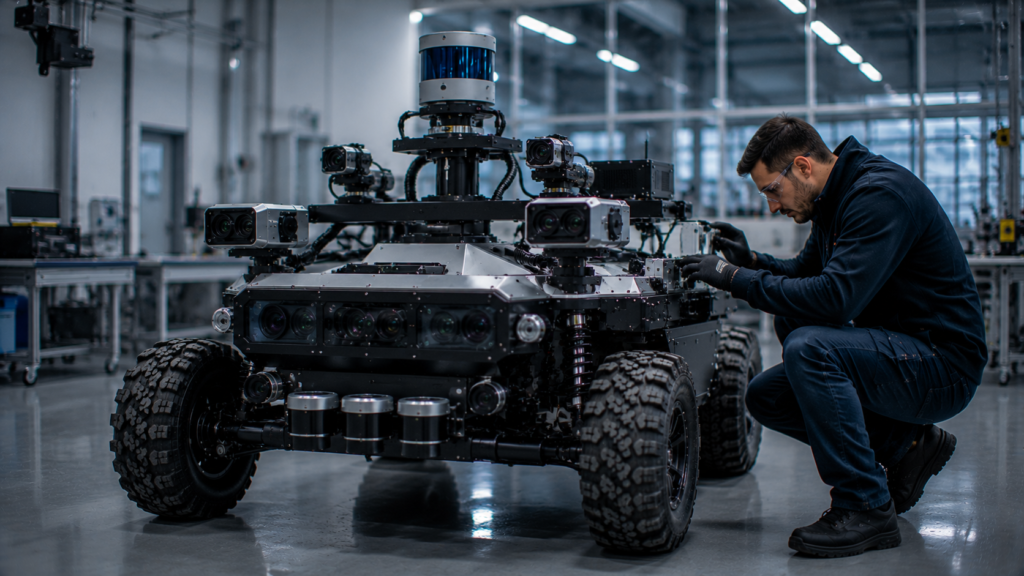
Mobility platforms must respond smoothly to commands, obstacles, path changes, and operating constraints.
We help assess:
This helps improve autonomous movement quality and mission success.
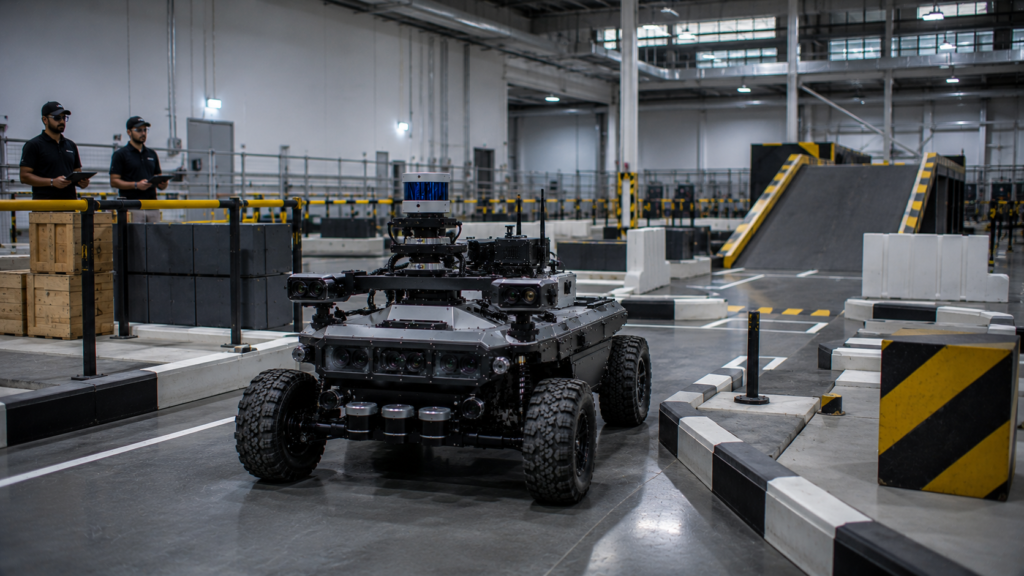
Autonomous mobility platforms are exposed to continuous operation, payload loads, vibration, thermal buildup, and power demand variation.
We help evaluate:
This helps improve reliability, durability, and uptime during real-world deployment.
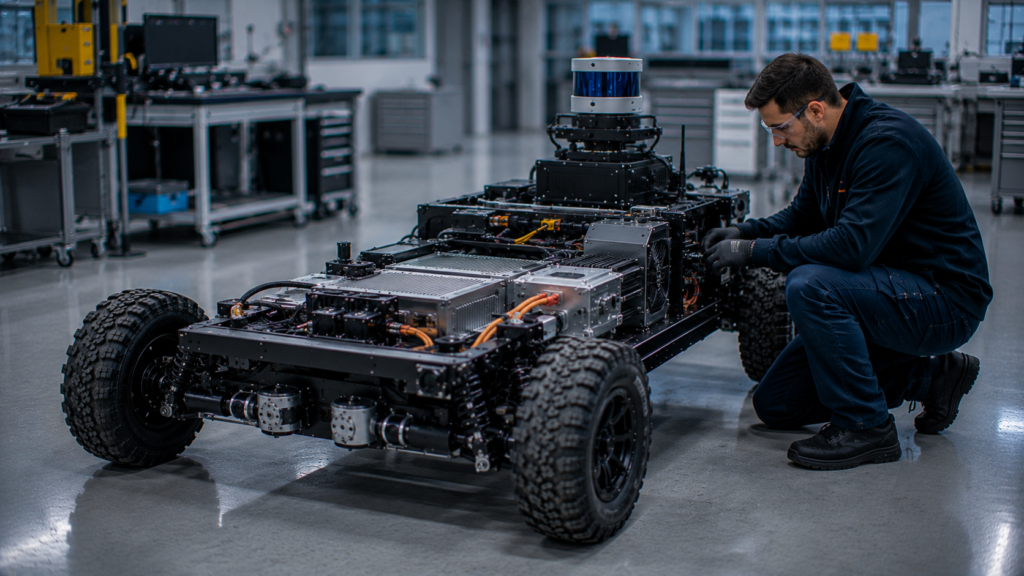
Experiqs helps autonomous vehicle and mobility platform teams address engineering challenges, including:
Evaluate perception, navigation, control, and platform behaviour across realistic operating conditions.
Identify field risks early and validate platform performance before real-world deployment.
Assess failure modes, emergency response, obstacle behaviour, and operational risks.
Improve placement and integration of sensors, compute systems, actuators, power systems, and mechanical subsystems.
Reduce structural, thermal, vibration, power, and mobility-related risks during operation.
Use simulation-led engineering and system-level validation to reduce prototype iterations and improve design decisions.
Experiqs combines robotics engineering, system-level analysis, CFD, FEA, thermal analysis, vibration assessment, AI/ML support, and simulation-led validation to improve autonomous vehicles and mobility platforms.
Our strength lies in evaluating the complete mobility system, not only individual components. We help teams understand how perception, control, navigation, sensors, actuators, power systems, thermal behaviour, structures, payloads, and terrain conditions interact during real-world operation.
By validating autonomous mobility platforms virtually before field deployment, Experiqs helps robotics teams reduce uncertainty, improve reliability, strengthen safety, and make better engineering decisions.
Optimize autonomous ground vehicle behaviour, perception integration, control response, terrain performance, safety-critical operation, thermal reliability, and deployment readiness with Experiqs’ Autonomous Vehicles & Mobility Platforms services.
Talk to our experts to evaluate your mobility platform and identify practical opportunities for stronger performance, safer operation, and better real-world reliability.
Partner with Experiqs to transform complex ideas into validated, industry-ready engineering solutions
Discover how to partner with Experiqs and get started quickly
Whether you’re exploring a new R&D initiative, seeking advanced simulations, planning experimental validation, or evaluating product feasibility—our experts are ready to assist you.
