
More results...
More results...
Autonomous robots and mobility platforms must move safely, efficiently, and reliably across changing layouts, terrains, obstacles, payloads, speeds, mission profiles, and operating conditions. Navigation, planning, and control systems directly influence how well a robot understands its environment, plans a route, follows a trajectory, avoids obstacles, and responds to dynamic conditions.
Navigation, Planning & Control Optimization helps robotics teams improve autonomous movement, control response, path reliability, and mission-level behaviour. By evaluating route planning, obstacle avoidance, trajectory execution, control stability, response time, tracking accuracy, and edge case scenarios, Experiqs helps reduce uncertainty before field deployment.
Experiqs provides Navigation, Planning & Control Optimization services for autonomous robots, AMRs, AGVs, drones, UAVs, autonomous vehicles, inspection robots, service robots, warehouse robots, and intelligent mobility platforms. We support path planning validation, control system optimization, trajectory analysis, obstacle avoidance evaluation, edge case testing, mission execution studies, and autonomous decision-making improvement.
Autonomous systems must make reliable movement decisions in real time. A robot may perform well in a simple test environment but face issues when exposed to narrow pathways, changing obstacles, different surfaces, payload variation, sensor noise, dynamic objects, crowded layouts, slopes, turns, or mission interruptions.
Path planning issues can lead to inefficient routes, poor obstacle avoidance, unnecessary stops, collision risk, mission delays, or incomplete task execution. Control system issues can cause overshoot, oscillation, slow response, poor tracking accuracy, unstable motion, jerky movement, or reduced positioning precision.
Edge cases are especially important in robotics. Rare or uncertain conditions can expose weaknesses in autonomous decision-making that may not appear during normal testing. These may include sensor obstruction, unexpected obstacles, slippery surfaces, payload shifts, localization errors, sharp turns, emergency stops, or unusual mission conditions.
Simulation-led validation and engineering analysis help robotics teams understand how navigation, planning, and control systems behave across realistic and high-risk scenarios. Experiqs helps identify improvement opportunities before field deployment or customer operation.
We evaluate route planning, obstacle avoidance, trajectory behaviour, and mission-level movement.
Our analysis helps assess:
This helps improve autonomous route execution and mission reliability.
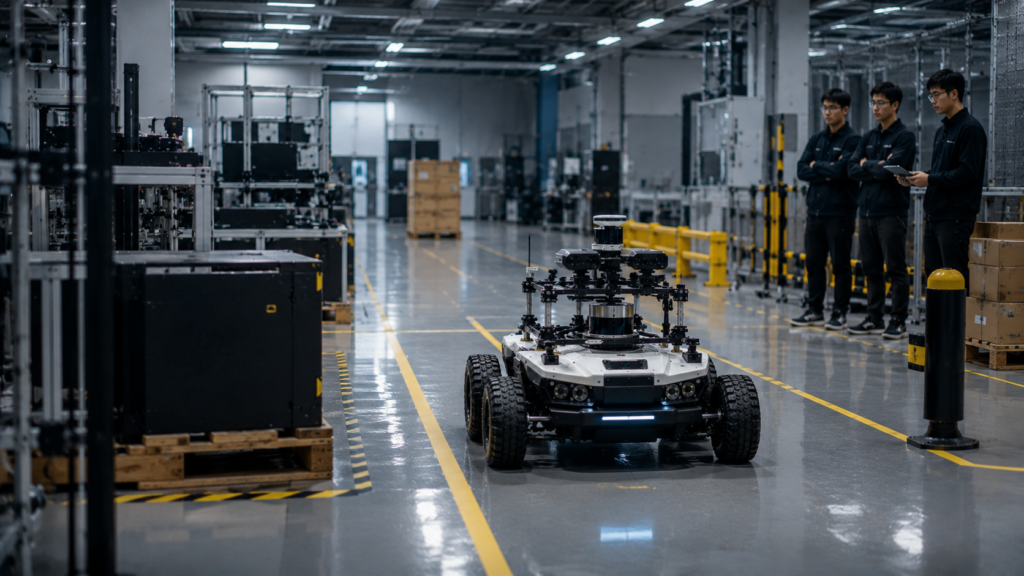
We improve stability, response time, tracking accuracy, and behaviour under dynamic conditions.
Experiqs helps evaluate:
This helps improve smoothness, precision, and stability of autonomous movement.
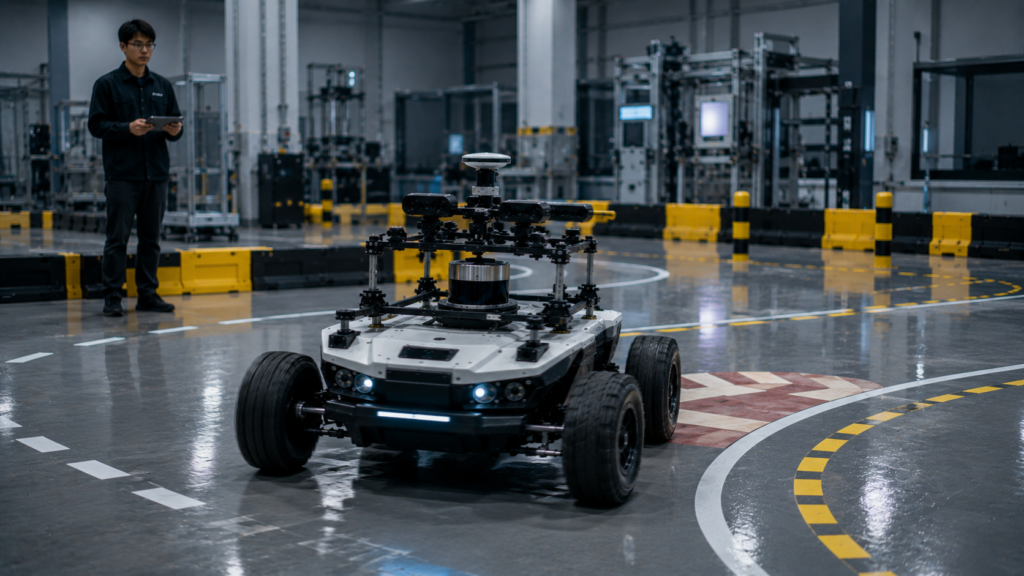
We study rare, uncertain, or high-risk situations that may affect autonomous decision-making.
We help test:
This helps reduce deployment risk and improve autonomous behaviour under non-ideal conditions.
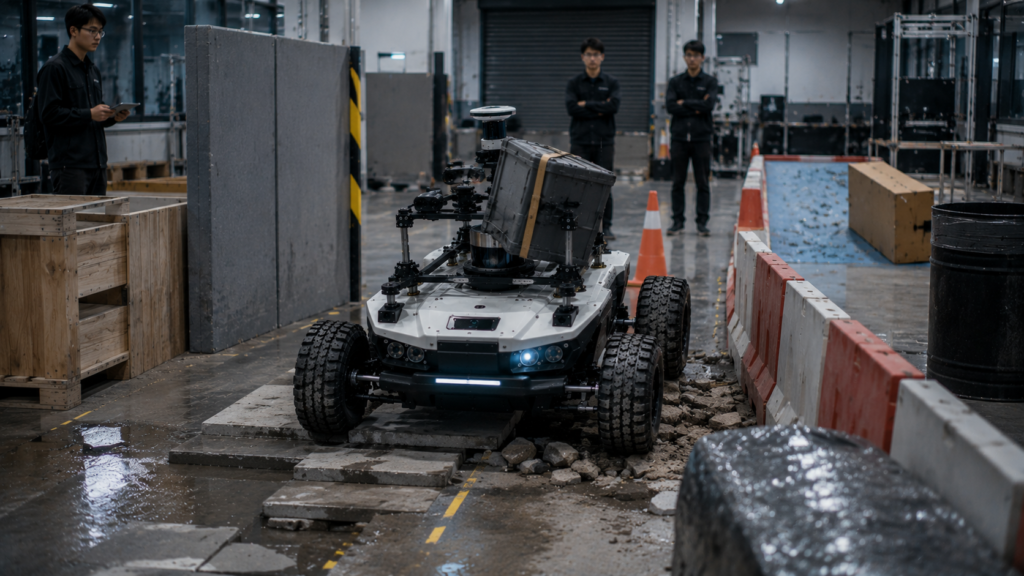
Trajectory quality affects safety, speed, energy usage, positioning, and mission completion.
We help analyze:
This helps improve efficient and stable robotic movement.
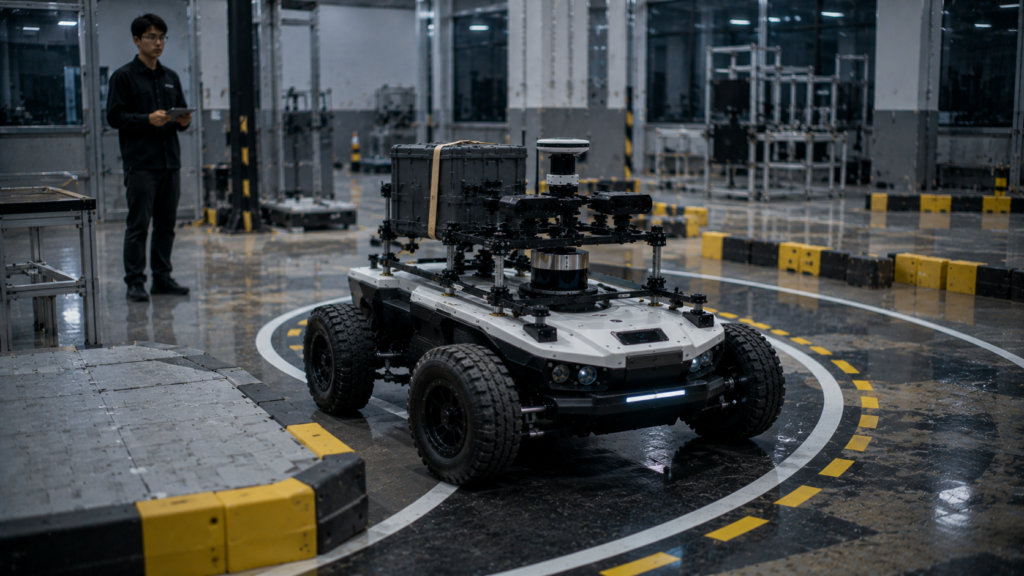
Autonomous platforms must detect obstacles, react safely, and replan movement without mission failure.
We help evaluate:
This helps improve safety and reliability in real operating environments.
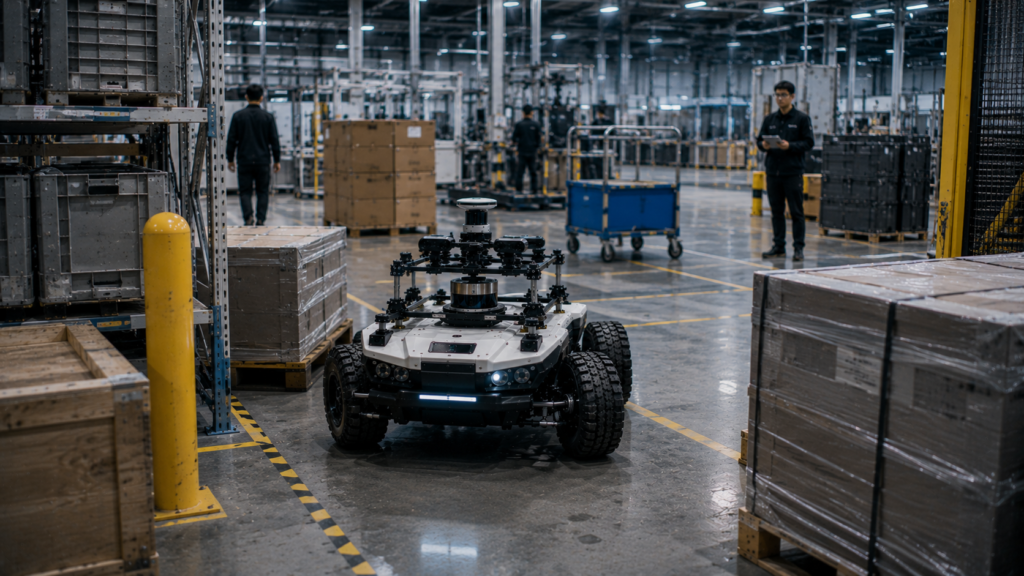
Navigation and control performance must support the full mission, not only individual movements.
We support evaluation of:
This helps improve mission success and deployment confidence.
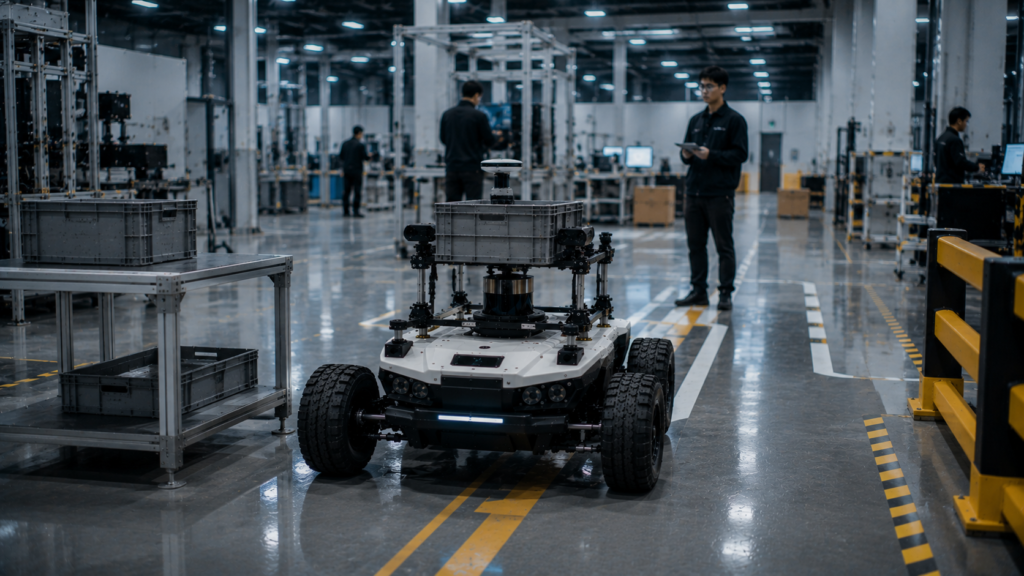
Experiqs helps robotics and autonomous system teams address navigation, planning, and control challenges, including:
Improve route planning, trajectory behaviour, obstacle response, and mission-level movement reliability.
Improve response time, tracking accuracy, motion smoothness, and dynamic behaviour.
Test edge cases, uncertain conditions, and high-risk scenarios before real-world deployment.
Validate whether robots can complete tasks across layouts, obstacles, terrain, payloads, and operating conditions.
Improve obstacle avoidance, emergency response, replanning, and autonomous decision-making.
Use simulation-led evaluation to compare navigation, planning, and control strategies before field trials.
Experiqs combines robotics engineering, simulation-led validation, AI/ML support, control-system understanding, sensor behaviour analysis, and system-level modelling to improve navigation, planning, and control performance.
Our strength lies in evaluating autonomous movement as a complete system. We help clients understand how path planning, control logic, sensor inputs, payloads, terrain, obstacles, and mission conditions interact during real-world operation.
By validating navigation and control behaviour virtually, Experiqs helps robotics teams reduce deployment uncertainty, improve mission success, strengthen safety, and make better engineering decisions.
Optimize path planning, control stability, trajectory behaviour, obstacle avoidance, edge case handling, and mission execution with Experiqs’ Navigation, Planning & Control Optimization services.
Talk to our experts to evaluate your autonomous mobility system and identify practical opportunities for smoother movement, safer operation, and stronger mission reliability.
Partner with Experiqs to transform complex ideas into validated, industry-ready engineering solutions
Discover how to partner with Experiqs and get started quickly
Whether you’re exploring a new R&D initiative, seeking advanced simulations, planning experimental validation, or evaluating product feasibility—our experts are ready to assist you.
