
More results...
More results...
Autonomous robotic systems must operate reliably across changing environments, payloads, speeds, terrains, mission profiles, sensor inputs, control responses, and mechanical constraints. A successful robotic platform depends on the proper integration of sensors, actuators, control systems, compute units, power systems, mechanical structures, thermal systems, and mobility subsystems.
Autonomous Robotic Systems Engineering helps robotics teams improve platform architecture, system integration, performance, reliability, and deployment readiness. By using simulation-led engineering, system-level validation, mechanical assessment, thermal analysis, and real-world operating condition evaluation, Experiqs helps reduce uncertainty before field deployment.
Experiqs provides Autonomous Robotic Systems Engineering services for mobile robots, inspection robots, warehouse robots, service robots, field robots, AMRs, AGVs, industrial robotic platforms, and autonomous systems. We support system architecture improvement, robotic platform optimization, sensor-actuator integration, mobility validation, mechanical subsystem assessment, and deployment readiness engineering.
Autonomous robots are complex systems where every subsystem affects overall performance. A robot may work well in a controlled test environment but face issues in real-world deployment due to terrain variation, load changes, vibration, thermal buildup, dust exposure, battery limitations, sensor placement, actuator sizing, or mechanical instability.
System-level engineering is important because changes in one subsystem can affect the complete robotic platform. Sensor placement influences perception quality. Actuator selection affects speed, torque, power draw, and heat generation. Mechanical layout affects stability, vibration, serviceability, and payload handling. Compute and control systems affect response time, decision-making, and mission reliability.
Without proper engineering validation, robotic platforms may experience unstable movement, actuator overload, overheating, structural weakness, excessive vibration, poor navigation performance, reduced uptime, or unreliable field operation.
Experiqs helps robotics teams evaluate platform behaviour early, identify integration risks, and improve design confidence before prototype trials, pilot deployments, or customer operation.
We improve integration between sensors, actuators, control systems, compute units, power systems, and mechanical subsystems.
Our analysis helps assess:
This helps improve complete robotic platform integration and reduce system-level design risks.
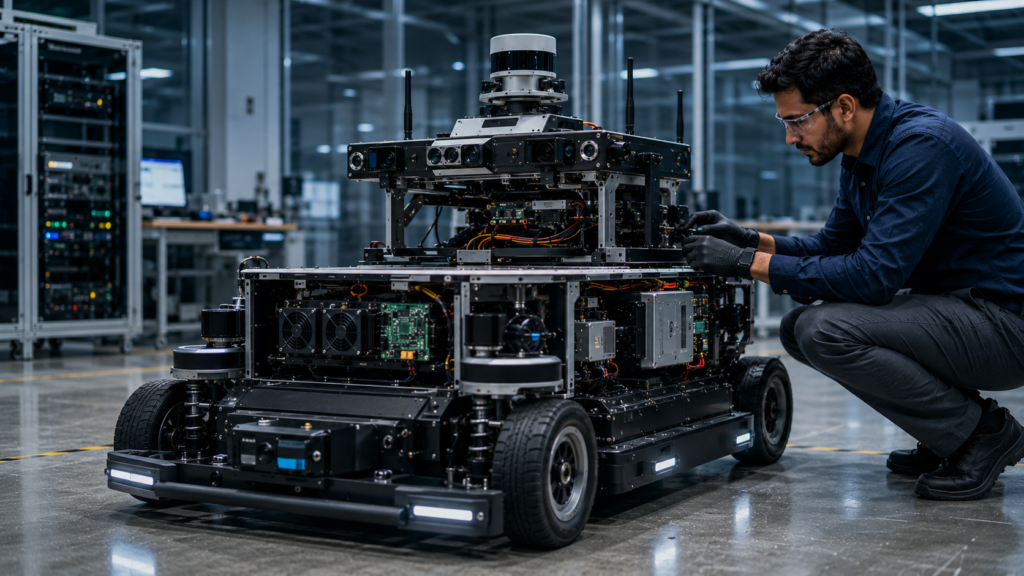
We evaluate robot behaviour across speed, load, terrain, environment, and mission conditions.
Experiqs helps analyze:
This helps improve robotic system performance under realistic operating conditions.
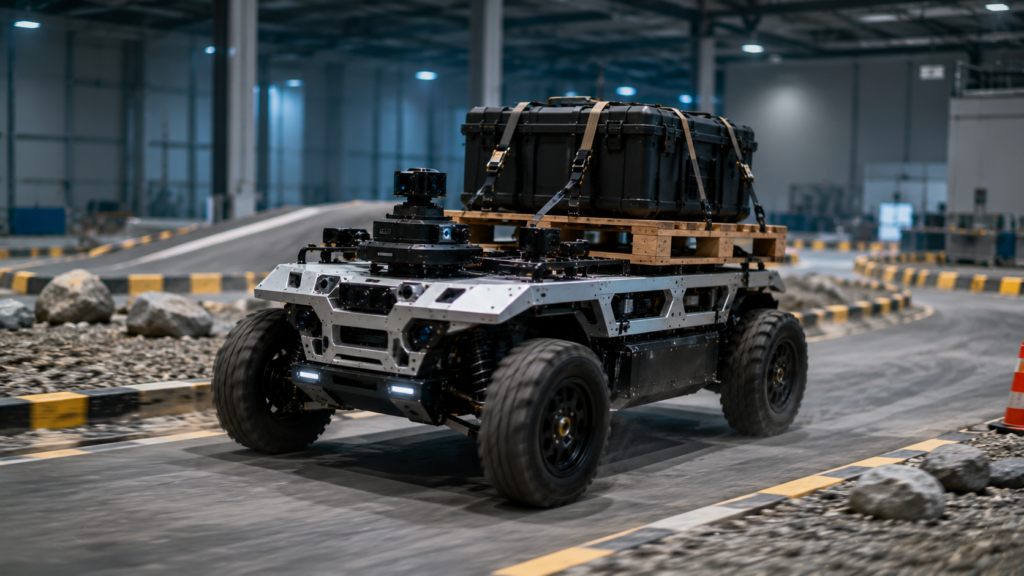
We support engineering validation to reduce uncertainty before field deployment.
We help evaluate:
This helps prepare robotic platforms for safer and more reliable deployment.
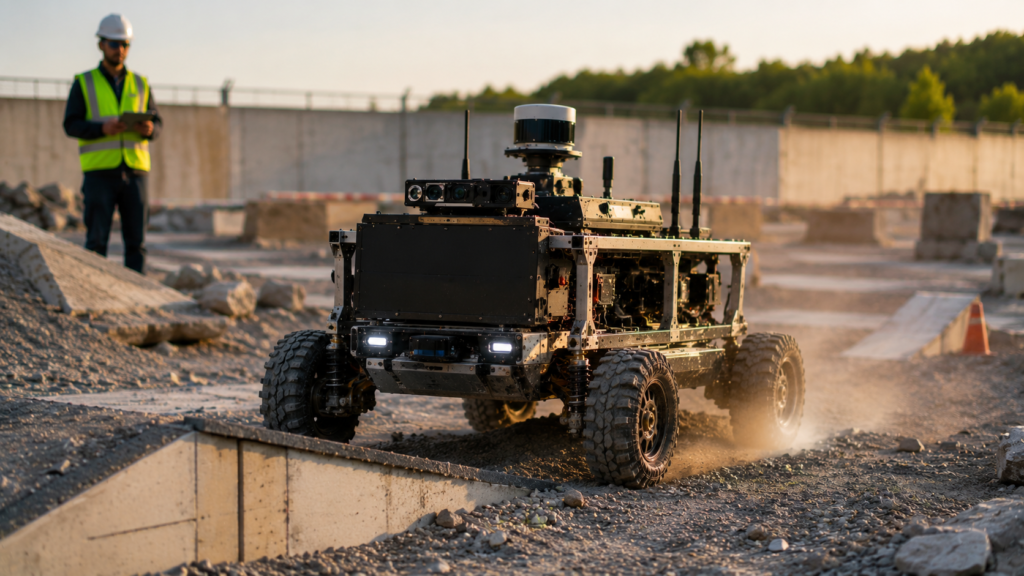
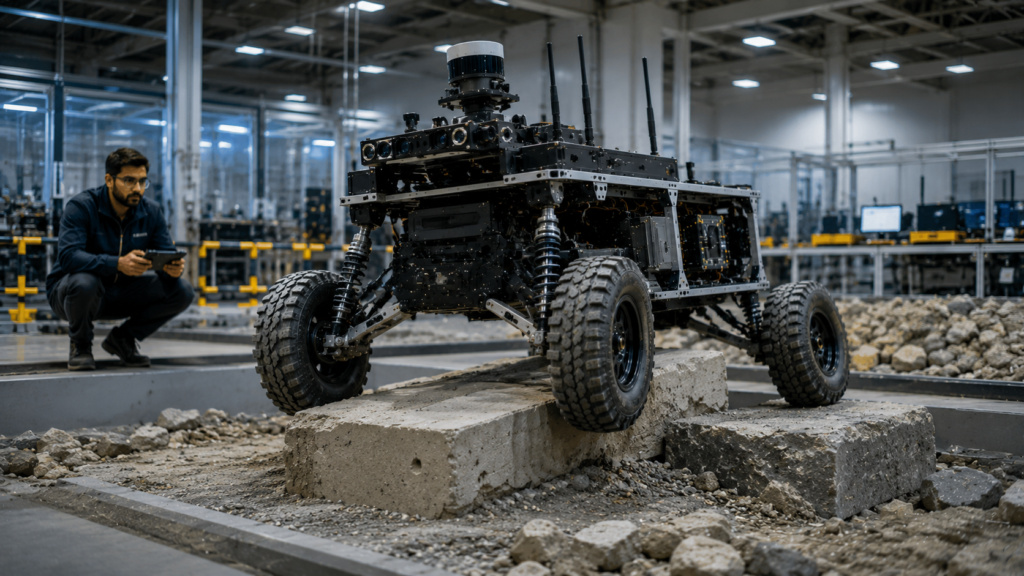
Robot mobility depends on chassis design, wheel or track configuration, suspension behaviour, payload distribution, and ground interaction.
We support improvement of:
This helps improve mobility, stability, and operational reliability.
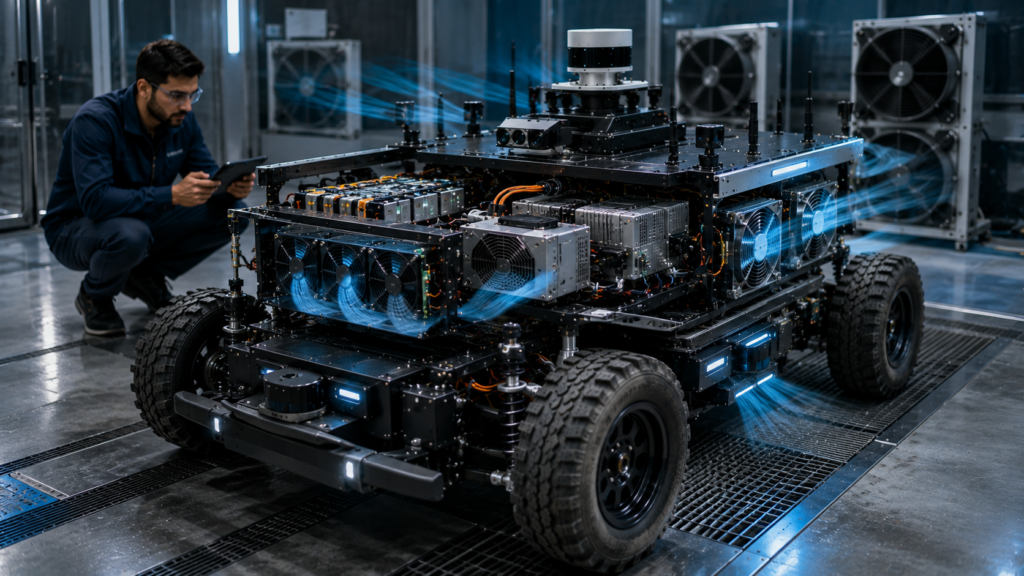
Autonomous robots often operate in compact packages where motors, batteries, controllers, drives, and compute units generate heat.
We help evaluate:
This helps improve reliability during long-duration, high-load, or continuous operation.
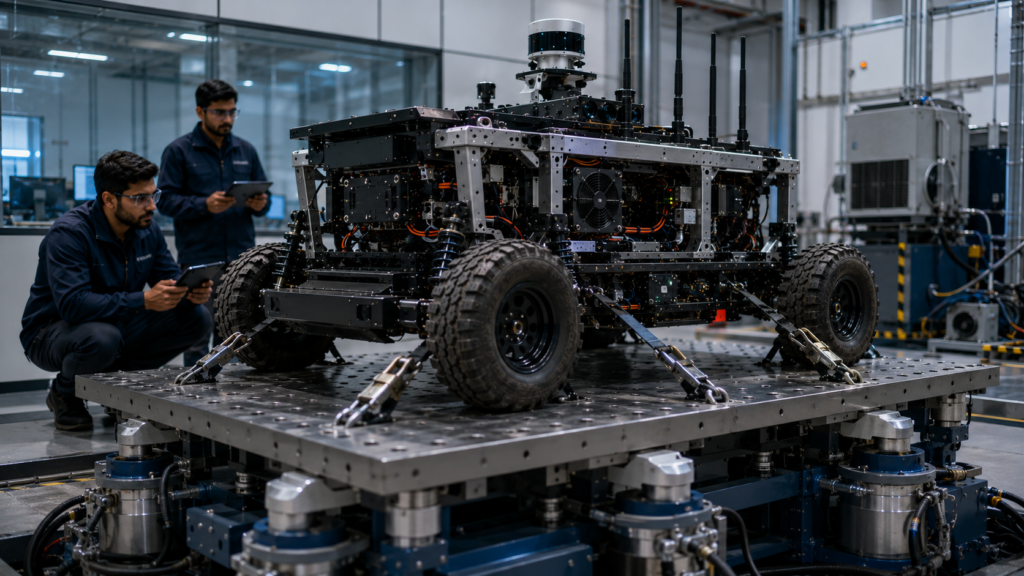
Robots are exposed to repeated motion, shock, vibration, payload loads, terrain impact, and handling conditions.
We help assess:
This helps improve platform robustness and reduce field failure risk.
Experiqs helps robotics and autonomous system teams address engineering challenges, including:
Improve coordination between sensors, actuators, controls, compute units, power systems, and mechanical subsystems.
Evaluate robot behaviour across load, speed, terrain, environment, and mission conditions.
Identify field risks early and validate platform readiness before real-world deployment.
Reduce thermal, structural, vibration, mobility, and integration-related failure risks.
Use simulation-led engineering to reduce prototype iterations and improve design decisions.
Support product variants, payload changes, new mission profiles, and next-generation robotic system upgrades.
Experiqs combines system engineering, CFD, FEA, thermal analysis, vibration assessment, mobility engineering, and simulation-led product development to support robotic and autonomous system development.
Our strength lies in evaluating the complete robotic platform, not only individual components. We help teams understand how sensors, actuators, control systems, compute units, power systems, thermal behaviour, structural design, and mobility conditions interact in real-world operation.
By validating robotic systems virtually before field deployment, Experiqs helps robotics teams reduce uncertainty, improve reliability, optimize performance, and make stronger engineering decisions.
Optimize system architecture, mobility behaviour, thermal reliability, structural durability, control integration, and deployment readiness with Experiqs’ Autonomous Robotic Systems Engineering services.
Talk to our experts to evaluate your robotic platform and identify practical opportunities for better performance, stronger reliability, and safer real-world deployment.
Partner with Experiqs to transform complex ideas into validated, industry-ready engineering solutions
Discover how to partner with Experiqs and get started quickly
Whether you’re exploring a new R&D initiative, seeking advanced simulations, planning experimental validation, or evaluating product feasibility—our experts are ready to assist you.
