
More results...
More results...
Bulk solids handling systems are critical to mining, mineral processing, metal production, and material movement operations. Chutes, hoppers, conveyors, transfer points, feeders, bins, silos, stockpiles, crushers, screens, and loading systems must move material reliably while controlling blockage, segregation, dust, spillage, impact, wear, and flow instability.
Bulk Solids Handling & Material Flow Engineering helps mining and mineral industry teams improve the way ore, minerals, concentrates, coal, aggregates, pellets, and other bulk materials move through handling systems. By using simulation-led engineering and material flow analysis, Experiqs helps identify flow restrictions, impact zones, transfer issues, dust generation points, and wear-prone regions before they cause downtime or material loss.
Experiqs provides Bulk Solids Handling & Material Flow Engineering services for mining operations, mineral processing plants, metal production facilities, material handling systems, and process equipment. We use material flow analysis, chute and hopper flow studies, conveyor transfer point evaluation, DEM-based assessment support, dust and spillage analysis, wear risk evaluation, and transfer point optimization to improve handling reliability and process continuity.
Material handling issues can directly affect plant availability, throughput, maintenance cost, safety, and production consistency. Even when processing equipment performs well, poor material flow in chutes, hoppers, conveyors, feeders, or transfer points can create bottlenecks that limit the entire plant.
Common problems include blockage, arching, ratholing, segregation, uneven loading, spillage, dust generation, excessive impact, belt mistracking, chute wear, liner damage, and transfer point plugging. These issues can lead to unplanned shutdowns, material loss, high maintenance frequency, safety concerns, and unstable downstream process performance.
In mining and mineral processing plants, material behaviour can change due to particle size distribution, moisture content, ore type, abrasiveness, stickiness, feed rate, drop height, impact angle, and equipment geometry. A handling system that works under one condition may perform poorly when feed characteristics change.
Simulation-led material flow engineering helps visualize how bulk solids move, where flow becomes unstable, where material impacts occur, and where dust, spillage, or wear risks are likely to develop. Experiqs helps clients improve handling system reliability with practical, engineering-backed recommendations.
We study bulk material movement, blockage risk, segregation, and impact zones across chutes, hoppers, conveyors, and transfer equipment.
Our analysis helps assess:
This helps improve material movement and reduce handling interruptions.
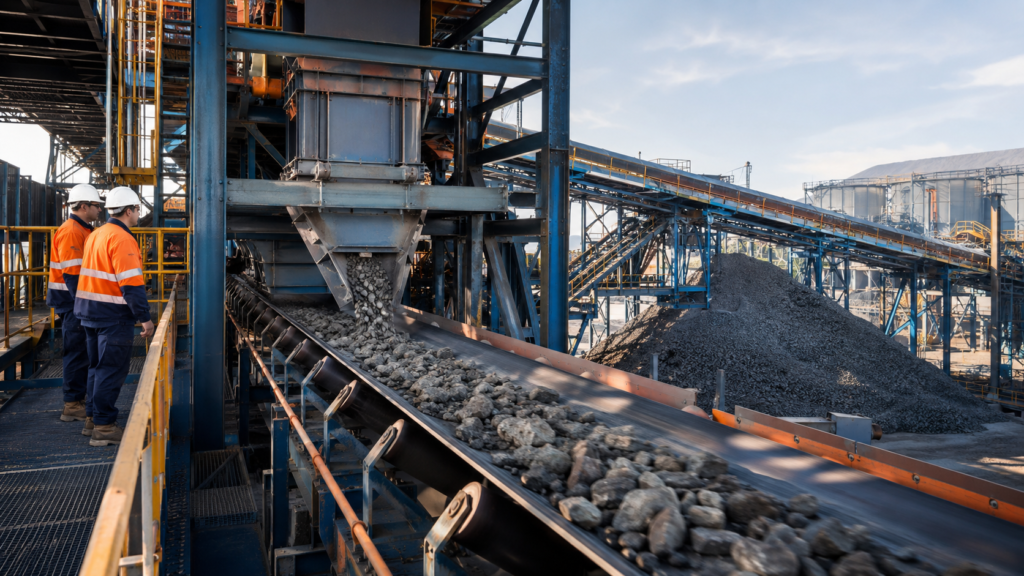
Dust generation and material spillage can increase material loss, maintenance effort, environmental concerns, and safety risks.
Experiqs helps identify:
This helps improve containment, reduce cleanup effort, and support safer plant operation.
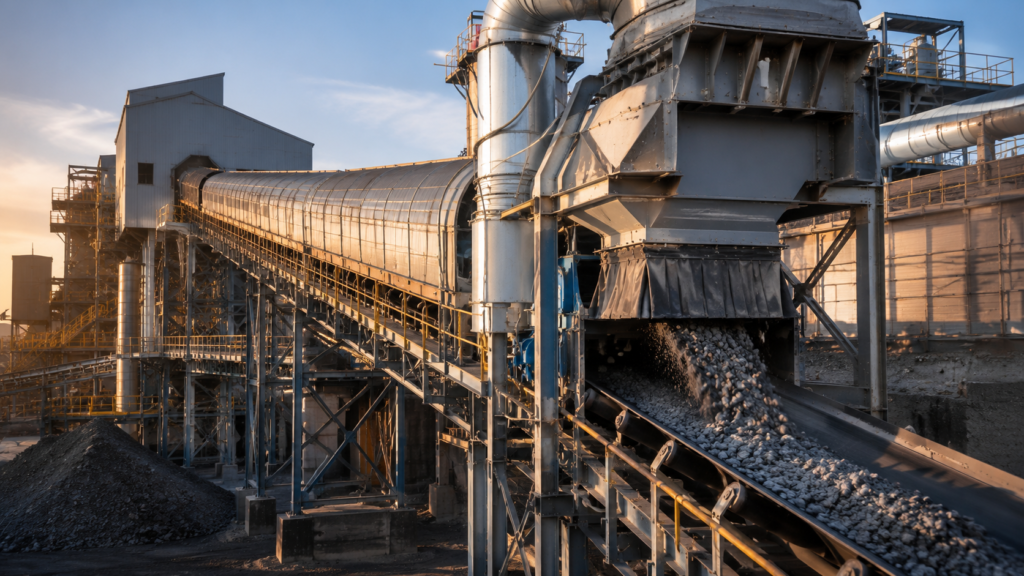
Transfer points are often major sources of wear, dust, spillage, impact damage, and flow instability.
We support optimization of:
This helps improve material flow, reduce wear, and increase reliability in handling systems.
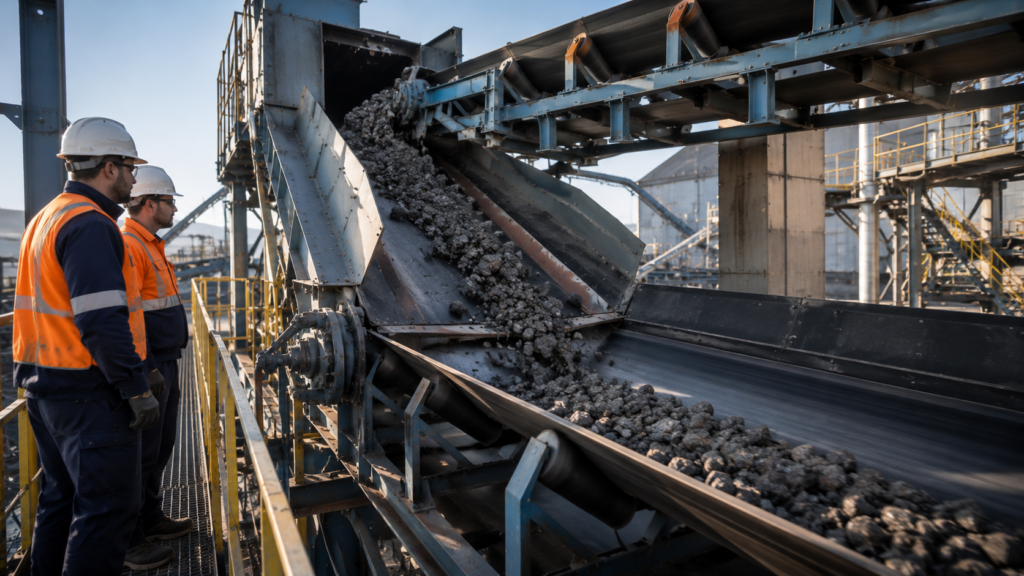
Bulk solids handling systems can experience blockages due to poor geometry, sticky materials, moisture variation, or unstable flow paths.
We help evaluate:
This helps reduce unplanned downtime caused by material flow interruptions.
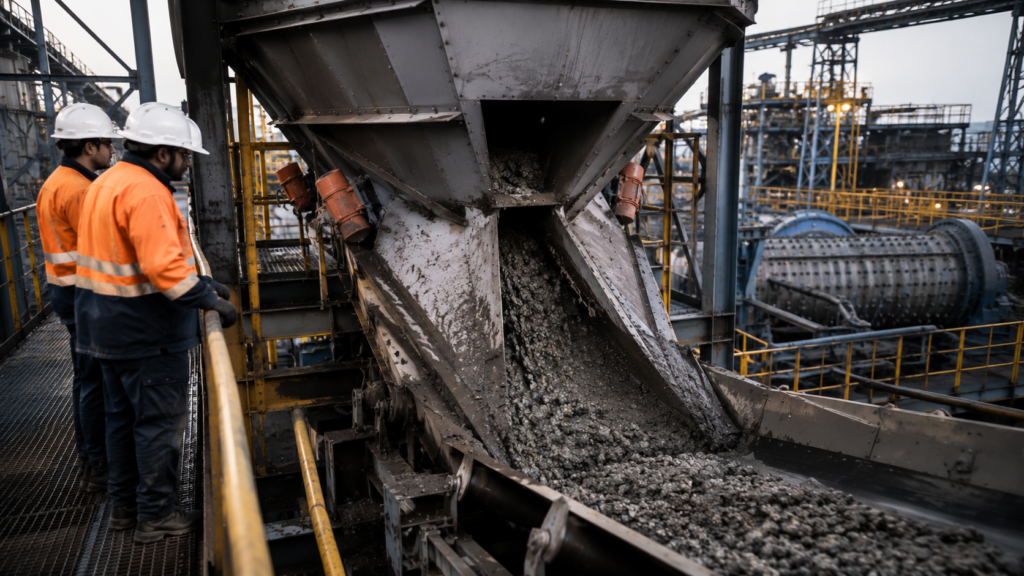
Abrasive bulk materials can cause severe wear in chutes, hoppers, transfer points, liners, and impact areas.
We help identify:
This helps improve liner strategy, reduce equipment damage, and extend component life.
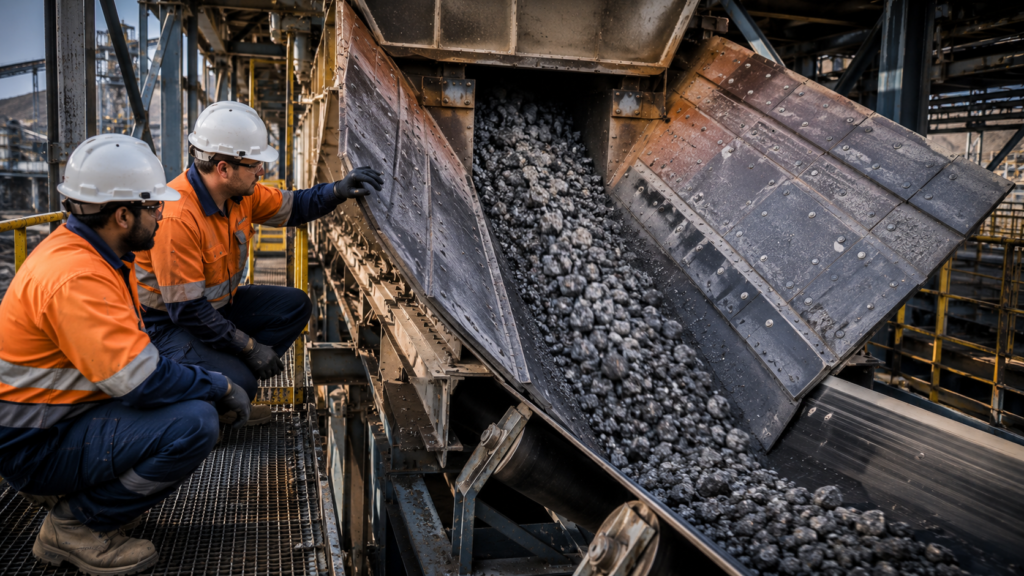
Uneven material distribution and segregation can affect downstream equipment performance, product consistency, and process stability.
Experiqs helps assess:
This helps improve process stability and downstream equipment performance.
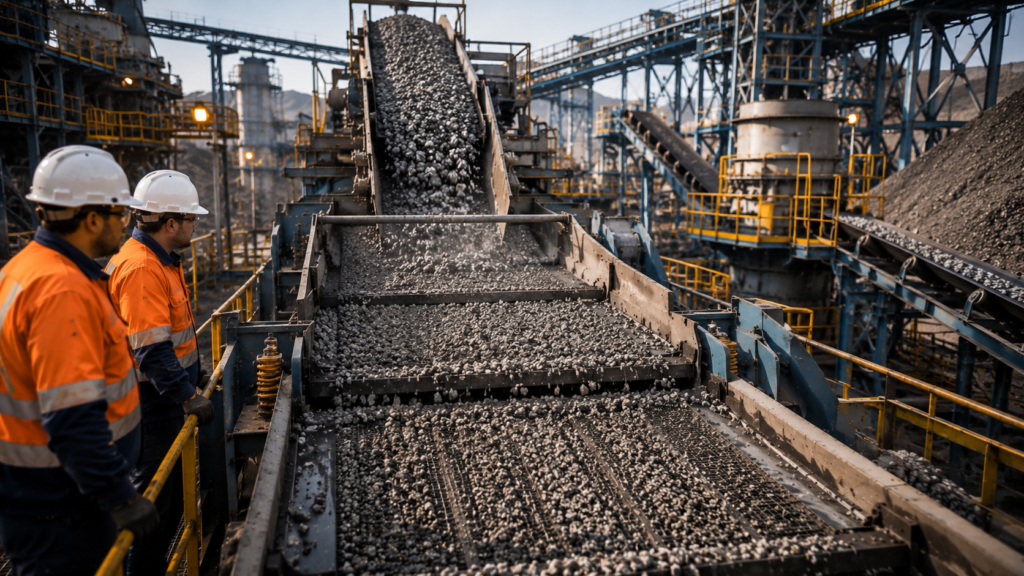
Experiqs helps mining, mineral processing, and metal production teams address bulk solids handling and material flow challenges, including:
Improve chute, hopper, conveyor, and transfer point performance to reduce blockages and flow interruptions.
Identify material escape paths and improve containment to reduce dust generation, spillage, cleanup, and material loss.
Identify high-impact and abrasion-prone zones to improve liner placement, geometry, and maintenance planning.
Optimize drop height, impact angle, belt loading, chute geometry, and material trajectory for smoother transfer.
Reduce segregation, uneven feed distribution, and unstable material movement that affect downstream equipment.
Use simulation-led analysis to identify root causes and compare improvement options before field modifications.
Experiqs combines material flow engineering, simulation-led analysis, DEM-based assessment support, process engineering, wear risk evaluation, and bulk solids handling expertise to improve reliability in mining and mineral handling systems.
Our strength lies in identifying hidden flow problems that are difficult to detect from production data alone. We help clients understand where blockages occur, why dust or spillage is generated, where wear is concentrated, and how transfer points can be improved for more reliable material movement.
By validating material handling improvements virtually, Experiqs helps mining and mineral teams reduce downtime, lower maintenance cost, improve safety, and maintain consistent plant operation.
Optimize chutes, hoppers, conveyors, transfer points, dust control, spillage reduction, wear zones, and bulk material movement with Experiqs’ Bulk Solids Handling & Material Flow Engineering services.
Talk to our experts to evaluate your material handling system and identify practical opportunities for better reliability, lower wear, reduced dust, and stronger process continuity.
Partner with Experiqs to transform complex ideas into validated, industry-ready engineering solutions
Discover how to partner with Experiqs and get started quickly
Whether you’re exploring a new R&D initiative, seeking advanced simulations, planning experimental validation, or evaluating product feasibility—our experts are ready to assist you.
