
More results...
More results...
Data center reliability depends not only on internal cooling performance, but also on how outdoor utility equipment interacts with the surrounding environment. Chillers, dry coolers, cooling towers, generators, ventilation intakes, exhaust outlets, and service yards can create complex airflow patterns that affect equipment efficiency, intake air temperature, and overall thermal reliability.
Experiqs provides simulation-driven External Airflow & Utility Yard Simulation services for data centers and mission-critical facilities. Using advanced CFD analysis, thermal engineering, and site-level airflow evaluation, we help facility owners, consultants, EPC teams, and operators identify heat recirculation, exhaust re-entry, poor equipment spacing, and ventilation risks before they impact performance.
Our approach supports better equipment placement, improved outdoor airflow movement, reduced intake temperature rise, and stronger reliability for critical infrastructure systems.
Utility yards are often densely packed with high-capacity mechanical and electrical equipment. When airflow paths are restricted or equipment is poorly positioned, hot discharge air can recirculate back into equipment intakes, reducing cooling efficiency and increasing operating temperatures.
Generator exhaust, chiller discharge, cooling tower plumes, and building ventilation systems can also interact with nearby intakes, creating risks for overheating, poor air quality, and reduced system performance.
Experiqs helps teams move from layout assumptions to data-driven site optimization by simulating outdoor airflow, heat movement, exhaust dispersion, intake conditions, equipment interaction, and wind effects around the data center building.
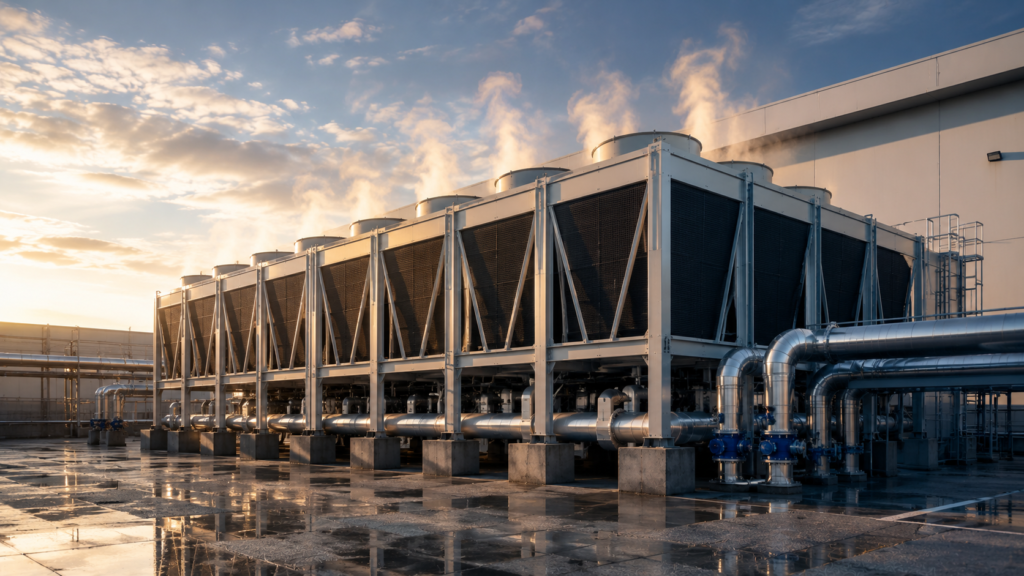
We perform detailed CFD simulations to study airflow behavior around chillers, dry coolers, condensers, and cooling equipment located in utility yards or rooftop plant areas.
Our chiller yard analysis helps evaluate:
This helps improve cooling equipment efficiency and reduce the risk of performance degradation during high ambient temperature conditions.
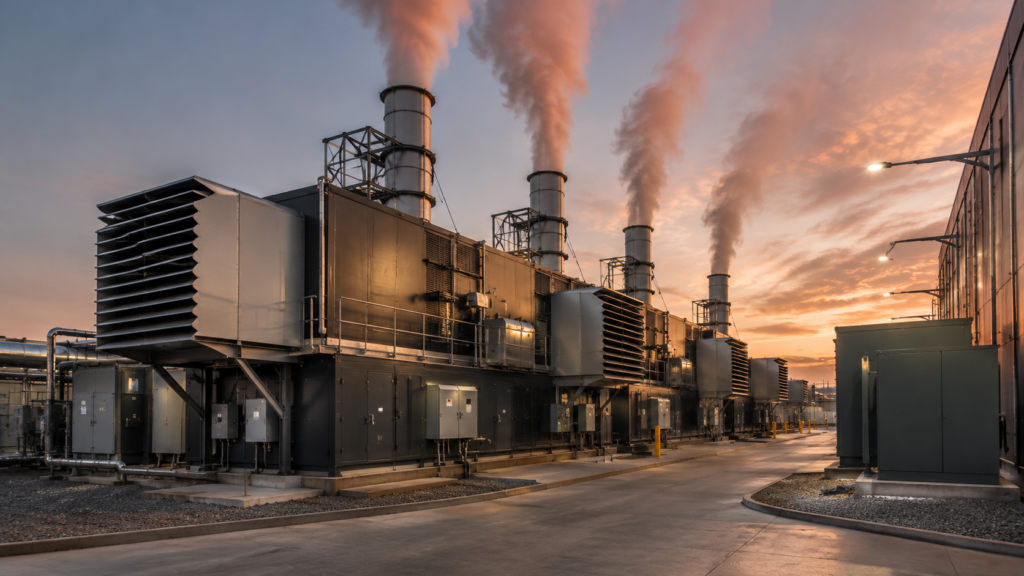
Diesel generator systems can create high-temperature exhaust streams that interact with nearby air intakes, ventilation openings, and surrounding equipment. Experiqs evaluates exhaust movement and intake air quality using CFD-based dispersion analysis.
We help assess:
This allows design and operations teams to improve generator placement, exhaust routing, and intake protection.
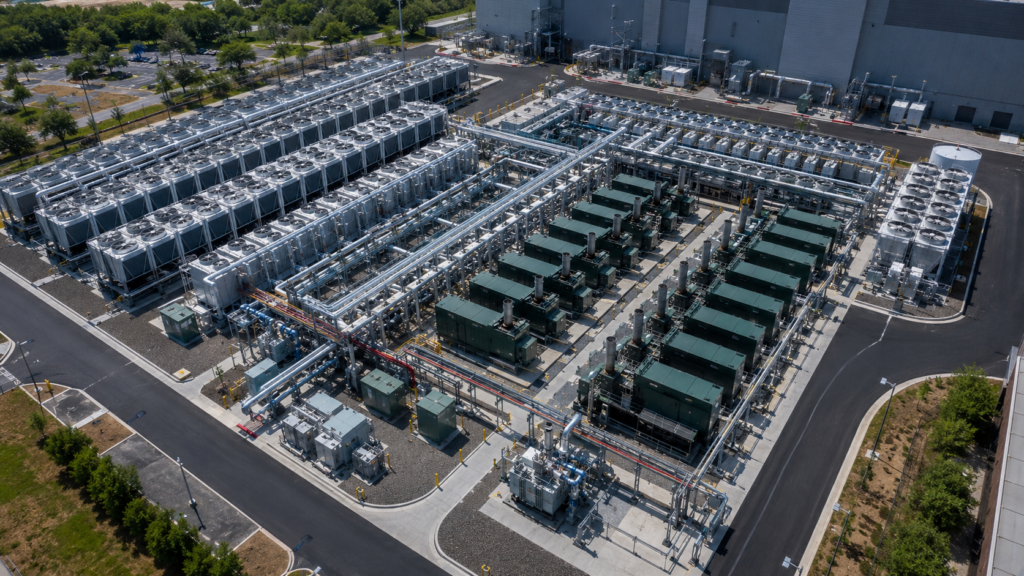
Outdoor equipment layout has a direct impact on airflow availability, thermal performance, and maintenance reliability. Experiqs supports site layout optimization by evaluating how equipment placement, spacing, and surrounding structures affect airflow movement.
We analyze and optimize:
Our recommendations help improve airflow access, reduce recirculation, and support efficient operation of critical utility systems.
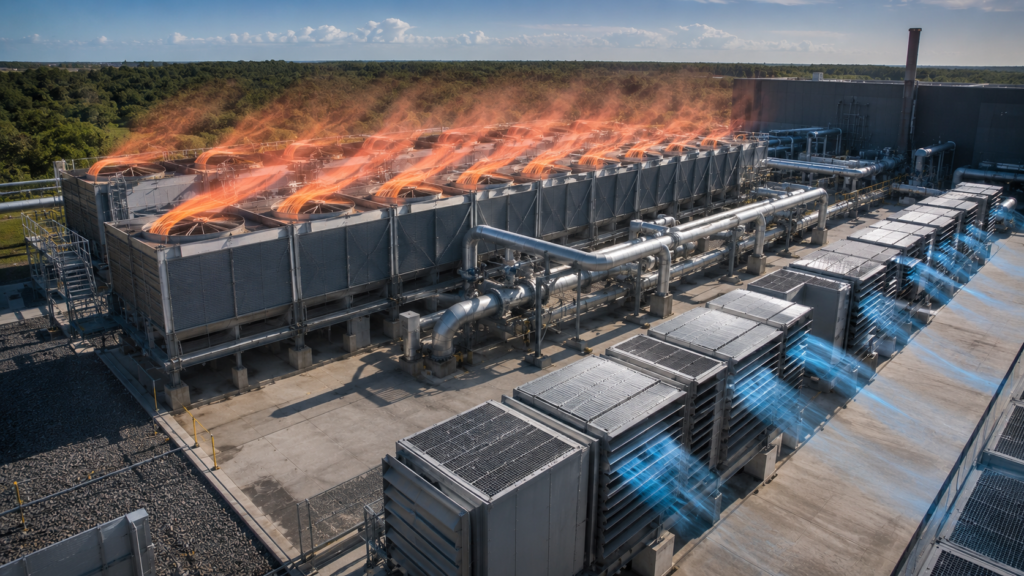
Hot discharge air and exhaust gases can return to equipment intakes when airflow paths are poorly controlled. This can increase intake temperatures and reduce equipment performance.
Experiqs helps identify:
The outcome is improved thermal reliability and better operating performance for outdoor utility infrastructure.
External airflow behavior changes with wind direction, wind speed, ambient temperature, equipment load, and surrounding site conditions. Experiqs models these variables to evaluate site performance under realistic operating conditions.
We assess:
This helps identify layout risks that may not be visible through standard design review alone.
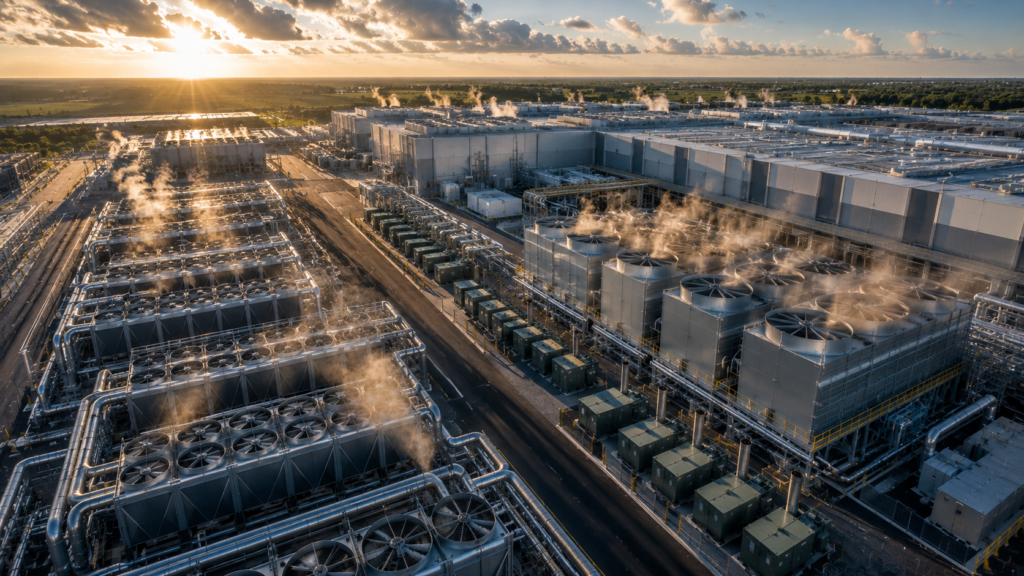
Experiqs helps data center teams address external airflow and utility yard challenges, including:
Reduce hot air recirculation and maintain better intake conditions for chillers, dry coolers, and condensers.
Understand DG exhaust movement and reduce the risk of exhaust re-entry into sensitive intakes or occupied zones.
Improve equipment placement, spacing, and airflow paths around the data center building.
Identify heat buildup, stagnant zones, and unfavorable airflow patterns before they affect critical systems.
Use CFD simulation results to validate site layouts, barrier designs, stack locations, and equipment arrangements.
Support reliable operation of cooling and backup power systems under real environmental and emergency conditions.
Our Cooling Performance Optimization service is suitable for:
Experiqs follows a simulation-led workflow to evaluate external airflow and utility yard performance.
We review building layout, utility yard arrangement, equipment specifications, heat rejection rates, exhaust details, intake locations, stack heights, barriers, screens, fencing, and local wind conditions.
A detailed external airflow model is developed to represent the building, utility yard, equipment, heat sources, exhaust outlets, intakes, and surrounding obstructions.
We evaluate existing or proposed airflow behavior, including temperature distribution, hot air movement, exhaust dispersion, intake conditions, and recirculation zones.
Multiple wind directions, ambient conditions, equipment operating modes, failure cases, and layout options are tested virtually.
We provide clear recommendations for equipment relocation, spacing improvement, stack height adjustment, barrier modification, airflow path enhancement, and recirculation reduction.
Experiqs combines CFD simulation, thermal engineering, system modelling, and digital twin expertise to solve complex airflow and thermal challenges in data centers and critical infrastructure.
Our strength lies in understanding how outdoor equipment, building geometry, exhaust systems, wind behavior, and thermal loads interact at site level. We convert complex external airflow behavior into practical engineering insights that help clients improve reliability, reduce cooling risk, and make confident design decisions.
By validating utility yard airflow before construction, expansion, or equipment modification, Experiqs helps data center teams prevent performance issues and strengthen operational resilience.
Prevent heat recirculation, reduce exhaust re-entry risk, improve equipment intake conditions, and strengthen critical infrastructure performance with Experiqs’ CFD-based External Airflow & Utility Yard Simulation services.
Talk to our experts to evaluate your chiller yard, DG yard, rooftop plant, or utility equipment layout and identify practical airflow optimization opportunities.
Partner with Experiqs to transform complex ideas into validated, industry-ready engineering solutions
Discover how to partner with Experiqs and get started quickly
Whether you’re exploring a new R&D initiative, seeking advanced simulations, planning experimental validation, or evaluating product feasibility—our experts are ready to assist you.
