
More results...
More results...
Generator rooms play a critical role in data centers and mission-critical facilities by supporting emergency and backup power operation. During generator operation, large amounts of heat, exhaust gases, and combustion air demand can create complex ventilation challenges inside enclosed rooms.
Poor ventilation can lead to heat buildup, insufficient fresh air supply, high room temperatures, reduced generator performance, exhaust accumulation, and unsafe operating conditions. For facilities that depend on reliable backup power, generator room airflow must be carefully designed and validated.
Experiqs provides simulation-driven Generator Room Ventilation Optimization services using advanced CFD analysis, thermal engineering, and airflow modelling. We help data center operators, consultants, EPC teams, facility owners, and MEP designers improve ventilation performance, control temperature rise, and support safe, reliable generator operation.
Generator rooms must maintain proper airflow for combustion, cooling, exhaust removal, and equipment heat rejection. When ventilation is not properly balanced, air may short-circuit between openings, hot air may recirculate inside the room, or fresh air may fail to reach critical equipment zones.
This can cause generator derating, overheating, poor air quality, reduced equipment life, and operational risk during emergency power events.
Experiqs helps teams move from assumption-based ventilation design to data-driven airflow optimization by simulating air movement, heat buildup, temperature distribution, pressure zones, exhaust behavior, and ventilation effectiveness inside generator rooms.
We perform detailed CFD simulations to evaluate airflow movement inside generator rooms and backup power spaces.
Our airflow modelling helps assess:
This helps ensure that ventilation air reaches the required areas and supports stable generator operation.
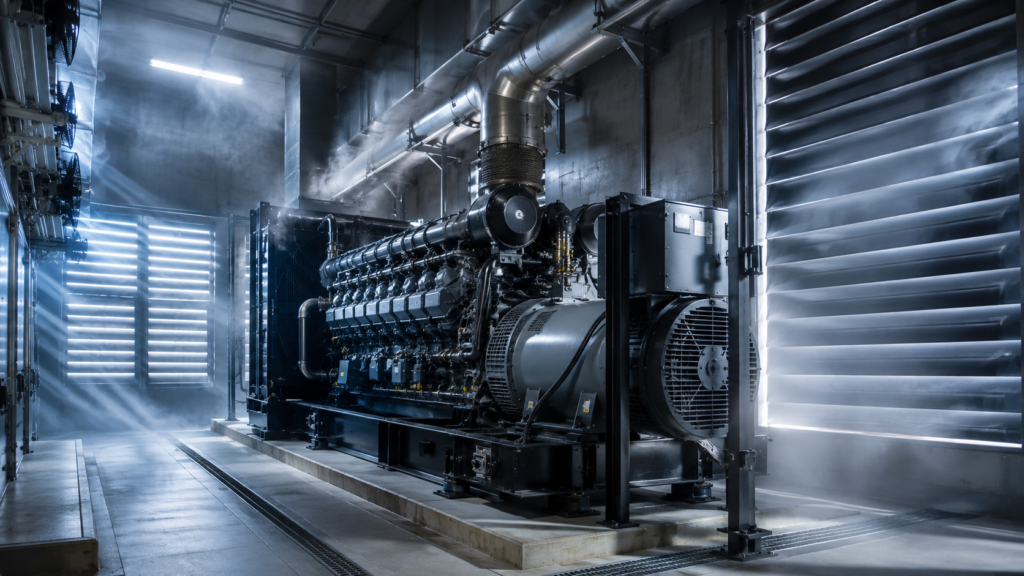
Generator rooms can experience rapid temperature rise during operation due to engine heat rejection, alternator heat, exhaust piping, radiator discharge, and poor air circulation.
We evaluate:
The result is better thermal control and reduced risk of generator overheating or derating.
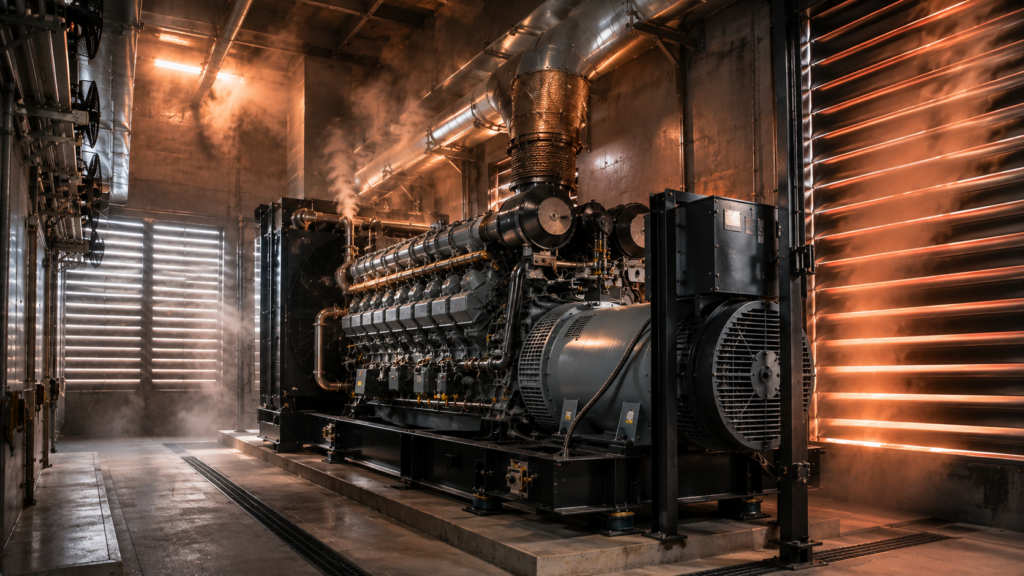
Proper ventilation is essential to remove exhaust leakage, hot air, and combustion-related contaminants from generator rooms.
Experiqs helps assess:
This helps improve safety and maintain suitable operating conditions during generator operation.
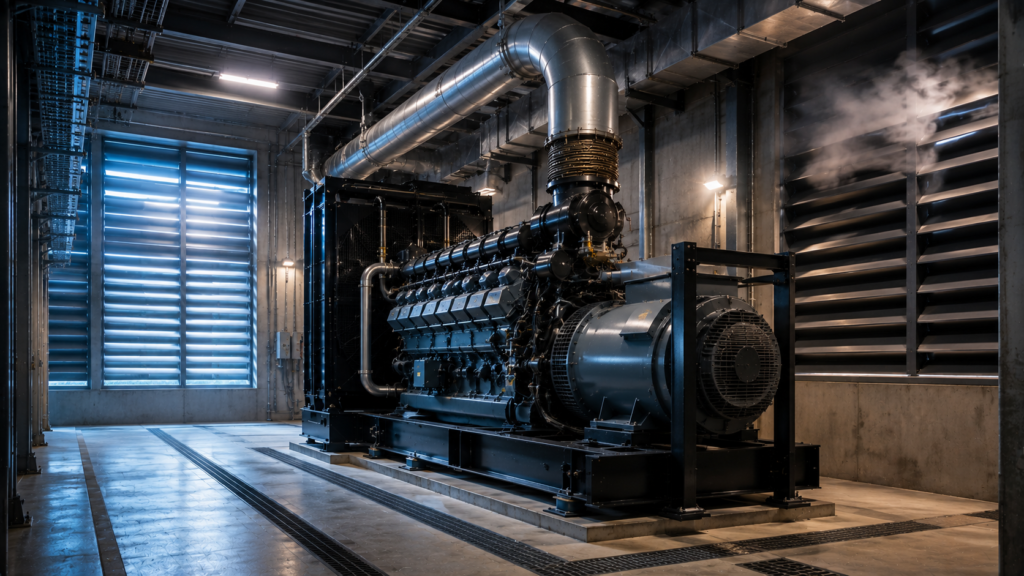
Experiqs supports the optimization of ventilation openings, louvers, ducts, fans, and airflow paths to improve generator room performance.
We analyze and optimize:
Our recommendations help improve ventilation reliability while reducing unnecessary airflow losses and thermal risk.
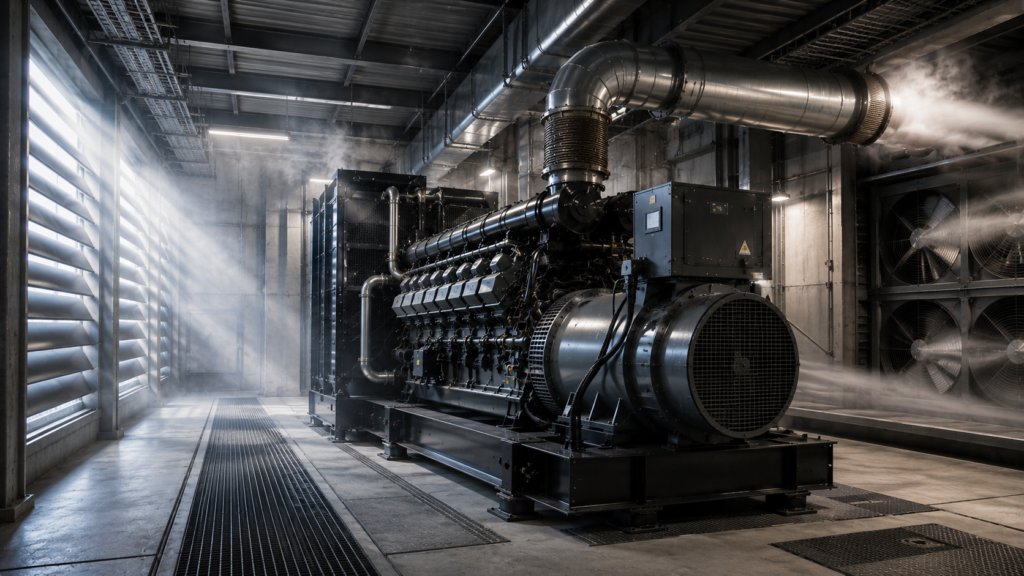
Rooms with multiple generator sets often experience complex airflow interaction between equipment. One generator’s hot discharge air can affect another unit’s intake zone, especially in compact layouts.
We evaluate:
This helps validate whether the generator room layout can support reliable operation during backup power demand.
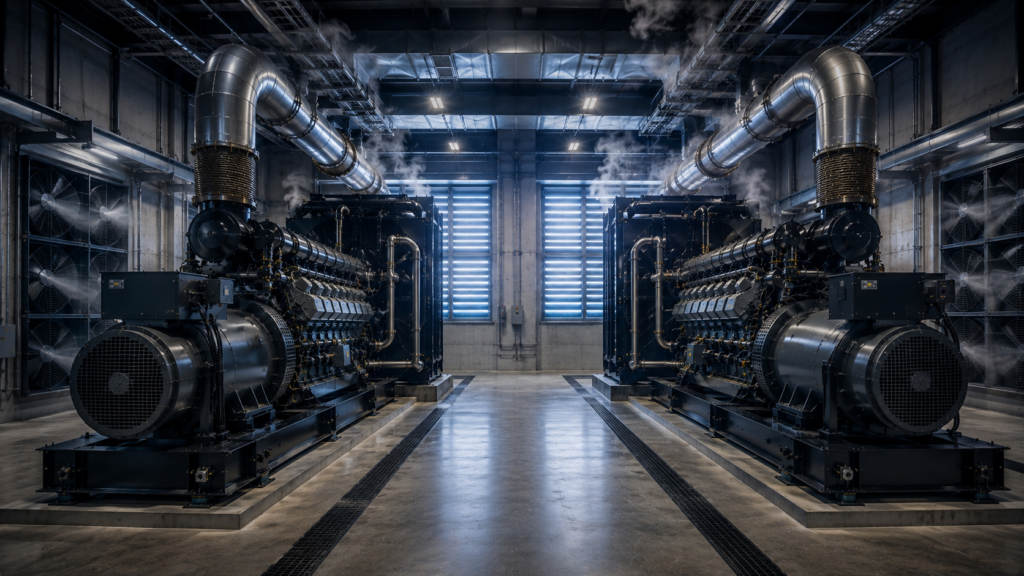
Experiqs helps data center and critical facility teams address generator room ventilation issues, including:
Support stable generator performance during emergency and backup power operation.
Reduce heat buildup, hot zones, and temperature rise inside generator rooms.
Improve openings, louvers, ducts, fans, and airflow paths using CFD-based engineering insight.
Identify heat buildup, stagnant zones, and unfavorable airflow patterns before they affect critical systems.
Improve exhaust removal, fresh air supply, and room ventilation effectiveness.
Validate generator room ventilation performance before construction, commissioning, or retrofit implementation.
Our Generator Room Ventilation Optimization service is suitable for:
Experiqs follows a simulation-led workflow to evaluate and optimize generator room ventilation performance.
We review generator room layout, generator specifications, heat rejection data, radiator details, exhaust routing, fresh air requirements, louver details, fan capacities, duct layouts, and operating scenarios.
A detailed airflow and thermal model is developed to represent the generator room, equipment, heat sources, ventilation openings, fans, ducts, louvers, and exhaust paths.
We evaluate the existing or proposed ventilation performance, including airflow distribution, temperature rise, heat buildup, pressure zones, and air quality concerns.
Multiple design changes are tested virtually, such as louver relocation, fan capacity adjustment, duct modification, airflow path improvement, and exhaust separation.
We provide clear recommendations for equipment relocation, spacing improvement, stack height adjustment, barrier modification, airflow path enhancement, and recirculation reduction.
Experiqs combines CFD simulation, thermal engineering, airflow modelling, and critical infrastructure expertise to solve complex generator room ventilation challenges.
Our strength lies in converting complex airflow and thermal behavior into practical engineering insights. We help clients understand how ventilation air moves, where heat accumulates, whether exhaust is removed effectively, and how design changes can improve backup power reliability.
By validating generator room ventilation before construction, commissioning, or retrofit, Experiqs helps facility teams reduce operational risk and improve emergency power readiness.
Improve airflow distribution, reduce heat buildup, enhance exhaust removal, and support reliable backup power operation with Experiqs’ CFD-based Generator Room Ventilation Optimization services.
Talk to our experts to evaluate your generator room ventilation design and identify practical airflow improvement opportunities.
Partner with Experiqs to transform complex ideas into validated, industry-ready engineering solutions
Discover how to partner with Experiqs and get started quickly
Whether you’re exploring a new R&D initiative, seeking advanced simulations, planning experimental validation, or evaluating product feasibility—our experts are ready to assist you.
