
More results...
More results...
Thermal systems, furnaces, kilns, roasters, dryers, smelters, heaters, and high-temperature process equipment are central to metal, mining, and mineral processing operations. Their performance directly affects fuel consumption, heat utilization, product quality, refractory life, process stability, emissions, and overall plant efficiency.
Thermal Systems, Furnaces & Kiln Optimization helps mining, mineral, and metal processing teams understand how heat transfer, combustion behaviour, temperature distribution, refractory performance, material movement, and operating conditions affect high-temperature process performance. By using simulation-led engineering, Experiqs helps improve thermal efficiency, reduce hotspots, support refractory durability, and optimize fuel and energy use.
Experiqs provides Thermal Systems, Furnaces & Kiln Optimization services for mineral processing plants, metal production facilities, smelters, refineries, kilns, roasters, furnaces, dryers, and high-temperature industrial systems. We use thermal simulation, CFD analysis, combustion modelling, heat transfer studies, refractory stress evaluation, thermal efficiency assessment, and fuel optimization to improve process performance and operational reliability.
High-temperature industrial systems consume significant energy and operate under demanding thermal, chemical, mechanical, and process conditions. Small inefficiencies in combustion, airflow, heat transfer, refractory design, or material flow can lead to high fuel consumption, uneven heating, poor product quality, refractory damage, thermal stress, and process instability.
Furnaces, kilns, and roasters often experience uneven temperature distribution, local hotspots, cold zones, poor flame behaviour, inefficient heat utilization, excessive heat loss, refractory cracking, and inconsistent process output. These problems can increase downtime, maintenance cost, fuel consumption, and operating risk.
Refractory systems are especially sensitive to thermal gradients and repeated heating cycles. If thermal stress is not properly evaluated, refractory lining damage, cracking, spalling, and structural durability issues can reduce equipment life and lead to costly shutdowns.
Simulation-led thermal analysis helps visualize temperature fields, heat transfer paths, combustion behaviour, gas flow, material heating, refractory stress, and heat loss mechanisms. Experiqs helps clients identify practical improvements that support better energy efficiency, process stability, and long-term equipment reliability.
We evaluate temperature distribution, heat transfer, combustion behaviour, and thermal efficiency in high-temperature process systems.
Our analysis helps assess:
This helps improve process stability, heating performance, and energy utilization.
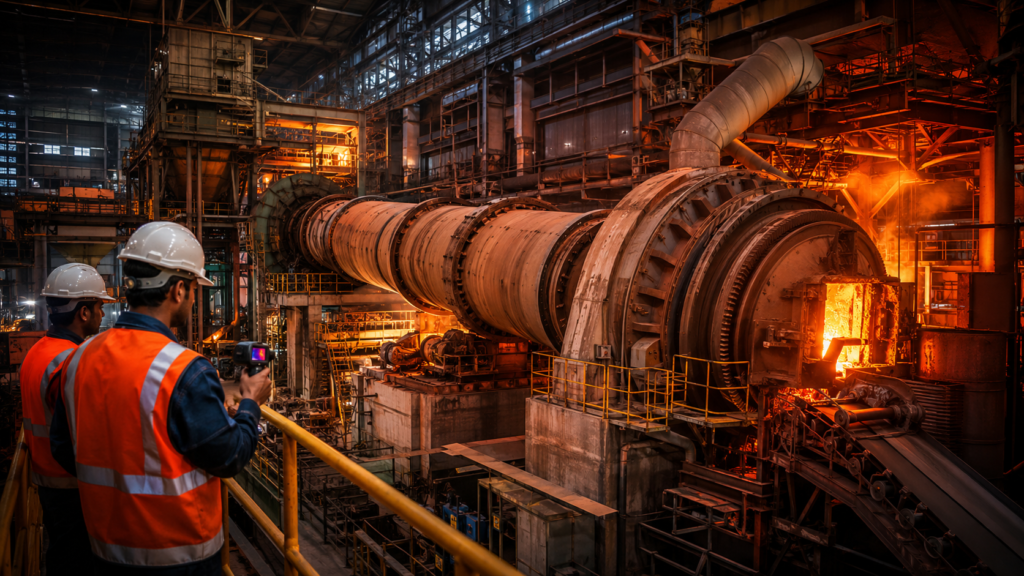
Refractory linings and high-temperature structures are exposed to severe thermal gradients, cyclic heating, and mechanical loads.
Experiqs helps evaluate:
This helps improve refractory reliability and reduce unplanned maintenance.
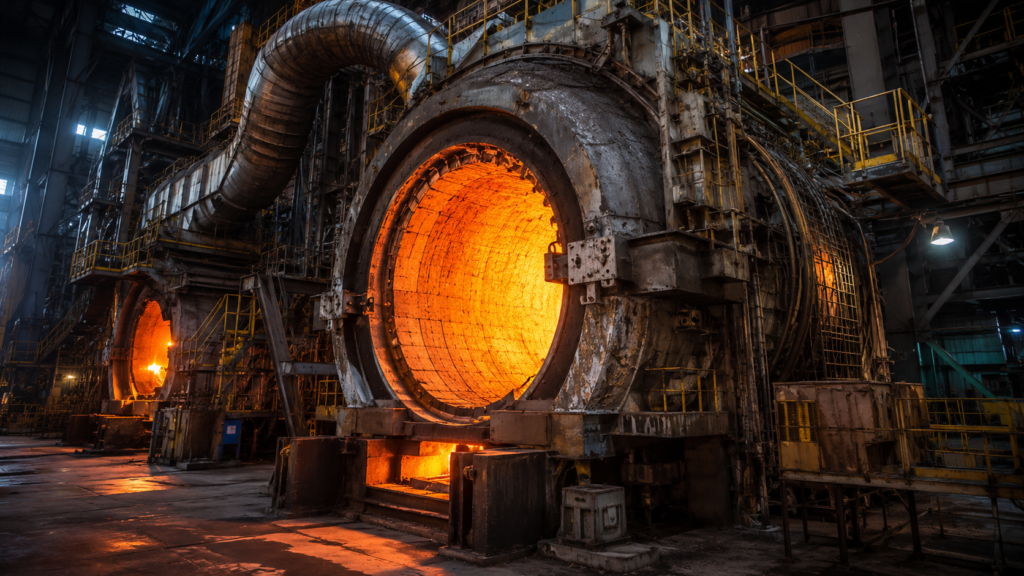
Fuel consumption is a major operating cost in furnaces, kilns, roasters, and smelting systems.
We help improve:
This helps reduce operating cost while maintaining required process performance.
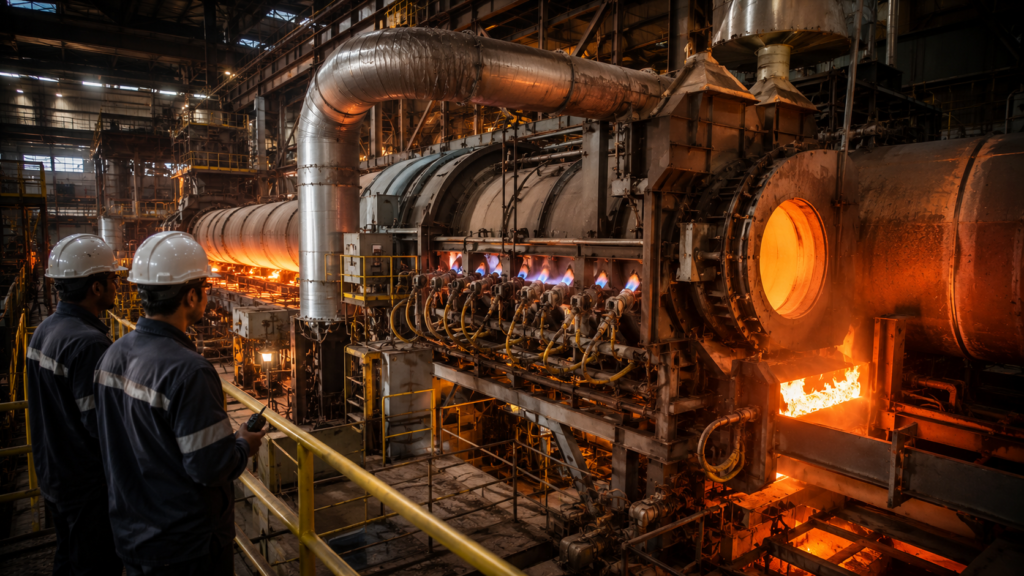
Combustion behaviour and gas flow strongly influence temperature uniformity, heat transfer, emissions, and fuel efficiency.
We analyze:
This helps improve thermal performance and combustion control.
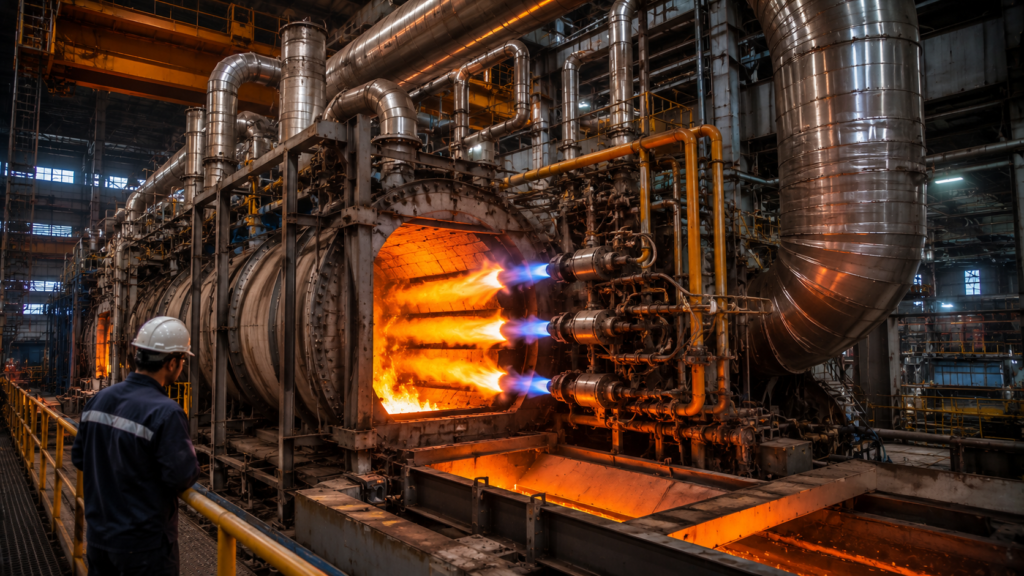
Uneven temperature distribution can affect product quality, equipment life, refractory durability, and process consistency.
We help identify:
This helps improve heating uniformity and reduce thermal damage.
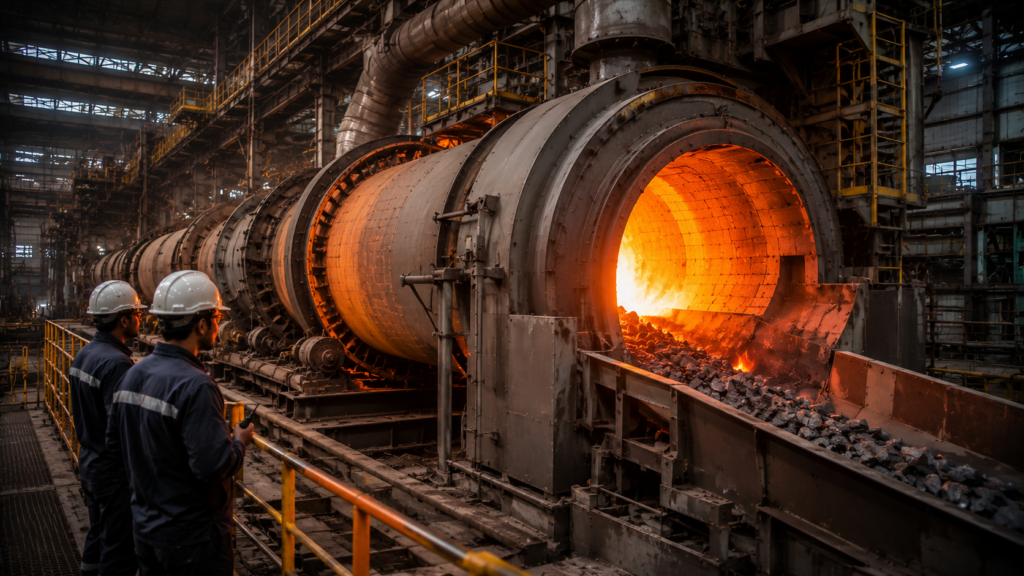
Heat losses through walls, openings, exhaust streams, and poorly insulated regions can reduce system efficiency.
We help evaluate:
This helps improve energy efficiency and reduce unnecessary fuel consumption.
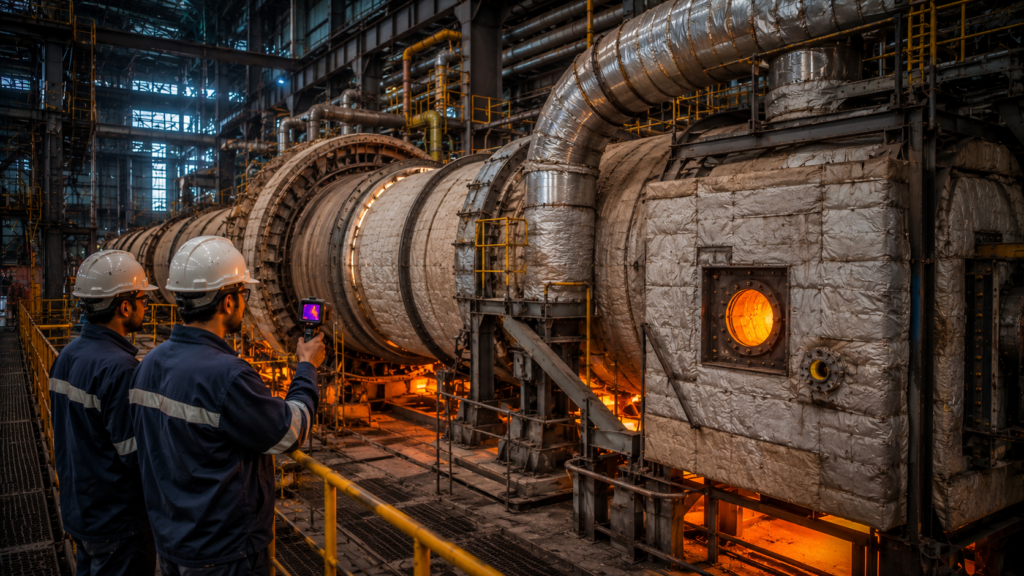
Experiqs helps mining, mineral processing, and metal production teams address thermal system challenges, including:
Optimize heat transfer, combustion behaviour, and heat utilization to reduce energy losses
Identify opportunities to reduce specific fuel consumption while maintaining process output and product quality.
Reduce hotspots, cold zones, and uneven heating that affect process consistency and equipment life.
Evaluate thermal gradients, refractory stress, and hotspot risks to improve lining life and reduce downtime.
Improve gas flow, combustion stability, heat distribution, and operating condition control for smoother operation.
Use simulation-led analysis to compare thermal improvement options before retrofit or operational changes.
Experiqs combines CFD simulation, thermal engineering, combustion analysis, heat transfer modelling, refractory stress evaluation, and energy optimization expertise to improve high-temperature industrial systems.
Our strength lies in identifying hidden thermal losses and process limitations that are difficult to detect through plant data alone. We help clients understand where heat is being wasted, why hotspots occur, how refractory stress develops, and which operating or design changes can improve furnace, kiln, and roaster performance.
By validating thermal improvement opportunities virtually, Experiqs helps mining, mineral, and metal processing teams reduce fuel consumption, improve process stability, extend refractory life, and make better energy optimization decisions.
Optimize furnaces, kilns, roasters, combustion systems, refractory performance, heat transfer, and fuel efficiency with Experiqs’ Thermal Systems, Furnaces & Kiln Optimization services.
Talk to our experts to evaluate your high-temperature process system and identify practical opportunities for better energy efficiency, stronger process stability, and improved equipment reliability.
Partner with Experiqs to transform complex ideas into validated, industry-ready engineering solutions
Discover how to partner with Experiqs and get started quickly
Whether you’re exploring a new R&D initiative, seeking advanced simulations, planning experimental validation, or evaluating product feasibility—our experts are ready to assist you.
