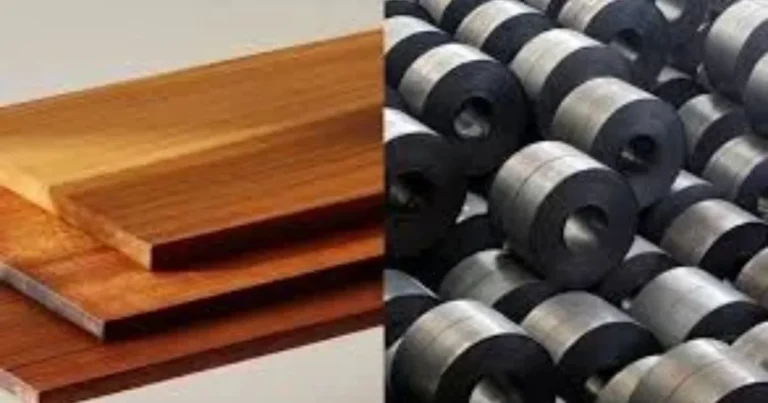
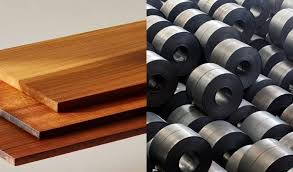
Imagine a building material that’s stronger than steel, lighter than aluminum, costs less, and actually helps the planet instead of harming it. Sounds like science fiction? It’s not anymore. American scientists have just engineered “superwood” — a game-changing material that could finally dethrone steel and concrete as the kings of construction.
What Exactly Is “Superwood”?
Researchers at the University of Maryland (with funding from the U.S. Department of Energy) have developed a process that transforms ordinary fast-growing woods (like poplar or balsa) into a material that rivals — and often beats — steel.
The secret? They strip out the lignin and hemicellulose (the “glue” that makes wood spongy and weak), then hot-press the remaining cellulose fibers together under extreme pressure. The result is a dense, aligned network of cellulose nanofibers — nature’s own version of carbon fiber.
The numbers are jaw-dropping: 5–10 times stronger than natural wood
- Stronger pound-for-pound than most steel alloys
- 12 times stiffer than natural wood
- Lighter than carbon fiber
- Bulletproof in thick enough panels
- Fully biodegradable and made from renewable resources
Steel has ruled construction for 150 years, but it comes with massive downsides:
- Producing one ton of steel releases ~1.9 tons of CO₂
- Mining iron ore and coal destroys ecosystems
- It’s heavy (shipping and erection costs are huge)
- It rusts, requiring constant maintenance
Superwood flips every one of those problems:
- Carbon-negative potential (trees absorb CO₂ while growing)
- Made from waste wood or fast-growing species (no old-growth forests needed)
- 80% lighter than steel for the same strength
- Naturally resistant to rot and pests after treatment
- Can be molded into complex shapes more easily than metal
Think skyscraper beams, car bodies, airplane fuselages, bridges — anything we currently make from steel or concrete could theoretically switch to superwood within a decade.
The process is surprisingly simple and scalable. The team has already licensed the technology, and pilot production facilities are being planned. First commercial applications (high-end furniture, sporting goods, automotive panels) could hit the market in 3–5 years. Large-scale construction use might take 8–12 years because of building codes and certification — but that timeline is lightning-fast in materials science.
If superwood scales, the impact would be staggering:
- Construction could become one of the first major industries to go carbon-negative
- Deforestation pressure drops because we’ll use fast-growing plantations instead of slow ancient forests
- Developing nations could leapfrog dirty steel production entirely
- Shipping becomes cheaper and less emissions-heavy because everything is lighter