In a groundbreaking advancement announced on November 30, 2025, researchers at Monash University have developed a novel graphene-based material that bridges the gap between supercapacitors and traditional batteries. This innovation, detailed in Nature Communications, enables supercapacitors to store energy at levels comparable to lead-acid batteries while delivering power far more rapidly. By leveraging abundant natural graphite through a scalable manufacturing process, this technology promises to revolutionize energy storage for electric vehicles, renewable energy grids, and portable electronics. Commercialization is already underway via the spinout company Ionic Industries, positioning this breakthrough for real-world impact in the coming years.

Introduction and the science behind the breakthrough
Energy storage remains a critical bottleneck in the global transition to sustainable technologies. While lithium-ion batteries dominate the market, their slow charging times, limited lifespan, and reliance on scarce materials hinder widespread adoption. Supercapacitors, on the other hand, excel in rapid charging and discharging but fall short in energy density. Enter a new era of hybrid performance: engineers at Monash University have engineered a multiscale reduced graphene oxide (M-rGO) material that supercharges supercapacitors, achieving battery-like energy storage with lightning-fast power delivery.
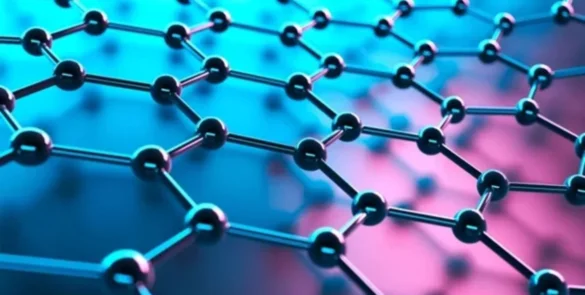
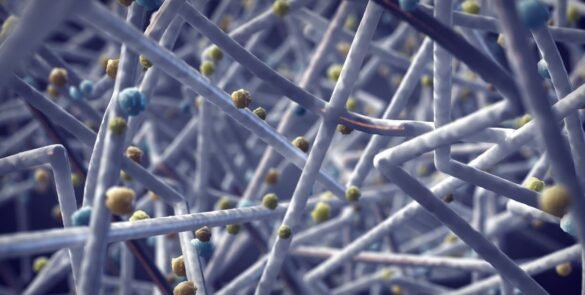
At the heart of this innovation is a rethinking of graphene’s structure—the wonder material known for its exceptional conductivity and strength. Traditional graphene-based supercapacitors suffer from inefficient ion transport, limiting access to the material’s vast surface area for charge storage. The Monash team addressed this by applying a rapid thermal annealing process to natural graphite, creating a highly curved, multiscale architecture in the resulting M-rGO.
Key Technical Achievements
- Energy Density: Up to 99.5 Wh/L using ionic liquid electrolytes, rivaling lead-acid batteries.
- Power Density: As high as 69.2 kW/L, enabling near-instantaneous charging and discharge.
- Cycle Stability: Demonstrates exceptional durability over thousands of cycles, with minimal degradation.
- Scalability: Produced from abundant Australian graphite via a low-cost, energy-efficient method compatible with industrial production.
Unlike batteries, which store energy through slow chemical reactions, supercapacitors rely on electrostatic charge separation. The M-rGO design optimizes ion pathways, unlocking previously inaccessible surface areas for storage. As Professor Mainak Majumder, Director of the ARC Research Hub for Advanced Manufacturing with 2D Materials (AM2D) at Monash, explained: “Our team has shown how to unlock much more of that surface area by simply changing the way the material is heat-treated. This discovery could allow us to build fast-charging supercapacitors that store enough energy to replace batteries in many applications, and deliver it far more quickly.”
The research, led by Majumder et al., was published in Nature Communications. Funding came from the Australian Research Council and the US Air Force Office of Sponsored Research, underscoring its international significance.
This breakthrough could fundamentally alter the energy landscape:
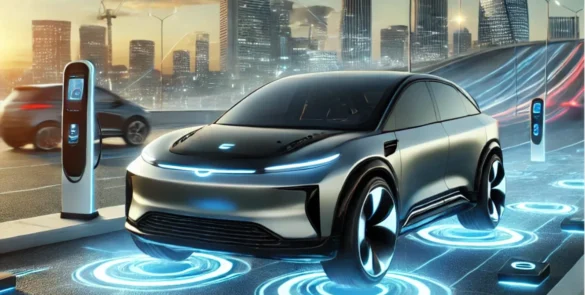
Electric vehicles (EVs) could charge in minutes rather than hours, reducing range anxiety and accelerating adoption. Hybrid supercapacitor-battery systems might extend vehicle lifespan by handling peak power demands. With grid-scale storage needing both high capacity and rapid response to fluctuations from solar and wind, M-rGO supercapacitors could stabilize renewables, minimizing waste and blackouts. Devices like smartphones and laptops could benefit from ultra-fast charging without compromising battery life, enhancing user experience in a mobile-first world. Broader societal benefits include reduced dependence on rare-earth minerals and lower carbon footprints through efficient, graphite-sourced production. Ionic Industries, a Monash spinout co-founded by Dr. Aitchison, is at the forefront of bringing this technology to market. The company is already producing commercial quantities of M-rGO materials and partnering with energy storage firms for pilot integrations.
Conclusion
The Monash graphene breakthrough represents a pivotal step toward efficient, sustainable energy storage. By supercharging supercapacitors with battery-level performance, it paves the way for a cleaner, faster-charging world. As research evolves and commercialization accelerates, stakeholders in energy, transportation, and manufacturing should monitor this space closely.
References
Petar Jovanović, Meysam Sharifzadeh Mirshekarloo, Phillip Aitchison, Mahdokht Shaibani, Mainak Majumder. Operando interlayer expansion of multiscale curved graphene for volumetrically-efficient supercapacitors. Nature Communications, 2025; 16 (1) DOI: 10.1038/s41467-025-63485-0
ScienceDaily Release: “New graphene breakthrough supercharges energy storage.” November 30, 2025.